Aged FRP/GRP grating needs a periodic recertification cycle, not a one-time acceptance test. The core retest is a Barcol hardness check (threshold 40, retest below 40) plus a visual walk for cracks, whitening, fiber exposure and grit wear. Failed panels are swapped, and every step is logged.
- Barcol: at or above 40 passes; below 40 means non-conforming and retest on an adjacent point
- Four visual signals: cracks, whitening/chalk, exposed fiber, worn grit top
- Sampling density set by exposure zone and risk, confirmed against the original spec
- Record: dated log with panel ID, location, readings, photo and disposition
Why aged FRP grating needs a recertification cycle
After ten years outdoors the resin-rich top layer has seen UV, thermal cycling, chemical splash and foot traffic. The panel that left the factory at Barcol 40 or above is no longer identical to the surface in service. Most aged failures are slow, visible changes rather than sudden breaks; recertification turns them into a documented pass / patch / replace decision.
| Exposure | Typical aged signal | Where to look first |
|---|---|---|
| UV and thermal cycling | Resin chalk, pale whitening | Sun-facing deck, open walkway |
| Chemical splash or vapour | Softened resin, lifted grit | Sump cover, tank rim, acid aisle |
| Heavy foot or trolley traffic | Worn grit, rounded edges | Egress route, gangway, apron |
| Salt or coastal air | Fixing corrosion, frayed edge | Marina, dock, coastal walkway |
| Frozen climate, de-icing salt | Brittle surface, impact cracks | Ramp, stair tread, cold walkway |
Note: This guide covers in-service audit, not factory acceptance. Numeric thresholds not stated here are confirmed per project conditions.
Barcol hardness retest: method and acceptance
The Barcol impresser is the same instrument used at the factory. On an aged panel it is a quick go/no-go check. The acceptance rule used throughout this site: at or above 40 passes; below 40 means non-conforming and a second reading is taken on the same bar.
| Step | Action | Disposition |
|---|---|---|
| Prepare | Brush off grit, salt, oil, chalk | Clean, dry surface |
| Choose points | Separated points on bar tops | Away from cutouts and clips |
| Read | Perpendicular press, settled dial | At or above 40 passes |
| Retest | Adjacent point if below 40 | Second at or above 40: note only |
| Flag | Two low readings on one bar | Panel marked for swap |
| Barcol reading | Interpretation | Action |
|---|---|---|
| 40 or above | Within acceptance band | Return to service |
| Below 40, retest at or above 40 | Local soft spot | Accept, log, retest sooner |
| Two separated below 40 | Matrix below band | Replace panel |
| Will not hold a reading | Crumbly, delaminating | Isolate immediately |
Visual defect criteria: cracks, whitening, fiber exposure, wear
The Barcol number describes the resin; the walk-around describes everything else. Aged grating fails in four recognizable ways, each recorded as minor, moderate or severe rather than present or absent.
| Defect | Minor | Moderate | Severe |
|---|---|---|---|
| Crack | Hairline on one bar | Crosses two adjacent bars | Offset, delamination |
| Whitening | Pale patch, no powder | Chalk over area, powder on glove | Resin crumbles, fiber shows |
| Fiber exposure | Single filament at edge | Continuous roving along bar | Frayed roving on walking surface |
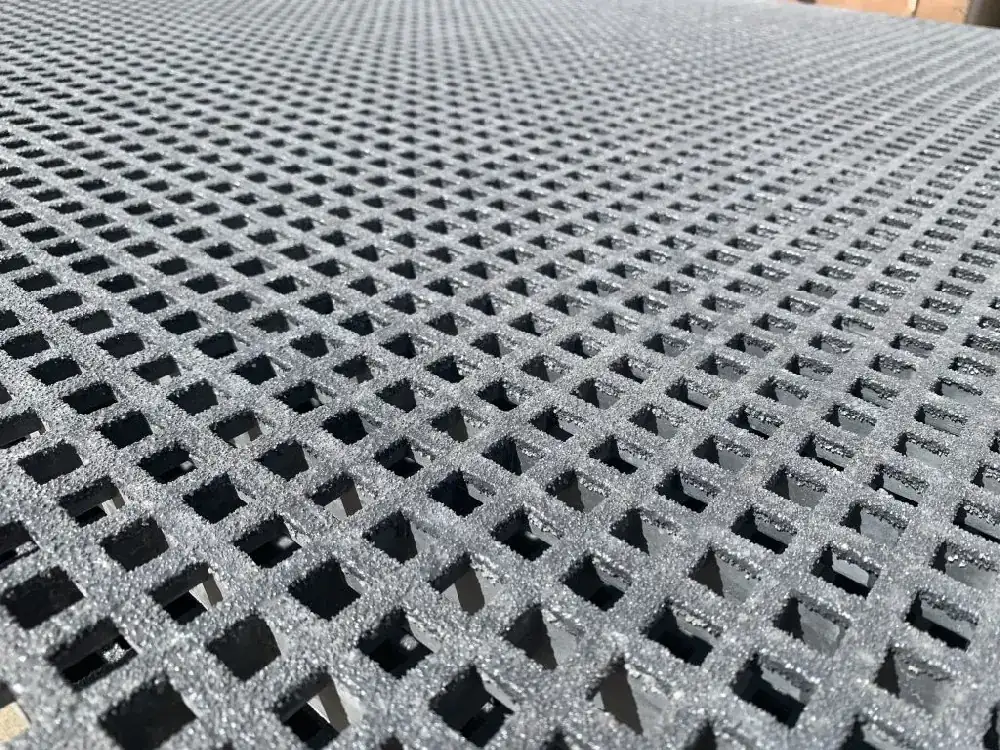
| Grit wear | Grit texture intact | Polished, edges rounded | Grit gone, smooth resin |
A crack staying on one bar with no offset is monitored; one crossing into the next bar is structural. Whitening is normal UV chalk until it covers a large share of the panel. Exposed roving on the walking surface is both structural and a slip risk. Grit wear is judged by comparing the traffic lane to an unexposed corner; the numeric wear limit is set by the original spec, confirmed per project.
Replacement thresholds: when to retire a panel
Retirement is never based on one observation. It combines Barcol result, defect severity, traffic exposure and consequence of failure. A low-traffic catwalk with one moderate crack and acceptable Barcol may stay in service with a shorter interval; a high-egress route with two low readings and fiber exposure is swapped, not patched.
| Scenario | Patch | Partial swap | Full swap |
|---|---|---|---|
| Hairline crack, Barcol at or above 40 | Recommended | Not needed | Not needed |
| Crack crosses two bars, Barcol at or above 40 | Not recommended | Consider isolated swap | On egress: recommended |
| Two Barcol below 40 on one bar | Not recommended | Recommended | Recommended |
| Exposed roving on walking surface | Not recommended | Recommended | Recommended |
| Heavy grit wear, wet slip risk | Not recommended | Overlay if spec allows | On egress: recommended |
Note: Swap panels must match the original bar size, mesh and resin system. Do not substitute a heavier bar as a field fix without re-checking span and clips.
Sampling rate and test-point distribution
A recertification walk samples; it does not test every square meter. Density is risk-based: high-exposure zones are sampled more densely, and the first recert after a long gap uses a denser sample than a steady annual cycle. The exact percentage is confirmed against the original spec and the risk register.
| Zone | Exposure | Density | Interval |
|---|---|---|---|
| Egress route | Foot traffic, trolleys, wet | Denser per panel | Shorter, per risk |
| Chemical splash | Acid, alkali, vapour | Denser, plus resin check | Shorter |
| Splash / salt | Coastal, dock, marine | Denser, plus fixing check | Shorter |
| General walkway | Occasional access | Standard per panel | Standard |
| Stored deck | Minimal traffic, shaded | Minimum | Longer, per owner policy |
When a sample point fails, the sample expands. One low reading triggers a second point on the same bar; two adjacent low readings trigger a denser sample across neighboring panels. Do not condemn the whole deck at the first failure, but do not declare the rest clean either.
Inspection record form: required fields
A recertification that is not written down is not a recertification. The log is the document that turns a walk-around into a defensible record. The fields below are the minimum; the owner may add more but should not drop these.
| Field | Format | Note |
|---|---|---|
| Asset and location | Text | Plant, unit, deck ID |
| Panel ID | Text | Position on layout drawing |
| Date | Date | Day / month / year |
| Inspector | Text | Name and qualification |
| Barcol reading | Number per point | At or above 40 pass; below 40 retest |
| Visual defects | Tick or note | Crack, chalk, fiber, wear + severity |
| Photo reference | Filename | Each defect with panel ID |
| Disposition | Choice | Pass / patch / replace / isolate |
| Next inspection | Date | Per risk register |
| Signature | Text | Inspector and reviewer |
The log lives with the asset file, not a personal notebook. Year on year the next inspector needs to see where the previous low points were, which panels were patched, and which route has been drifting.
Recertification workflow and reporting
A cycle has four phases: planning, field work, disposition and reporting. Planning is the zone map and sample plan; field work is the Barcol retest and visual walk; disposition is the patch / partial / full decision; reporting is the log, photo set and summary back to the owner.
| Phase | Activity | Output |
|---|---|---|
| 1. Plan | Pull spec, mark zones, set density | Inspection plan, panel list |
| 2. Field | Barcol retest, visual walk, photos | Raw readings, defect notes |
| 3. Disposition | Apply thresholds per panel | Pass / patch / replace list |
| 4. Report | Assemble log, summary, swap cost | Recertification report |
The report states which panels passed, which are monitored and which are scheduled for swap. It does not overstate: a pass on a low-traffic catwalk is a different assurance level than a pass on an egress route.
Resin-specific degradation signals
Visual defects look similar across resin systems, but the early signals are not identical. Polyester chalks earlier under UV; vinyl ester resists chemical splash better; phenolic is chosen for fire performance and ages differently. The panel ID should note the resin system so the visual check is weighted correctly.
| Resin | Expected strength | Early signal | Limiting condition |
|---|---|---|---|
| Orthophthalic polyester | Indoor, covered walkway | UV chalk, whitening | Years of outdoor UV |
| Isophthalic polyester | Moderate chemical, outdoor | Chalk then surface crack | Repeated chemical splash |
| Vinyl ester | Stronger chemical resistance | Local softening under splash | Hot acid or solvent contact |
| Phenolic | Fire performance, low smoke | Surface discoloration | Direct flame or hydrocarbon fire |
If the resin system is not recorded on the panel ID, treat the panel conservatively. Matching a swap panel to the wrong resin is a field error that is expensive to undo.
Fixings, clips and substructure checks
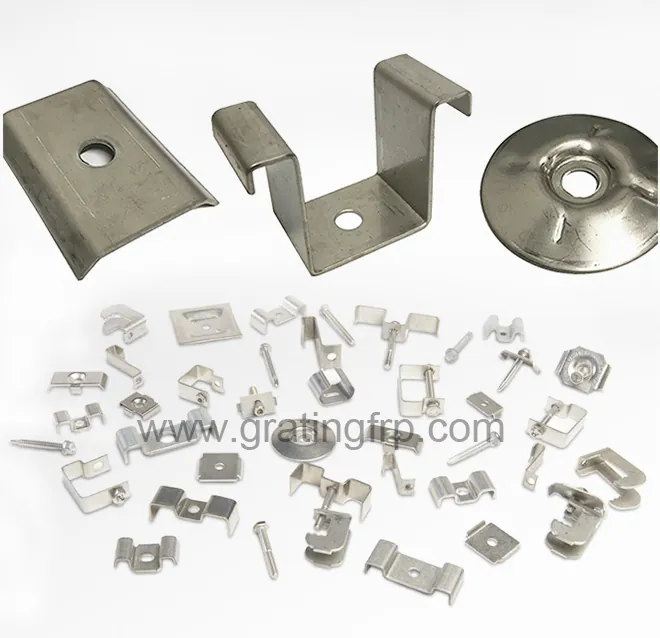
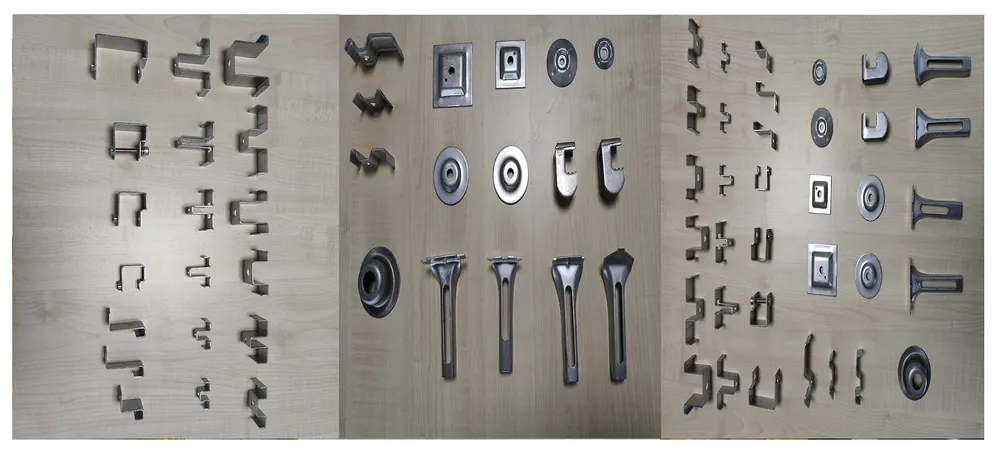
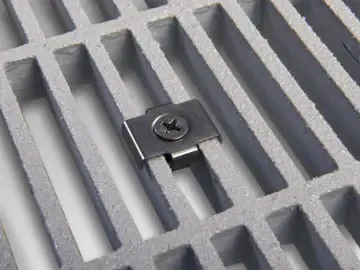
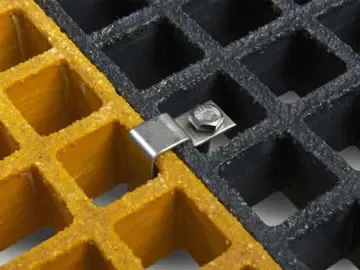
A panel can pass every test and still fail because the clip corroded or the bearer shifted. Spend a few minutes on the fixing set, especially on installations that sat unmaintained for years. Stainless clips are the norm; on marine sites the grade matters, on chemical sites the clip material must match the spec.
| Item | Inspection | Replacement trigger |
|---|---|---|
| M / C / L / Z clip | Tightness, corrosion, broken tab | Retighten loose; swap corroded or broken |
| Bolt and washer | Rust, thread condition | Swap rust-stained washer, re-check bolt |
| Support bearer | Movement, rust, rotation | Re-align shifted; assess rusted steel |
| Panel edge at cutout | Chipped or frayed edge | Trim frayed edge or swap panel |
The FRP panel itself does not rust, but the fixings do. That is why the fixing set is part of recertification rather than a separate maintenance task.
Cost planning: patch vs partial vs full swap
Recertification ends with a swap list and a budget. Standard molded panels ship at 1220 by 3660 mm; production lead time is 12 to 36 working days depending on resin, mesh and destination. A production order typically starts at 10 m²; a single emergency swap is confirmed per project conditions.
| Decision | Scope | Lead time | When it fits |
|---|---|---|---|
| Patch and monitor | Local crack or wear | Immediate on-site | Low traffic, Barcol at or above 40 |
| Partial swap | A few panels on a route | 12 to 36 working days | High-egress, clustered failures |
| Full deck swap | Whole walkway or platform | 12 to 36 working days, plan shutdown | Deck-wide drift, decades-old install |
| Emergency isolate | Immediate safety risk | Immediate | Structural crack, exposed roving |
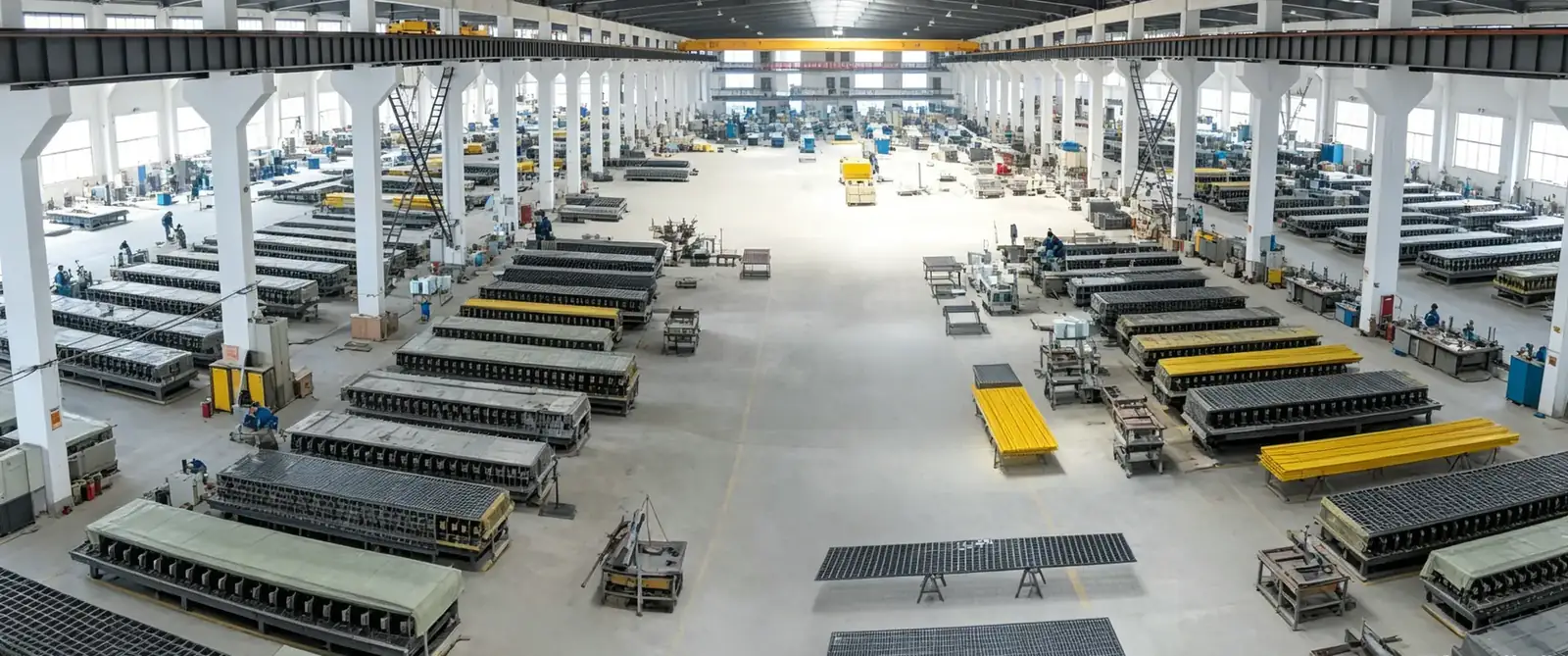
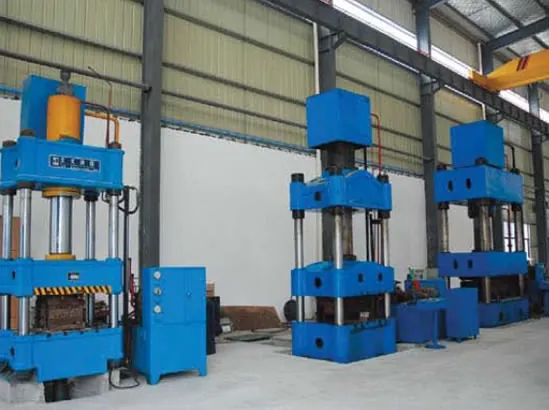
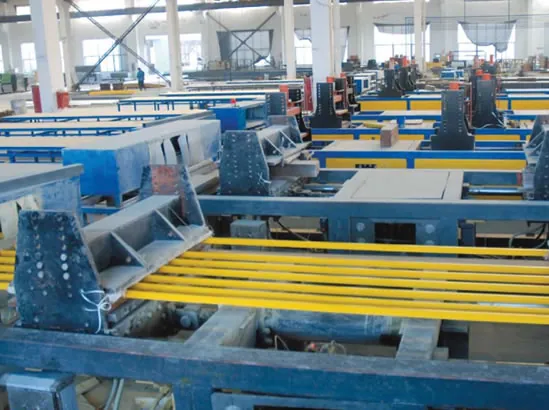
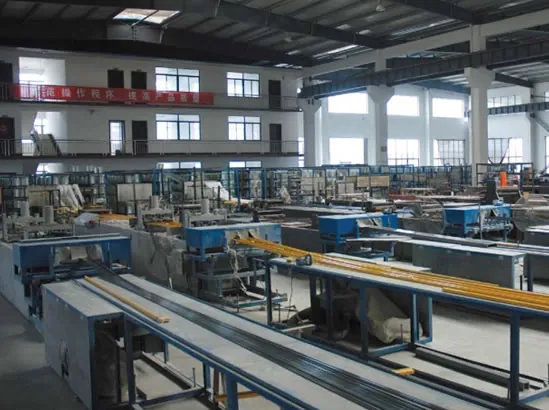
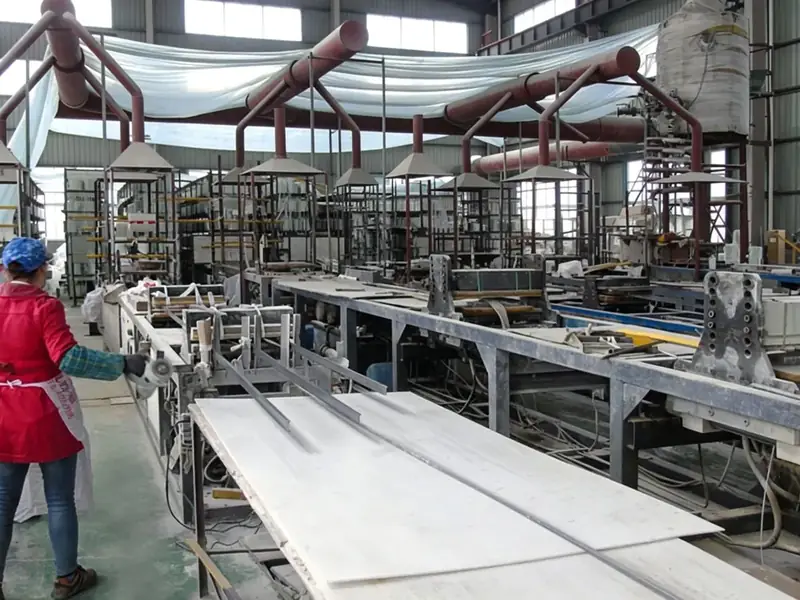
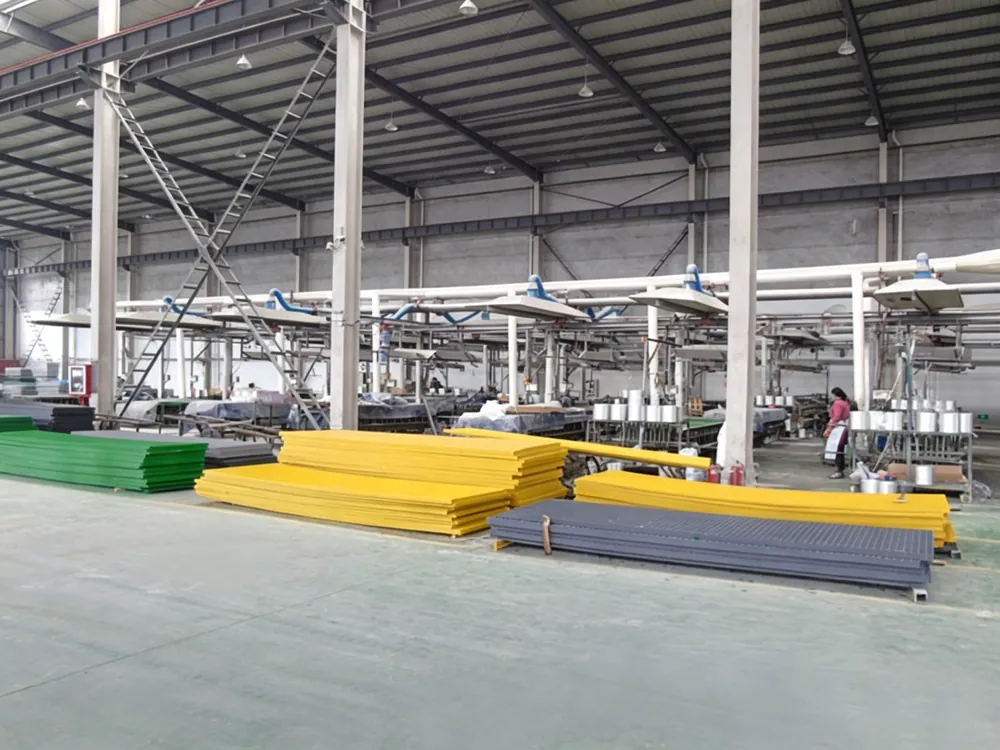
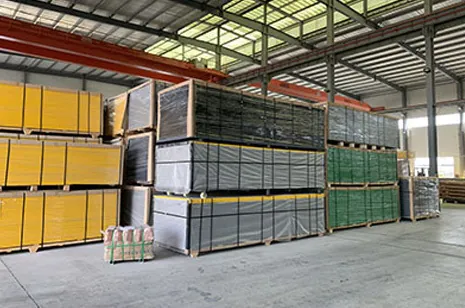
Our factory has run FRP and GRP grating since 2004, covers 20,000 plus square meters and employs more than 200 people. Swap panels are produced under the same quality system as the original batch, with the Barcol 40 threshold applied at outgoing QC.
Common pitfalls in aged-asset audit
Recertification fails in predictable ways: treating Barcol as a prediction tool, stopping at the first failed panel, patching a panel that should be swapped to save a purchase order, and losing the previous year's log so the drift trend is invisible.
- Do not retest on a wet, greasy or freshly painted surface.
- Do not swap to a heavier bar without re-checking span and clips.
- Do not judge whitening by photo alone; compare against an unexposed corner.
- Do not skip the fixing set because the panel looks fine.
- Do not archive the log in a personal folder; it belongs in the asset file.
A recertification program that follows these steps is the in-service audit that keeps an aged FRP grating installation defensible when an inspector, insurer or internal audit asks why that panel was still in service.
Frequently Asked Questions
How often should aged FRP grating be recertified?
The interval is set by exposure zone and the owner's risk register, not a fixed number. High-wear egress, chemical splash and salt installations use a shorter cycle; covered low-traffic walkways use a longer one. The first recert after a long gap uses a denser sample.
What Barcol reading means a panel must be replaced?
The threshold is 40. At or above 40 passes. Below 40 means non-conforming and a second reading is taken on the same bar; if that is also below 40, the panel is marked for replacement.
Is whitening on FRP grating a failure?
Whitening or chalking is normal on outdoor panels after years in sunlight. It becomes an issue when it covers a large area, leaves powder on the glove, or hides the bar pattern. Whitening alone does not retire a panel.
Can a cracked FRP panel stay in service?
A hairline crack on one bar, no offset and Barcol at or above 40, can be logged and monitored. A crack that crosses two bars, or shows a step or delamination, is structural and the panel should be swapped, especially on egress.
How long does replacement take for an aged installation?
Production lead time is 12 to 36 working days for a standard order, depending on resin, mesh and destination. A production order typically starts at 10 m²; single emergency swaps are confirmed per project conditions.