Knowing FRP grating terms — resin, I-bar, grit top, bearing bar, panel, load class — prevents mis-orders across borders; the same panel is called different names by region.
- Best for: cross-border buyers matching supplier vocabulary
- Learn before: quoting sizes, surfaces and load classes to avoid mismatch
- Key spec: ISO 9001, standardized terminology for ordering
Buying FRP grating across borders means matching your vocabulary to your supplier's. The same product can be called FRP, GRP, fiberglass grating, or composite grating — and every datasheet assumes you already know what bearing bars, grit surfaces, and deflection limits actually mean. This quick-reference guide walks through the 49 essential terms in the order you meet them when buying: material, surface, safety, hardware, corrosion, commercial terms, and applications.
All definitions match the terms used by FRP Grating Master (NANTONG ZEALL NEW MATERIALS CO., LTD.), an ISO 9001:2015 certified manufacturer with 20+ year warranty on structural performance. The same glossary is available in Spanish, German, and French on the four-language glossary page, so your local team can check terms in its own language.
1. Know Your Material
Resin choice is the single biggest cost and performance lever in an FRP specification. Confirm it on every quotation.
FRP (Fiber Reinforced Polymer)
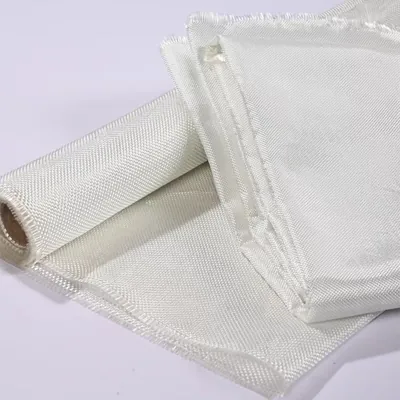
A composite material made of polymer matrix reinforced with glass fibers. Also known as GRP (Glass Reinforced Plastic).
GRP (Glass Reinforced Plastic)
Same as FRP. Common term in UK and Europe for fiberglass composite materials.
Vinyl Ester Resin
Premium corrosion-resistant resin with excellent chemical resistance to acids, alkalis, and solvents. Temperature range up to 120°C. Buyers choose it for chemical plants and wastewater.
Isophthalic Polyester
Mid-grade polyester resin with good chemical resistance for wastewater and general industrial applications. Temperature up to 80°C. The workhorse specification for industrial walkways.
Orthophthalic Polyester
General purpose polyester resin for dry indoor and mild exposure environments. Lowest cost option.
Phenolic Resin
Fire-retardant resin with Class B flame spread (FSI <75), low smoke, and zero halogen. Used in tunnels, offshore, and transit. Check fire codes before specifying.
UV Stabilizer
Additive in resin that prevents degradation from ultraviolet sunlight. Essential for outdoor and exposed applications.
Glass Content
Percentage of glass fiber in FRP by weight. Typical 60-70% for pultruded, 45-55% for molded. Higher content = higher strength. The best single quality check when comparing offers.
Resin Content
Percentage of resin matrix in FRP by weight. Typical 30-40% for pultruded, 45-55% for molded. Resin provides corrosion resistance.
Chemical Resistance
Ability of FRP to withstand exposure to acids, alkalis, solvents, and other chemicals without degradation. Depends primarily on resin type. Ask for the chemical compatibility chart before you finalize.
2. Choose the Right Surface
Molded and pultruded cover two very different structural worlds. Match the process to the span and load.
Molded Grating
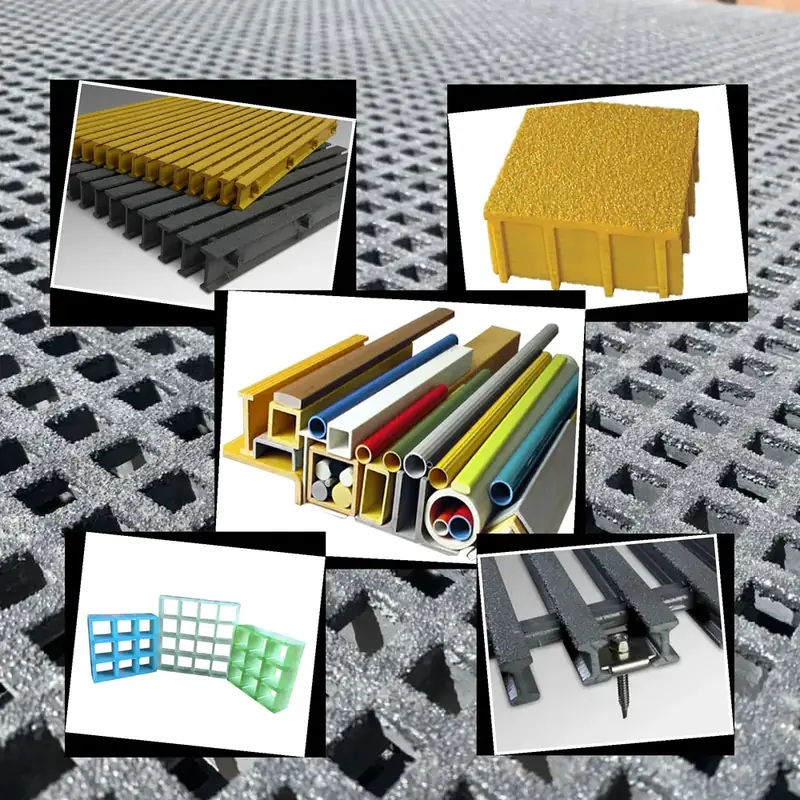
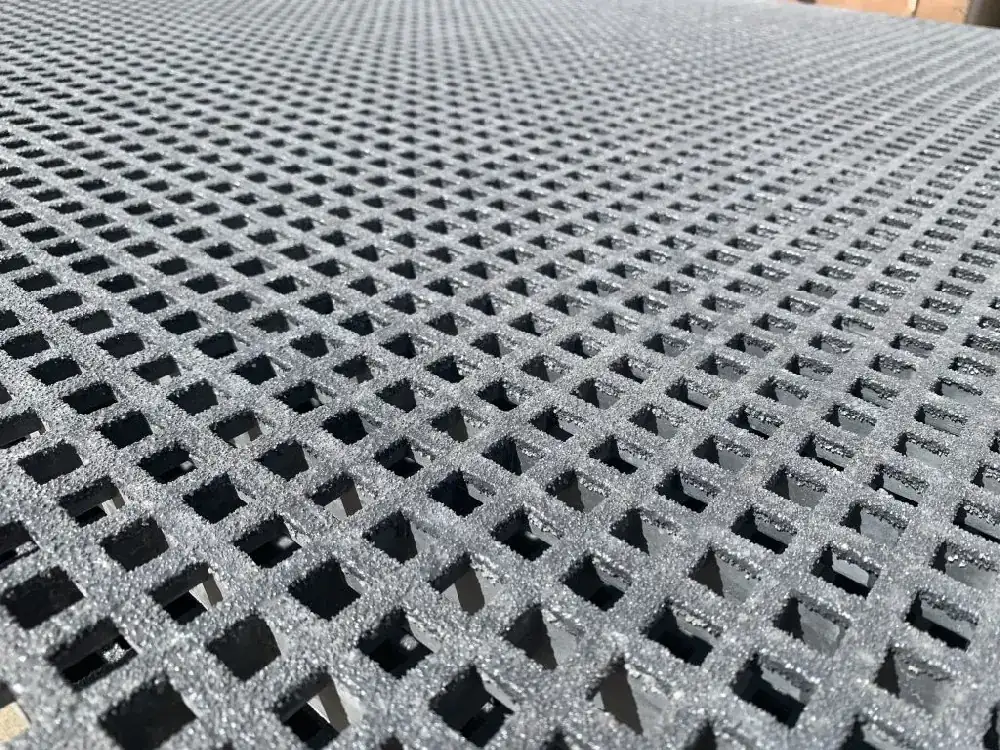
FRP grating manufactured by pressing continuous glass fibers in a cross pattern with resin in heated molds. Has bidirectional strength. Best value for platforms and mezzanines.
Pultruded Grating
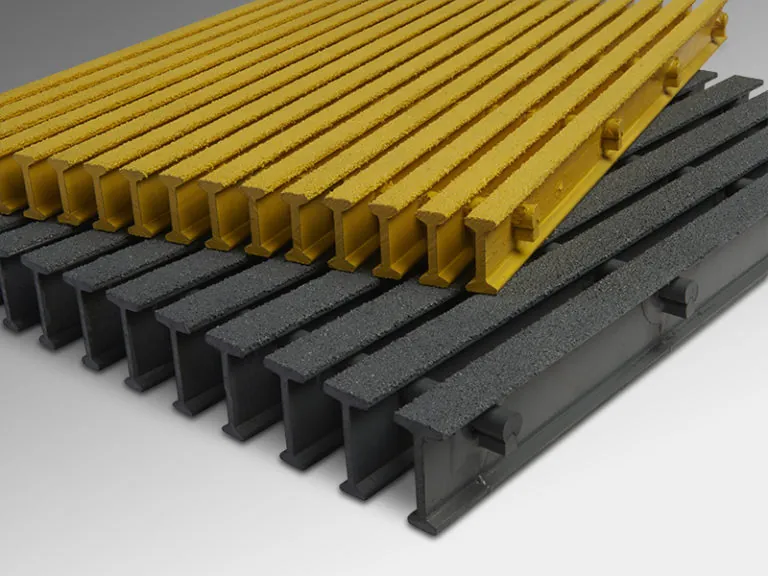
FRP grating made by pulling continuous fibers through a resin bath and heated die, forming I-bar or T-bar bearing bars. Higher unidirectional strength. Specified for long spans and heavy loads.
Mesh Size
The opening size between grating bars. Standard 38x38mm, mini-mesh 19x19mm, micro-mesh 12x12mm. Prevents small tools from falling through. Choose micro or mini mesh around machinery.
Grit Surface
Anti-slip surface with quartz sand embedded in resin. Highest slip resistance rating R13. Ideal for wet and oily environments.
Concave Surface
Standard surface with curved bar tops (meniscus). Moderate slip resistance R9-R10. Easy to clean. Most common surface type.
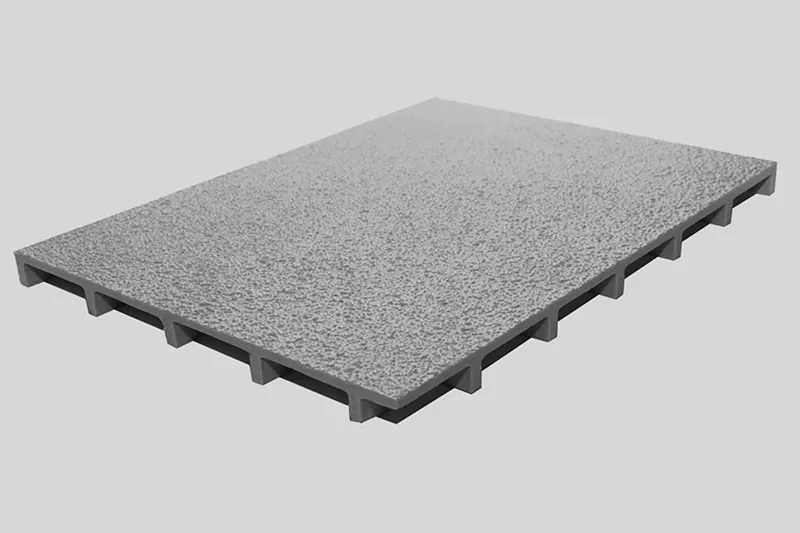
Solid Cover
Completely sealed top surface that prevents liquids, debris, and small objects from falling through. Used for tank covers and trench covers.
3. Check Safety and Loads
These are the numbers an engineer or inspector will verify first. Keep them on one page of your spec.
Load Class
Classification of grating load capacity: Light (pedestrian), Medium (walkway), Heavy (industrial platform), Extra Heavy (vehicle traffic).
Deflection Limit
Maximum allowable bending of grating under load. Typically L/200 for pedestrian areas, L/300 for precision equipment. L = span length.
Slip Resistance (R-Value)
DIN 51130 rating for floor slip resistance: R8 (low) to R13 (maximum). Grit surface typically R13, concave surface R9-R10.
Flame Spread Index (FSI)
Scale 0-200 measuring how fast flame spreads across a material surface. 0 = non-combustible, 200 = red oak reference. Class A = 0-25.
ASTM E-84
Standard test method for surface burning characteristics of building materials. Measures Flame Spread Index (FSI) and Smoke Developed Index (SDI).
Non-Conductive
Property of FRP that does not conduct electricity. Important safety feature for electrical substations and power plants.
Magnetic Transparency
FRP does not interfere with magnetic fields. Used in MRI rooms and areas with sensitive electronic equipment.
Thermal Conductivity
FRP has low thermal conductivity (0.3-0.5 W/m·K), providing natural insulation. Much lower than steel (50 W/m·K).
Weight-to-Strength Ratio
FRP has excellent strength-to-weight ratio. 75% lighter than steel with comparable strength. Reduces structural load and installation cost.
4. Specify the Hardware
Fixings are a small line item with a big safety role. Stainless grade and clip type must match the environment.
Bearing Bar
The main load-carrying bar in pultruded grating, oriented perpendicular to supports. Available in I-bar, T-bar, and rectangular shapes.
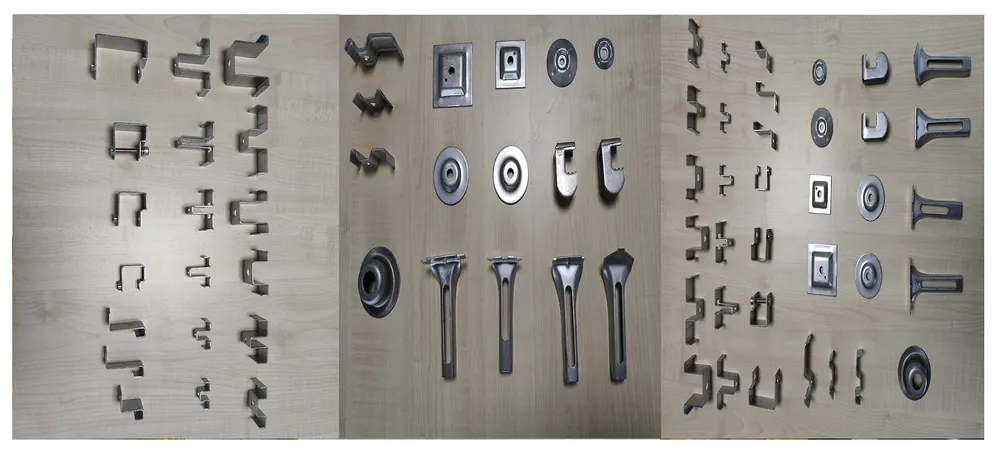
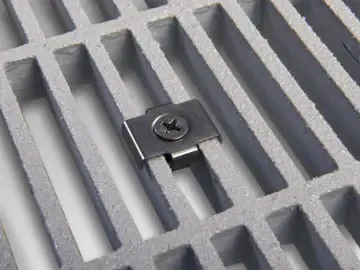
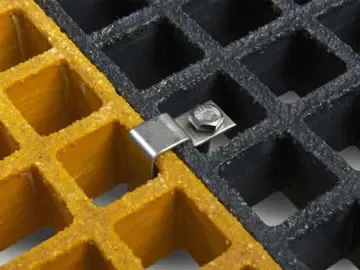
M-Clip
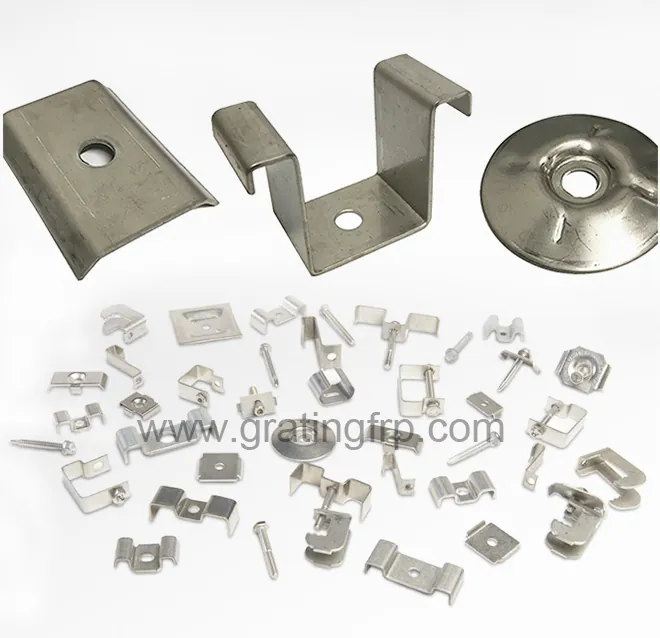
Standard grating fastener shaped like letter M. Used to secure grating panels to support structure. Most common clip type.
C-Clip
Edge mounting grating fastener shaped like letter C. Used at panel edges and perimeter locations.
Z-Clip
Heavy-duty grating fastener shaped like letter Z. Used for high traffic, vibration, and heavy load areas.
SS316 Stainless Steel
Marine-grade stainless steel with molybdenum addition for superior chloride corrosion resistance. Used for grating clips in coastal and offshore environments.
Handrail System
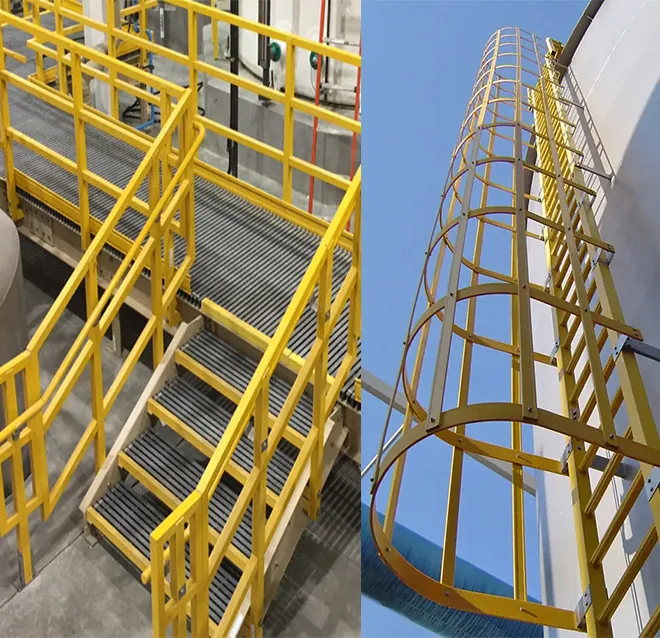
Safety barrier system made of FRP pultruded profiles. Includes posts, rails, and fittings. Corrosion-resistant alternative to steel handrails.
Pultruded Profile
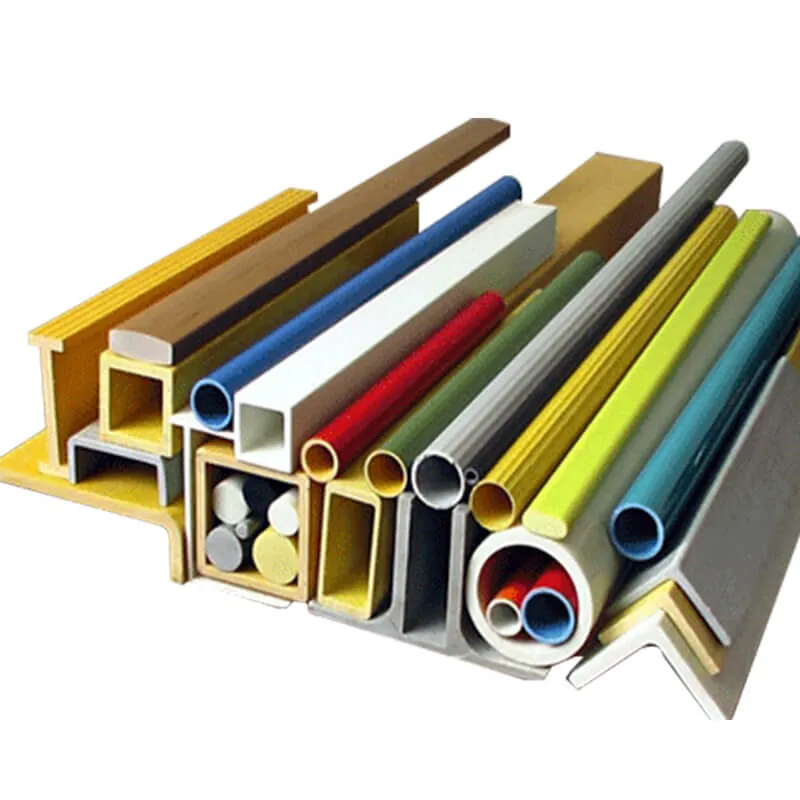
Continuous FRP shapes made by pultrusion process. Includes I-beams, channels, angles, tubes, and rods. Used for structural support.
5. Plan for Corrosion
Corrosion resistance is why buyers leave steel behind. These three terms frame the conversation with your site team.
H2S Corrosion
Corrosion caused by hydrogen sulfide gas, common in wastewater treatment and oil & gas. FRP is immune to H2S, unlike steel which corrodes rapidly.
Galvanic Corrosion
Electrochemical corrosion between dissimilar metals. FRP is non-conductive, eliminating galvanic corrosion entirely.
Lifespan / Service Life
Expected service life of FRP grating. With proper resin selection, 20+ years in corrosive environments. FRP Grating Master offers 20+ year warranty.
6. Buy with Confidence
The commercial terms are where buyers lose time with suppliers. Confirm each one in writing before you order.
MOQ (Minimum Order Quantity)
The smallest order quantity a manufacturer accepts. FRP Grating Master offers MOQ of 1 piece, meaning no minimum order requirement.
Lead Time
Time from order confirmation to shipment. FRP Grating Master standard lead time is 15-25 days, faster than leading brands (30-45 days).
OEM (Original Equipment Manufacturer)
Manufacturing products under another company's brand name. FRP Grating Master offers OEM/ODM services with custom branding and packaging.
ODM (Original Design Manufacturer)
Manufacturer that designs and produces products for another company to sell under their brand. FRP Grating Master provides full ODM support.
CAD (Computer-Aided Design)
Software for creating precise technical drawings. FRP Grating Master provides CAD drawings (DWG, DXF) for custom fabrication projects.
BOQ (Bill of Quantities)
Document listing all materials, quantities, and specifications for a project. Customers can upload BOQ for fast quotation.
EPC (Engineering, Procurement, Construction)
Type of contracting where one contractor handles all engineering, procurement, and construction. FRP Grating Master supplies FRP to EPC companies worldwide.
CE Marking
Conformity marking required for products sold in the European Economic Area. Indicates compliance with EU health, safety, and environmental standards.
ISO 9001
International standard for quality management systems. FRP Grating Master is ISO 9001:2015 certified, ensuring consistent product quality.
SGS Testing
Third-party testing and inspection by SGS, the world's leading inspection, verification, testing and certification company.
7. Put It to Work
Four application terms cover most project conversations. Match load, surface, and drainage to the site.
Walkway
A path for pedestrian walking, typically elevated. FRP grating is ideal for walkways in corrosive industrial environments.
Platform
Elevated work surface for equipment access and maintenance. FRP grating provides corrosion-resistant, lightweight platform flooring.
Stair Tread
Horizontal walking surface of a stair. FRP stair treads are corrosion-resistant, non-slip, and lightweight.
Trench Cover
Covering for drainage trenches and cable channels. FRP solid cover grating prevents debris and liquids from entering trenches.
Get Expert Guidance
Ready to specify? Send your BOQ or drawings to FRP Grating Master and get a quotation with CAD support and documented resin, mesh, and load recommendations. For the full technical reference with in-depth context, read FRP Grating Glossary: 49 Key Terms Explained.
Frequently Asked Questions
FRP (Fiberglass Reinforced Plastic) grating is a molded or pultruded fiberglass composite grid used for corrosion-resistant walkways, platforms and floorings. It combines glass fiber reinforcement with thermoset resin (polyester, vinyl ester, epoxy) for superior strength-to-weight ratio, zero rust and 20+ year service life.