Direct Answer
Correct resin selection keeps FRP grating corrosion-free for 20+ years: match resin to the actual chemical, temperature and concentration at the point of exposure.
- Best for: chemical dosing areas, storage bunds and process platforms
- Specify when: concentrated acid or solvent splash is present — upgrade to vinyl ester
- Key spec: match resin to chemical chart; verify max temp and % concentration
FRP Chemical Resistance Guide
Proper resin selection based on chemical exposure ensures 20+ year service life. This guide covers common industrial chemicals.
Chemical Resistance Chart
| Chemical | Concentration | Polyester | Isophthalic | Vinyl Ester |
|---|---|---|---|---|
| Sulfuric Acid | 10% | Fair | Good | Excellent |
| Sulfuric Acid | 50% | Poor | Fair | Good |
| Hydrochloric Acid | 20% | Fair | Good | Excellent |
| Sodium Hydroxide | 20% | Poor | Fair | Good |
| Sodium Hypochlorite | 12% | Poor | Fair | Good |
| Seawater | 100% | Good | Excellent | Excellent |
| Acetone | 100% | Poor | Poor | Fair |
| Gasoline | 100% | Fair | Good | Good |
Rating Definitions
- Excellent: No effect after 2 years immersion
- Good: Slight effect, acceptable for service
- Fair: Moderate effect, limited service life
- Poor: Not recommended
For specific chemical applications, contact ZEALL for detailed compatibility analysis and test coupons.
Frequently Asked Questions
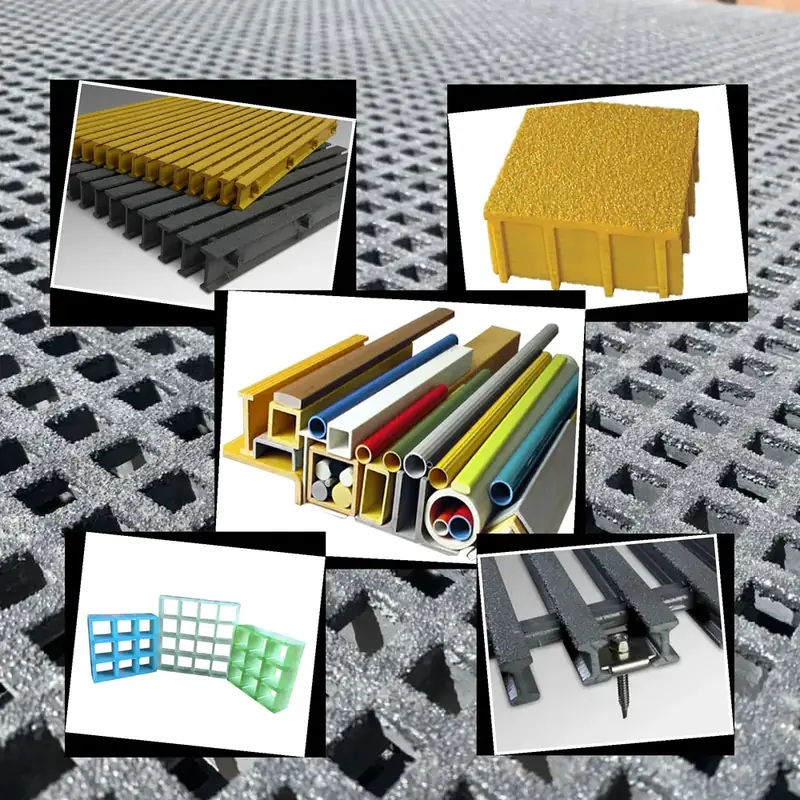
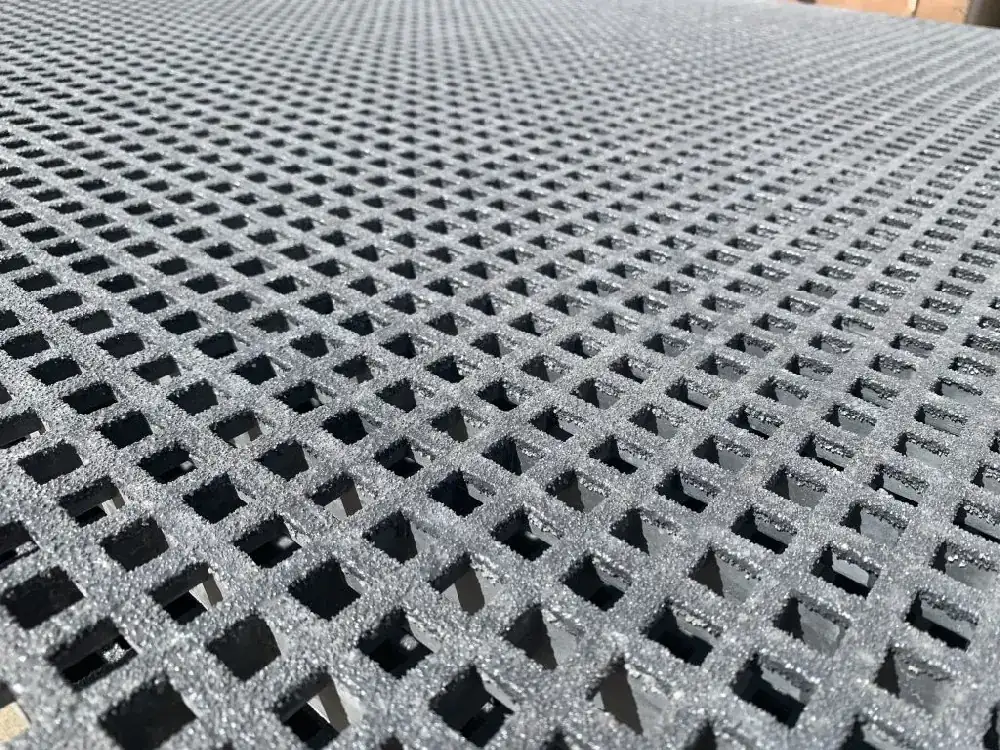
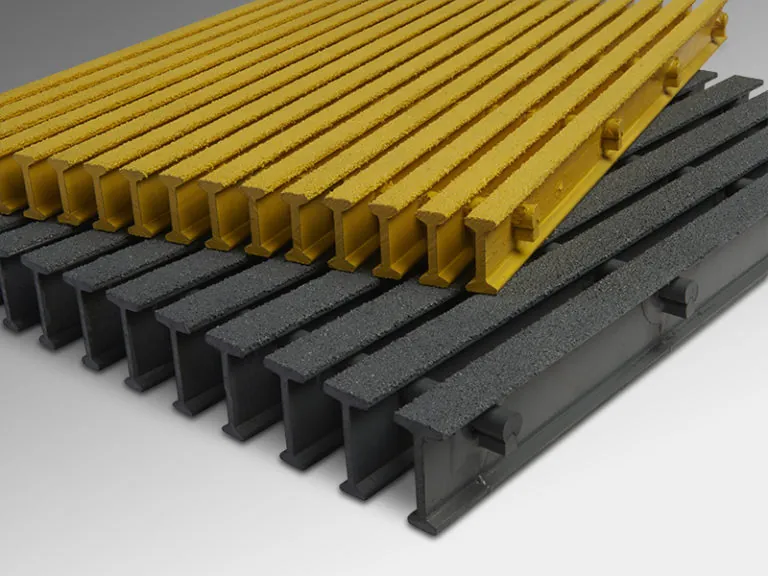
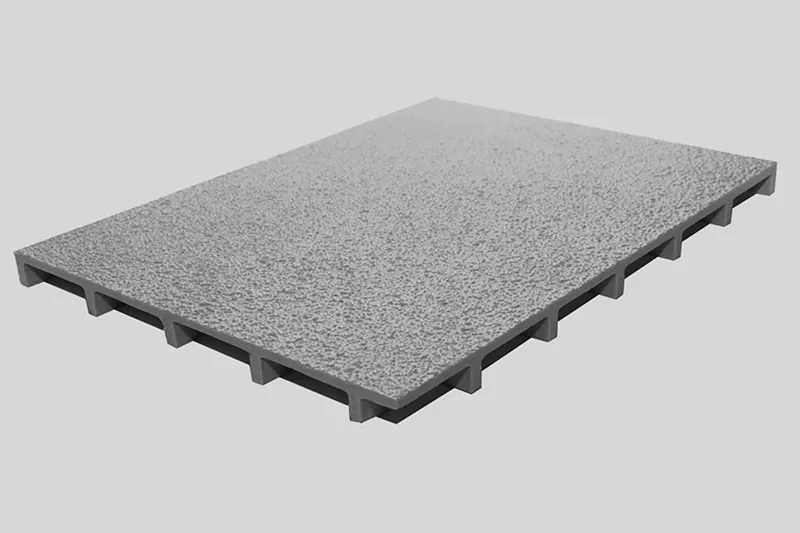
FRP (Fiberglass Reinforced Plastic) grating is a molded or pultruded fiberglass composite grid used for corrosion-resistant walkways, platforms and floorings. It combines glass fiber reinforcement with thermoset resin (polyester, vinyl ester, epoxy) for superior strength-to-weight ratio, zero rust and 20+ year service life.