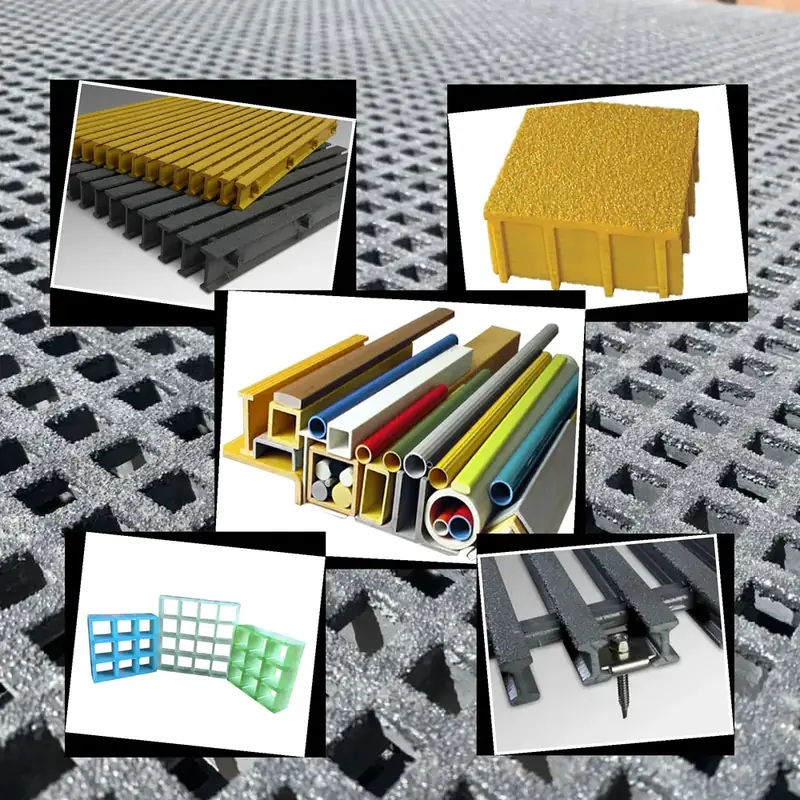
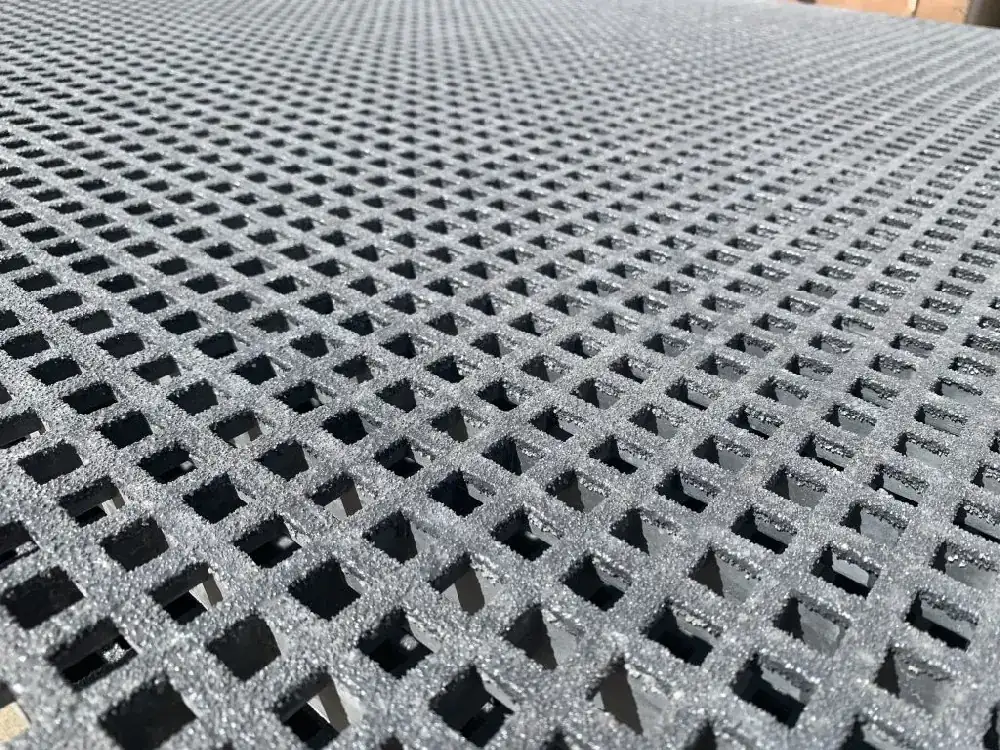
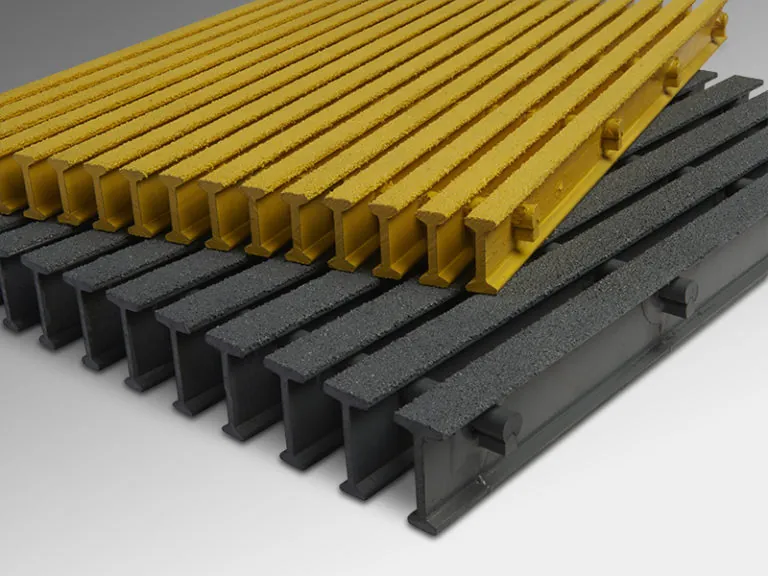
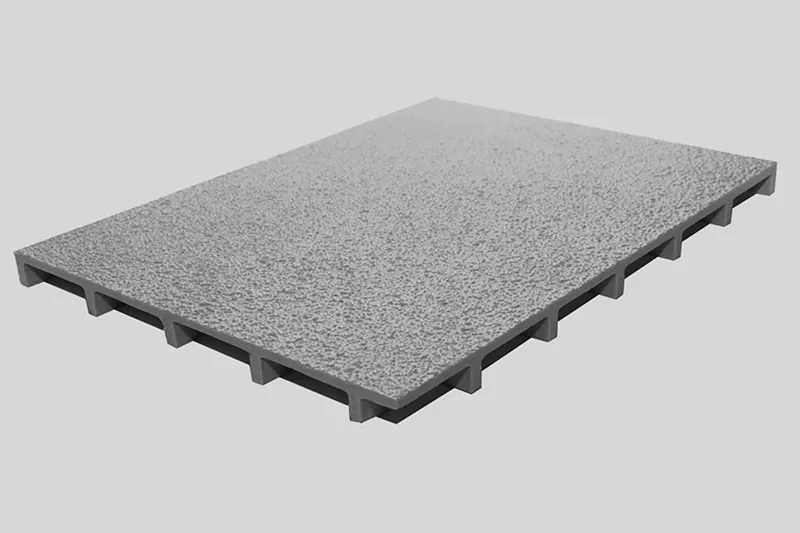
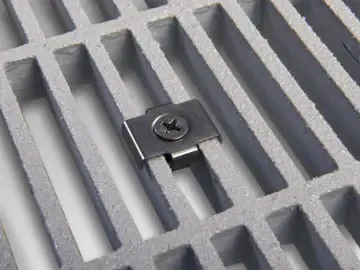
FRP grating can meet ASTM E-84 Class B or Class A flame-spread ratings by adding flame-retardant resin; this is the fire spec required in stairwells, egress and oil/gas platforms.
- Best for: egress routes, oil/gas platforms and code-mandated fire zones
- Choose Class A when: code requires lowest flame spread; Class B is the common industrial default
- Key spec: ASTM E-84 Class A/B, smoke-developed index per code
FRP Grating Fire Performance
Fire safety is critical for industrial applications. Understanding FRP fire ratings helps you specify the correct product for code-compliant installations.
ASTM E-84 Standard
ASTM E-84 (Standard Test Method for Surface Burning Characteristics of Building Materials) measures:
- Flame Spread Index (FSI): 0-200 scale (0 = non-combustible, 200 = red oak reference)
- Smoke Developed Index (SDI): 0-450 scale
Fire Rating Classes
- Class A (Class I): FSI 0-25, SDI 0-450 (Best)
- Class B (Class II): FSI 26-75, SDI 0-450
- Class C (Class III): FSI 76-200, SDI 0-450
FRP Grating Fire Ratings by Resin
- Polyester: Class C (FSI ~100-150)
- Vinyl Ester: Class B-C (FSI ~75-100)
- Phenolic: Class A (FSI <25), low smoke, zero halogen
When is Fire Rating Required?
Indoor applications, commercial buildings, offshore platforms, tunnels, and transit facilities typically require Class A or B fire ratings. Always check local building codes and project specifications.
Frequently Asked Questions
FRP (Fiberglass Reinforced Plastic) grating is a molded or pultruded fiberglass composite grid used for corrosion-resistant walkways, platforms and floorings. It combines glass fiber reinforcement with thermoset resin (polyester, vinyl ester, epoxy) for superior strength-to-weight ratio, zero rust and 20+ year service life.