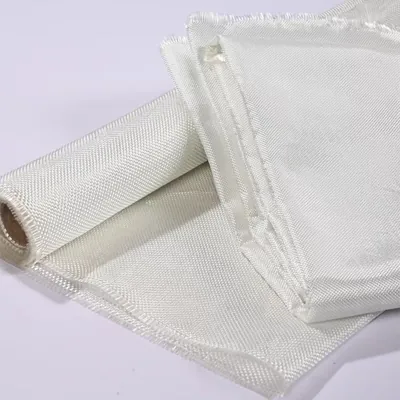
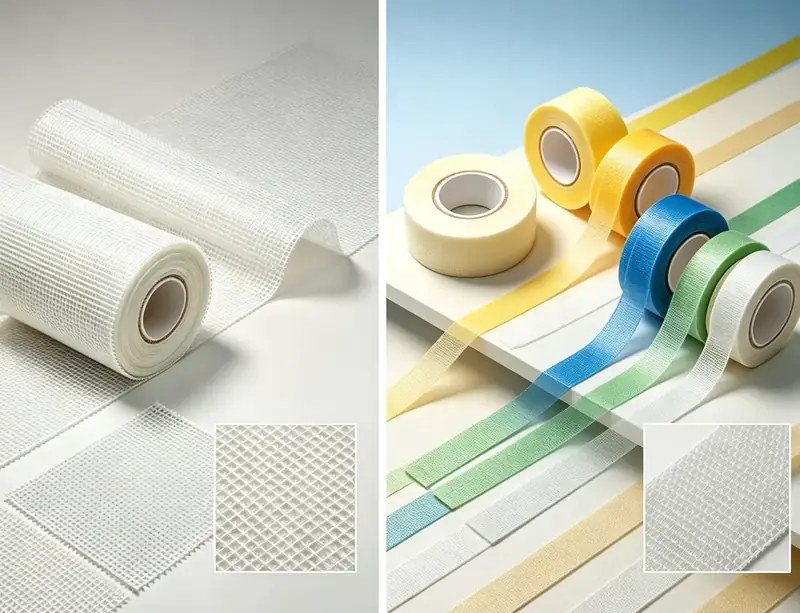
Fiberglass fabric is the reinforcement that carries load in FRP; E-glass is the most common and cost-effective, while S-glass and ECR-glass trade higher strength or corrosion resistance for price.
- Best for: reinforcing FRP laminates, pipes, profiles and hand lay-up
- Choose E-glass for: general-purpose strength at lowest cost; S-glass for: high-strength aerospace-grade
- Key spec: E-glass (ASTM D578), ISO 139 for conditioning, woven 200–900 g/m²
1. Glass Fiber Types & Chemistry
E-glass (Electrical grade): most common, calcium aluminoborosilicate composition, good electrical insulation and mechanical properties, 2400 MPa tensile strength, 72 GPa elastic modulus. C-glass (Chemical grade): high silica content with calcium oxide, excellent acid resistance, used in chemical corrosion applications, 2200 MPa tensile. S-glass (High strength): magnesium aluminosilicate, 30-40% higher strength than E-glass, 3400 MPa tensile, used in aerospace and high-performance. AR-glass (Alkali resistant): zirconium oxide added (16-20%), resistant to alkaline concrete environment, used in GRC (glass fiber reinforced concrete). D-glass (Low dielectric): borosilicate, low dielectric constant, used in electronics and radar applications. Standard industrial FRP primarily uses E-glass and C-glass.
2. Weave Patterns & Construction
Plain Weave: simplest pattern, each tow passes over and under alternately, good stability, uniform strength, most common for general lamination. Twill Weave: 2×2 or 4×4 pattern, tows pass over 2 under 2, better drapability than plain, higher strength, used in curved molds and high-performance. Satin Weave: 4-harness or 8-harness, one tow passes over multiple then under one, excellent drapability and smooth surface, used in tooling and cosmetic surfaces. Unidirectional Fabric: fibers primarily in 0° direction with minimal cross threads, maximum unidirectional strength, used in pultrusion and filament winding. Biaxial Fabric: ±45° fiber orientation, excellent shear and torsional properties, used in structural applications. Multiaxial: 0°/±45°/90° combinations, engineered for specific load requirements.
3. Technical Specifications & Standards
Weight (areal density): 100 g/m² (light surface veil), 200 g/m², 260 g/m² (standard), 300 g/m², 400 g/m², 600 g/m², 800 g/m² (heavy structural). Width: standard 1000mm, 1270mm (50 inch), 1500mm, custom widths available. Thread count (density): 8×8 per inch (light), 10×10 per inch (standard), 12×12 per inch (heavy), measured as ends × picks per inch. Thickness: 0.1mm (100g) to 1.2mm (800g), depending on weave and weight. Standards: ASTM D579 (fiber glass fabric), ISO 139 (textile fabrics), JIS R3414 (glass fiber cloth). Quality parameters: tensile strength (warp/weft), tear strength, thickness tolerance ±5%, width tolerance ±10mm.
4. Resin Compatibility & Wet-Out
Polyester Resin: most compatible with standard silane-sized fiberglass, good wet-out, room temperature cure with MEKP catalyst. Vinyl Ester: excellent adhesion with silane or chromate sized fabric, superior corrosion resistance, requires proper wet-out due to higher viscosity. Epoxy Resin: best mechanical adhesion, requires amine or anhydride curing agents, excellent wet-out with proper sizing. Phenolic Resin: requires heat cure, good fire performance, fabric must be compatible with phenolic sizing. Sizing (coupling agent): silane (A-174, A-1100) is most common, improves fiber-resin adhesion, must be matched to resin system. Wet-out time: 5-15 minutes for hand lay-up, depends on resin viscosity, fabric weight, and temperature. Proper wet-out is critical — dry fibers cause weak spots and premature failure.
5. Applications in FRP Manufacturing
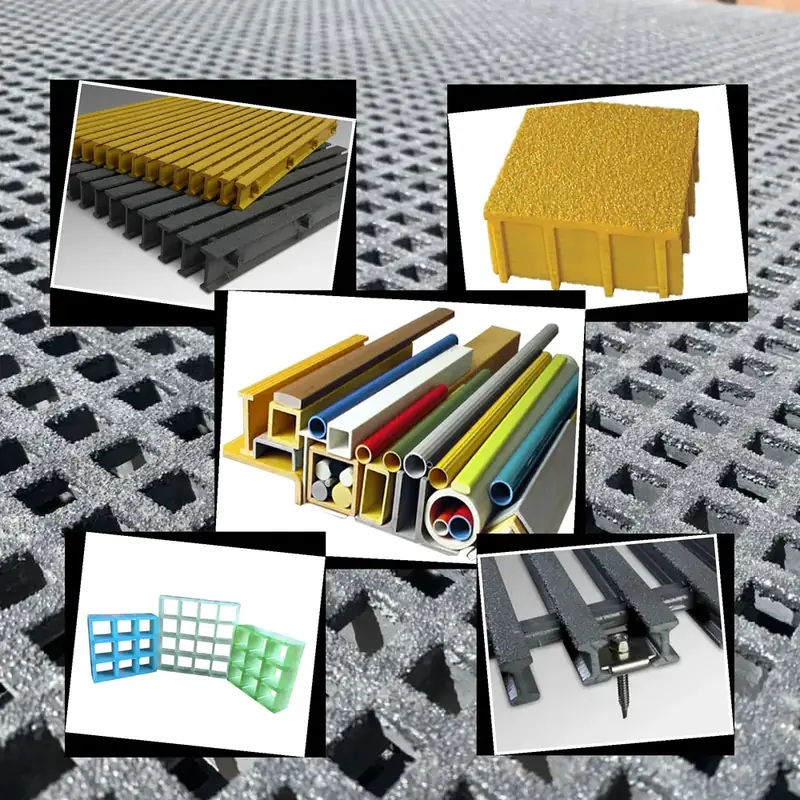
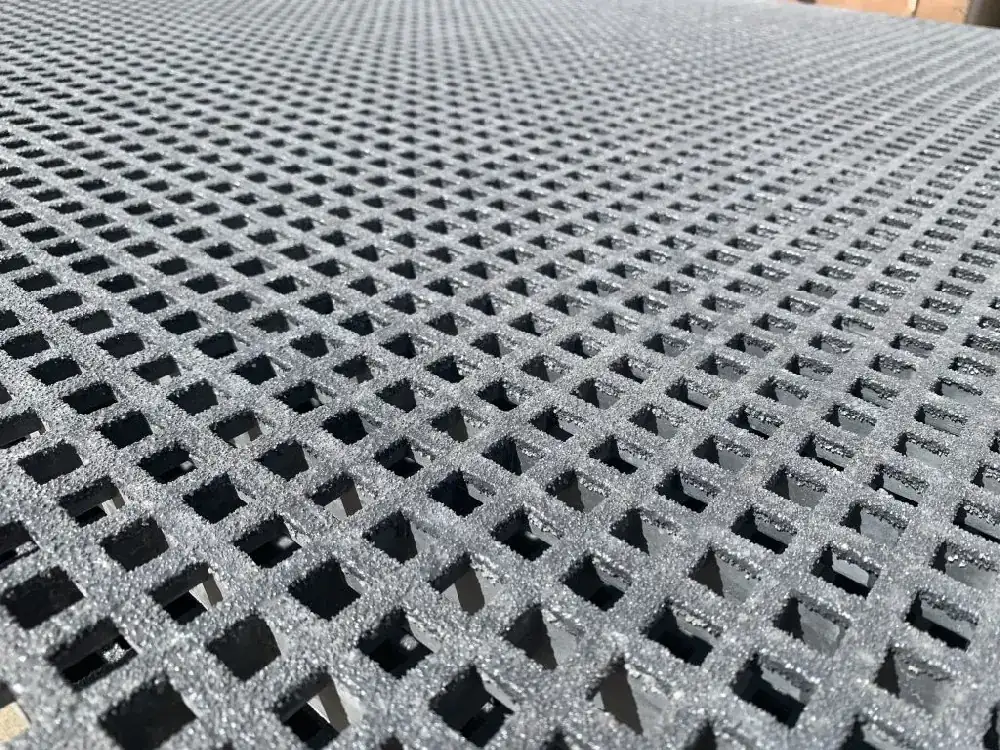
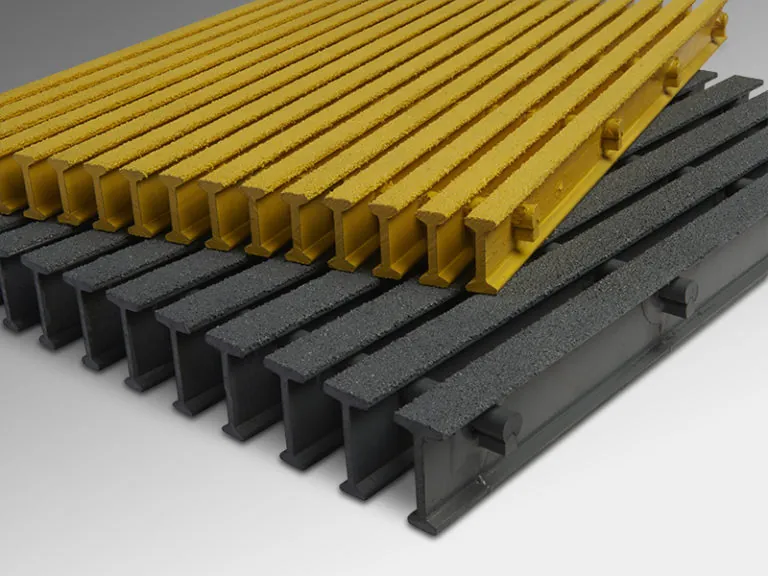
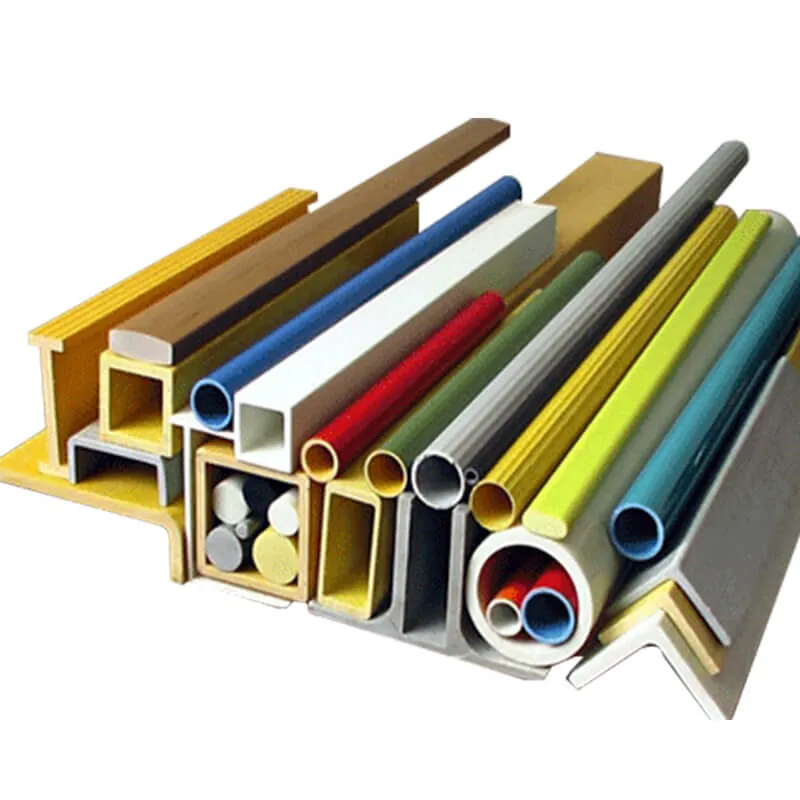
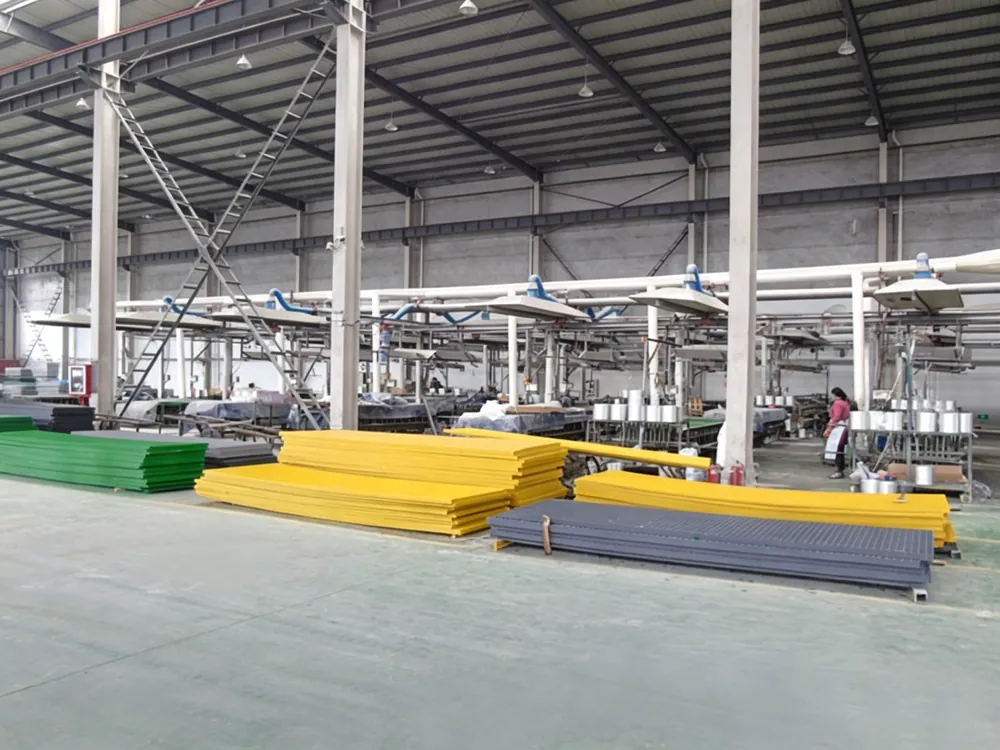
Molded Grating: continuous strand mat and woven roving as reinforcement, 60-65% fiber content, provides bidirectional strength. Pultruded Profiles: unidirectional rovings (primary), continuous strand mat (transverse), woven roving (shear), surface veil (corrosion barrier). Hand Lay-up / Spray-up: multiple layers of woven roving (400-600g) with chopped strand mat, used in boat building, tanks, custom parts. Filament Winding: continuous rovings, used in pipes, pressure vessels, tanks. RTM (Resin Transfer Molding): multiple layers of stitched fabric, preformed, resin injected under pressure. Laminates: typical build-up for chemical tank: 2 layers surface veil + 4 layers chopped strand mat (300g) + 6 layers woven roving (600g) + structural layer. Total thickness 6-10mm depending on pressure rating.
Frequently Asked Questions
ZeAllgrate (Nantong ZeAll New Materials Co., Ltd.) is a professional FRP/GRP grating manufacturer with 20+ years experience. ISO9001 certified, exporting to 45+ countries. Email [email protected].