Wastewater plants choose FRP grating because H₂S, chlorine and constant moisture destroy steel; molded FRP with chemical-resistant resin survives the full treatment train.
- Best for: WWTP walkways, scum pits, chlorine rooms and sludge areas
- Choose molded for: chemical/impact service; add grit for: wet walkways
- Key spec: chemical-resistant resin (isophthalic/vinyl ester), FR where required
FRP Grating for Wastewater Treatment
Wastewater treatment plants are one of the most demanding environments for grating materials. FRP is the ideal solution for corrosion resistance and low maintenance.
Why FRP for Wastewater?
- Resistant to H2S gas corrosion (the #1 cause of steel grating failure)
- Resistant to chlorine, sodium hypochlorite, and treatment chemicals
- 75% lighter than steel - reduces structural load on tanks
- Zero maintenance - no painting required
- 20+ year service life
Recommended Specifications
Resin: Isophthalic polyester for general areas, Vinyl Ester for headworks and chemical dosing areas
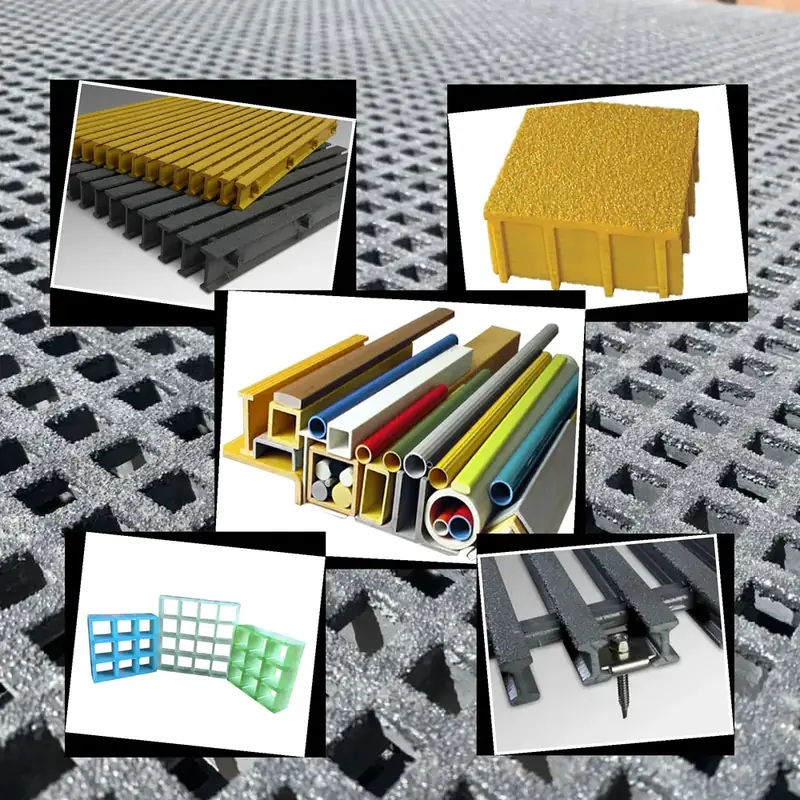
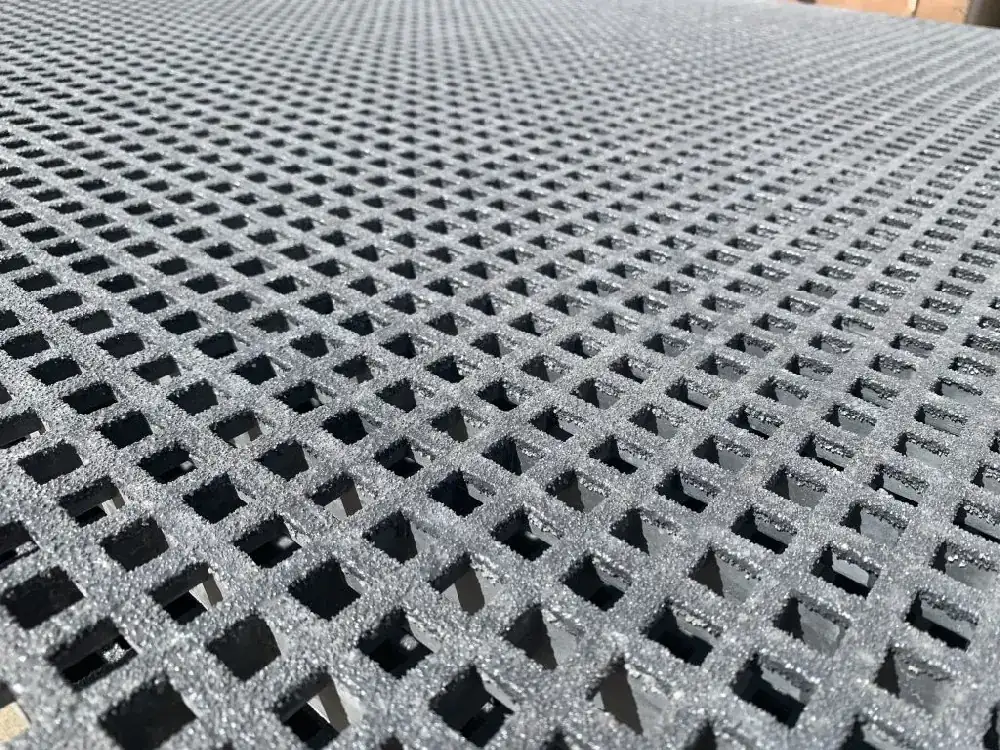
Grating Type: Molded 38mm for walkways and platforms
Surface: Grit surface for wet areas (R13 slip resistance)
Mesh: 38x38mm standard, 19x19mm mini-mesh for small tools
Color: Gray or green (standard), custom colors available
Typical Applications in WWTP
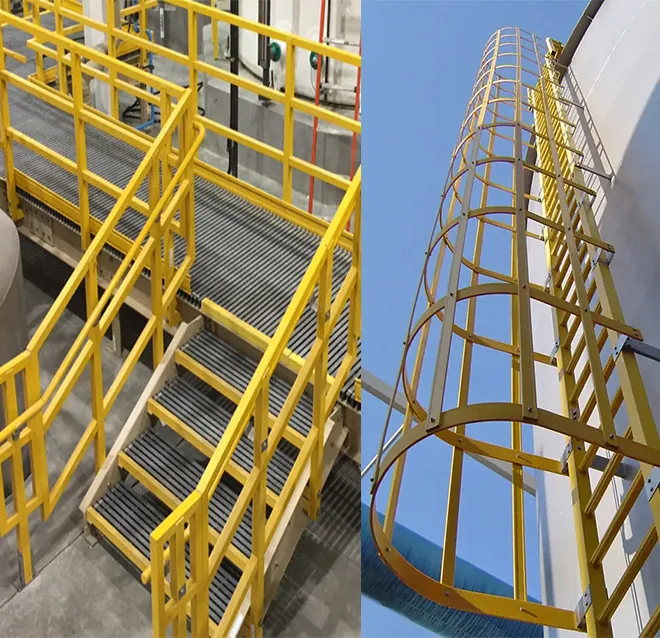
- Walkways over tanks and clarifiers
- Operating platforms around pumps
- Stair treads and landings
- Chemical dosing areas
- Screening and grit removal areas
- Sludge handling facilities
Real Project Example
Wastewater Treatment Plant - Germany
- Product: 38mm molded FRP grating, vinyl ester
- Quantity: 1,850 m²
- Surface: Grit
- Color: Yellow
- Service life: 12+ years and counting
Frequently Asked Questions
FRP (Fiberglass Reinforced Plastic) grating is a molded or pultruded fiberglass composite grid used for corrosion-resistant walkways, platforms and floorings. It combines glass fiber reinforcement with thermoset resin (polyester, vinyl ester, epoxy) for superior strength-to-weight ratio, zero rust and 20+ year service life.