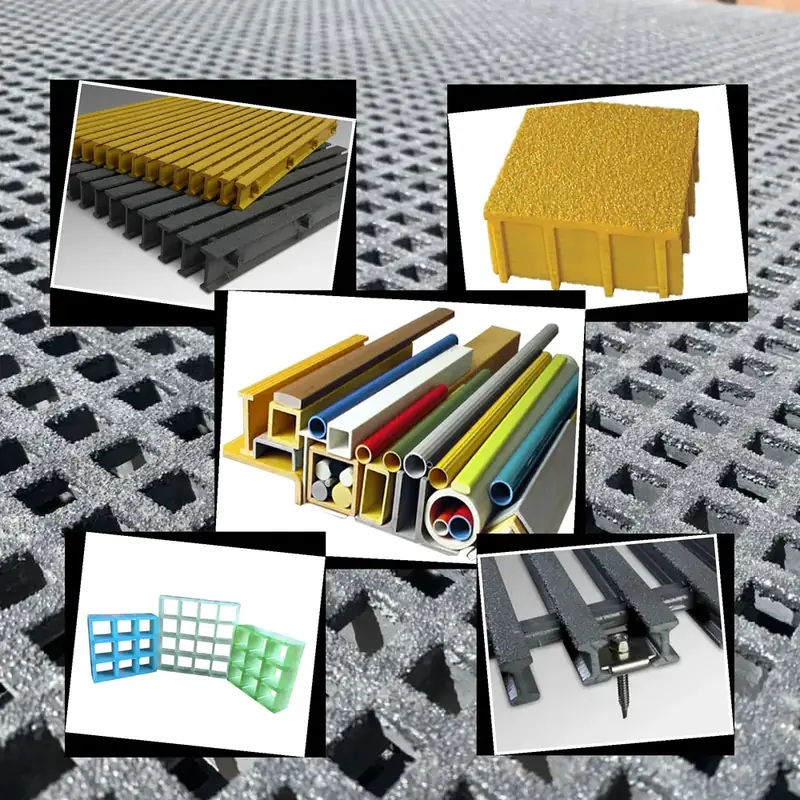
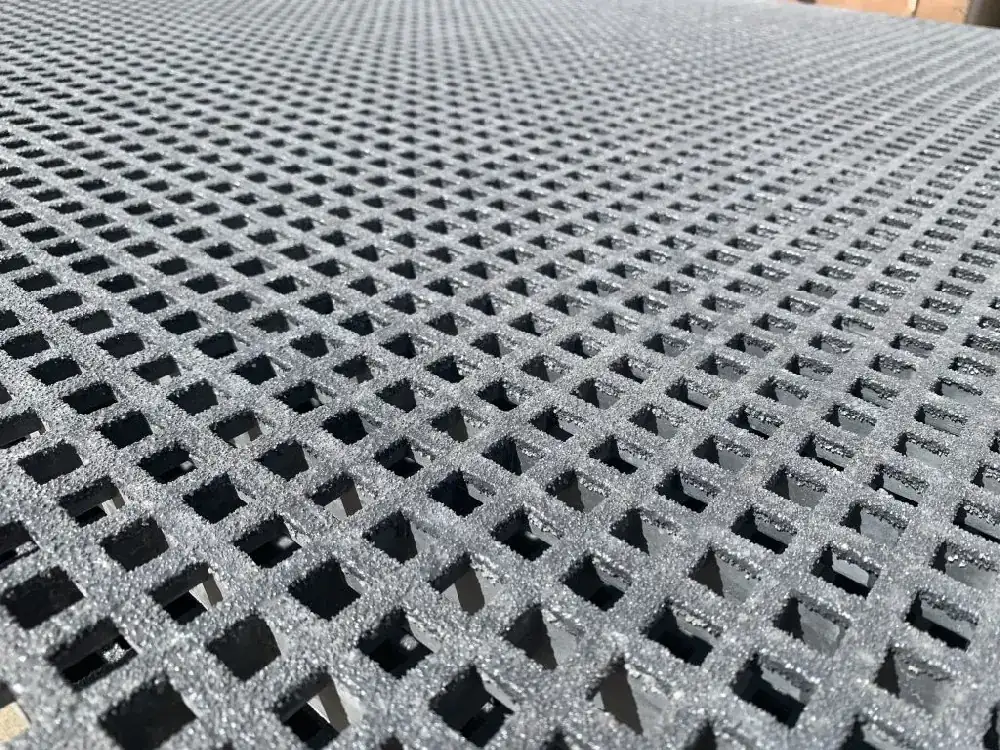
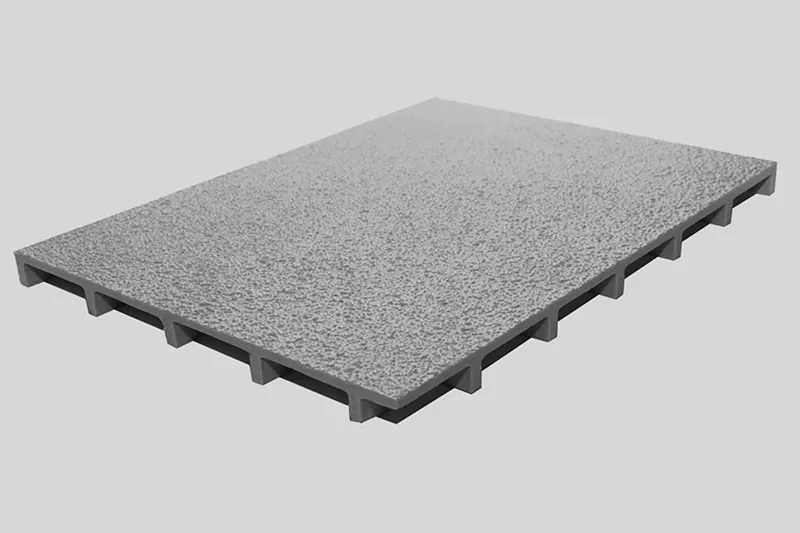
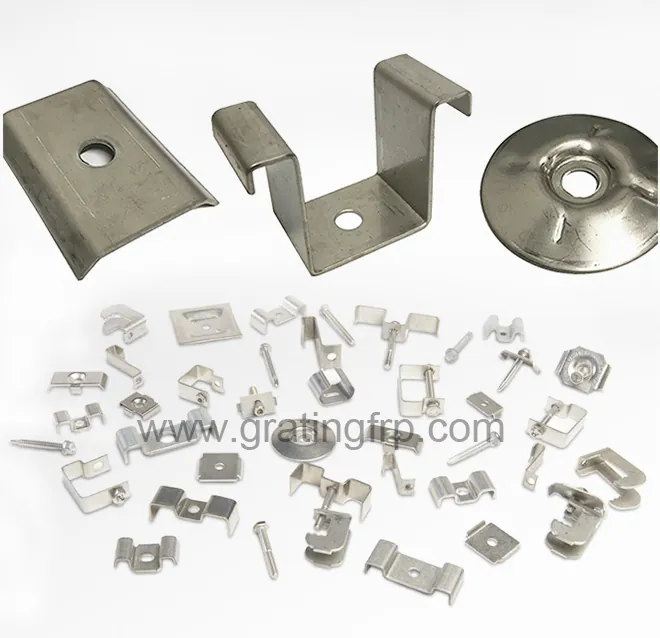
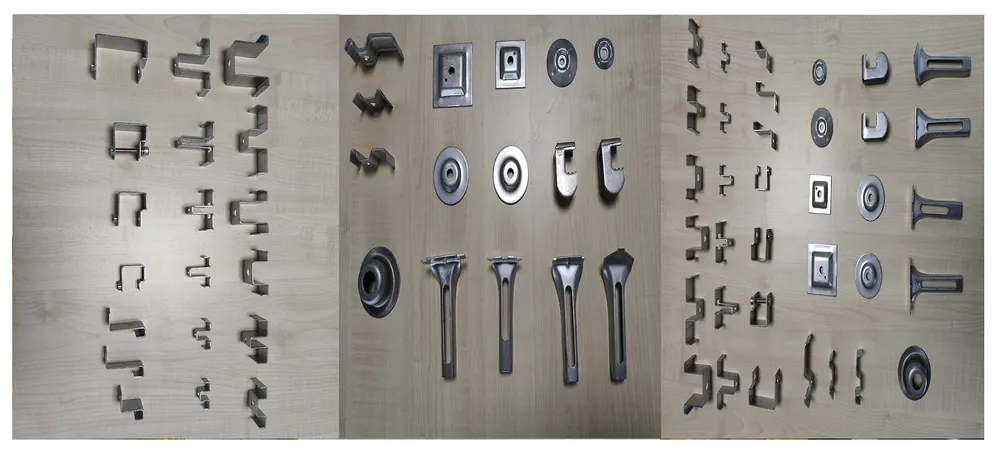
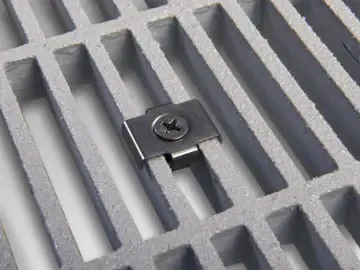
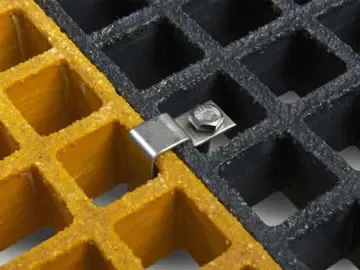
FRP grating clips (M, C, L, Z types) are the only metal on an FRP deck, so choose the right clip to stop lift under vibration while avoiding corrosion — stainless or FRP clips beat carbon steel.
- Best for: securing panels to steel or FRP support members
- Choose M/L for: general fixing; Z for: thicker bars; use stainless in coastal/chemical areas
- Key spec: A2/A4 stainless or FRP clips, spacing per load and panel
1. Why Grating Clips Matter
FRP grating clips are the only metal components in an FRP grating system, and they are critical for safety. Poor clip selection or installation can cause panels to shift, creating trip hazards or structural failure. The right clip secures the grating to support beams while allowing thermal expansion and contraction. ZEALL supplies matching clips with every grating order — always specify clip material based on your environmental conditions.
2. M-Clip (Top Mount) — Most Common
The M-clip (also called saddle clip) mounts over the top of the grating bearing bar and hooks under the support beam flange. It is the most versatile and widely used clip. Installation: place clip over bearing bar at support, insert M8 or M10 bolt from top, tighten nut from below. Use 4 clips per standard panel (one at each corner), 6-8 for heavy traffic or vibration zones. M-clips work with both molded and pultruded grating on steel I-beam, angle, or channel supports.
3. C-Clip (Side Mount) — Limited Access
The C-clip slides onto the side of the grating bar and clamps to the support beam flange from the side. Choose C-clip when you cannot access the top of the grating (e.g., retrofit projects, covered grating, or grating already in service). C-clips are slightly slower to install but require no access from above. Ideal for maintenance access panels that need frequent removal.
4. L-Clip (Edge Mount) — Perimeter Fixing
The L-clip is an angle-shaped clip that secures the edge of the grating to the support structure. Use L-clips at panel edges, corners, and transitions where M/C clips cannot be used. L-clips are essential for preventing lateral movement and maintaining panel alignment. Always use L-clips at stair tread edges and ramp transitions.
5. Z-Clip — Pultruded Grating Specific
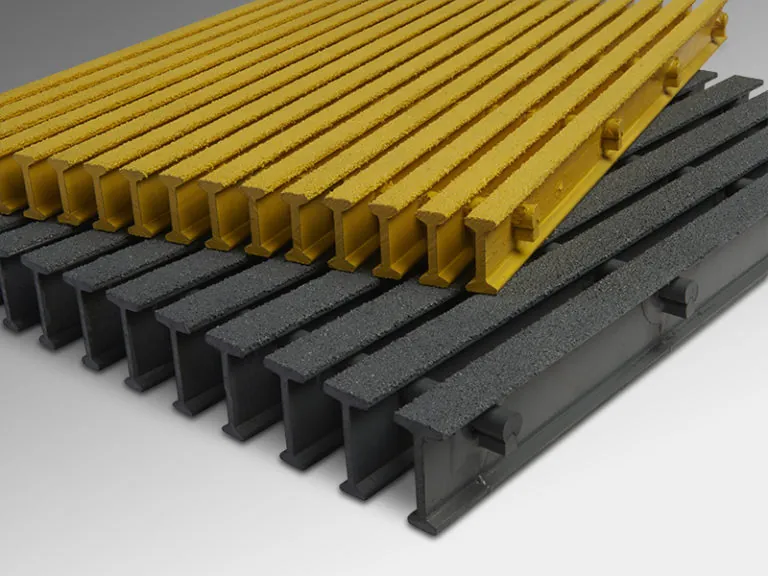
The Z-clip is designed specifically for pultruded grating with I-bar profiles. It has a Z-shaped profile that grips the bottom flange of the I-bar bearing bar. Use Z-clips for pultruded grating on wide-span structures where maximum clip engagement is required. Z-clips provide superior holding power against uplift (wind loads) and vibration.
6. Material Selection: SS304 vs SS316 vs HDG
HDG (Hot-Dip Galvanized) steel: Indoor, dry, non-corrosive environments. Most economical. Will rust in coastal/chemical exposure. SS304 stainless steel: Outdoor, standard industrial, mild chemical exposure. General purpose, good corrosion resistance. SS316 stainless steel: Coastal/marine, chemical plants, wastewater, food/pharma. Molybdenum content provides superior chloride and acid resistance. Rule: if steel supports in your environment need painting, use SS316 clips. ZEALL recommends SS316 for any outdoor or corrosive application as standard.
7. Installation Torque & Spacing
Torque: M8 bolt — 15 Nm. M10 bolt — 20 Nm. Do not over-tighten — over-torque cracks the FRP bearing bar. Spacing: Maximum 600mm between clips along bearing bars at supports. For vibration areas (heavy machinery, conveyor loading), reduce to 300mm. Minimum 4 clips per 1220×3660mm panel. Check all clips after 30 days and re-torque as needed. Always use anti-seize compound on SS316 threads in corrosive environments to prevent galling.
8. Ordering Grating Clips from ZEALL
ZEALL supplies matching FRP grating clips in all types (M/C/L/Z) and materials (HDG/SS304/SS316). Clips are priced per 100 pieces and shipped with grating orders. For custom clip configurations or non-standard support profiles, send us a drawing for engineering review. All clips come with matching bolts, nuts, and washers.
Frequently Asked Questions
FRP (Fiberglass Reinforced Plastic) grating is a molded or pultruded fiberglass composite grid used for corrosion-resistant walkways, platforms and floorings. It combines glass fiber reinforcement with thermoset resin (polyester, vinyl ester, epoxy) for superior strength-to-weight ratio, zero rust and 20+ year service life.