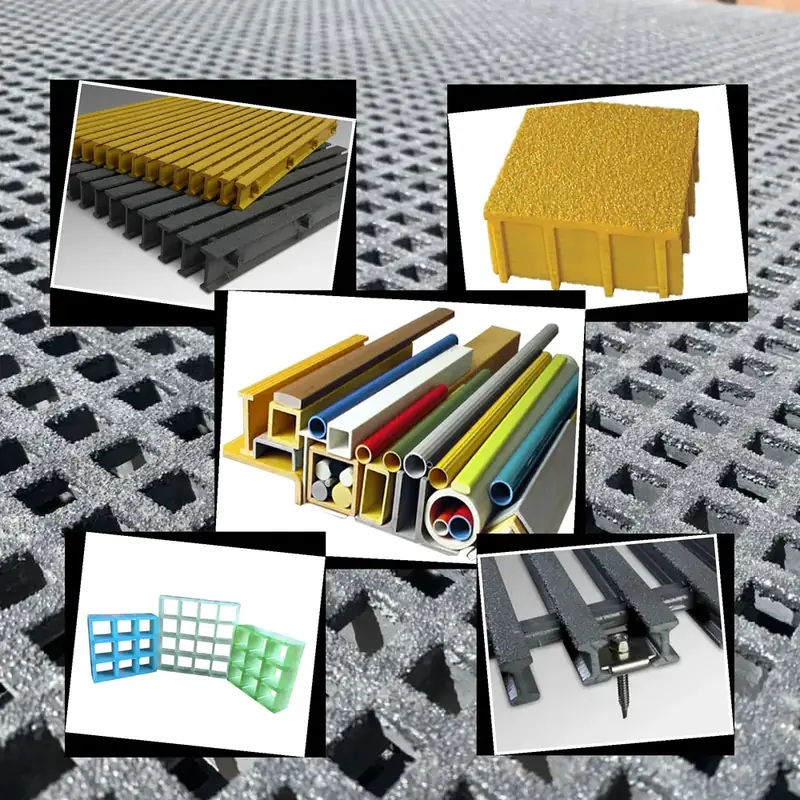
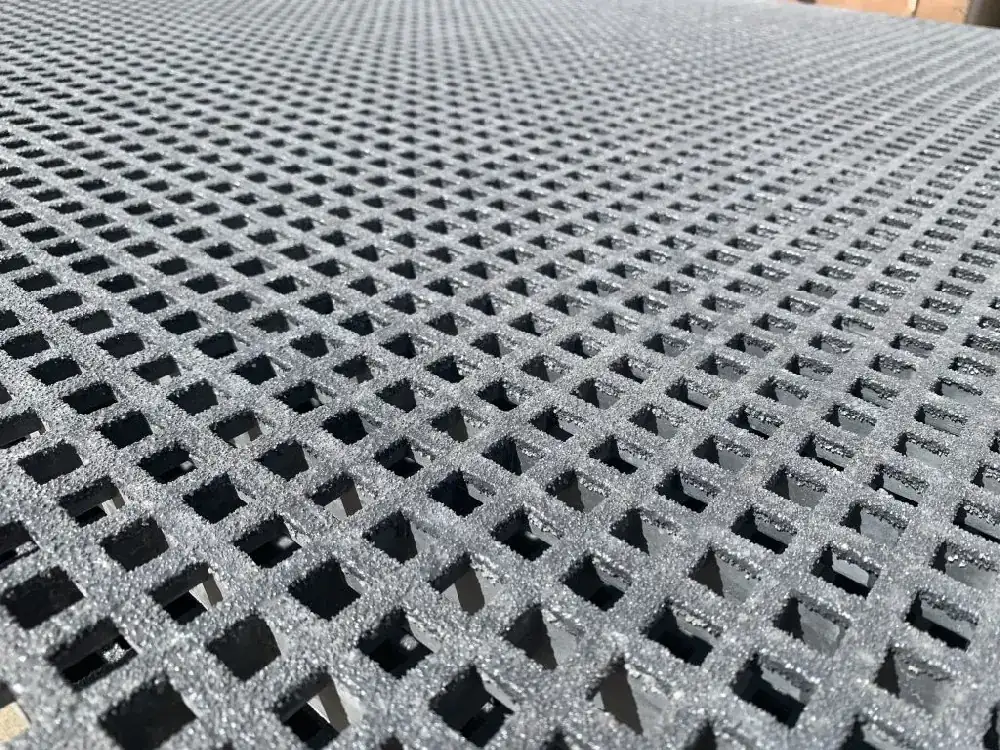
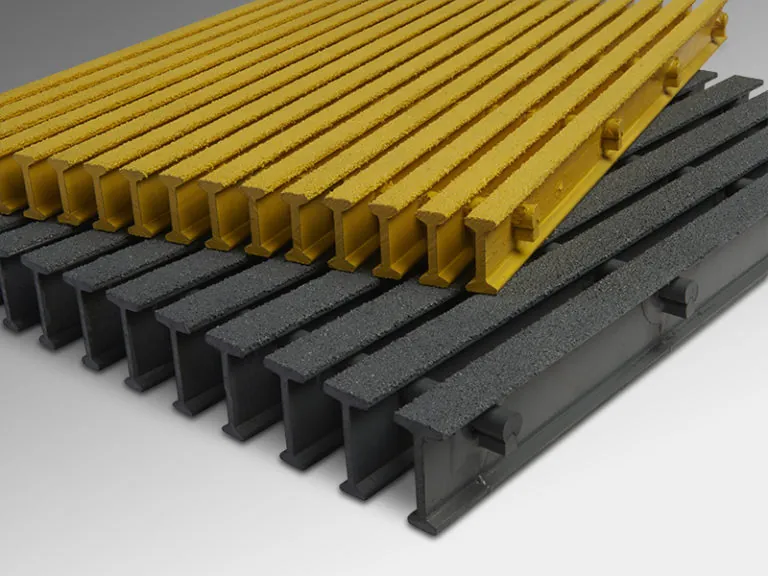
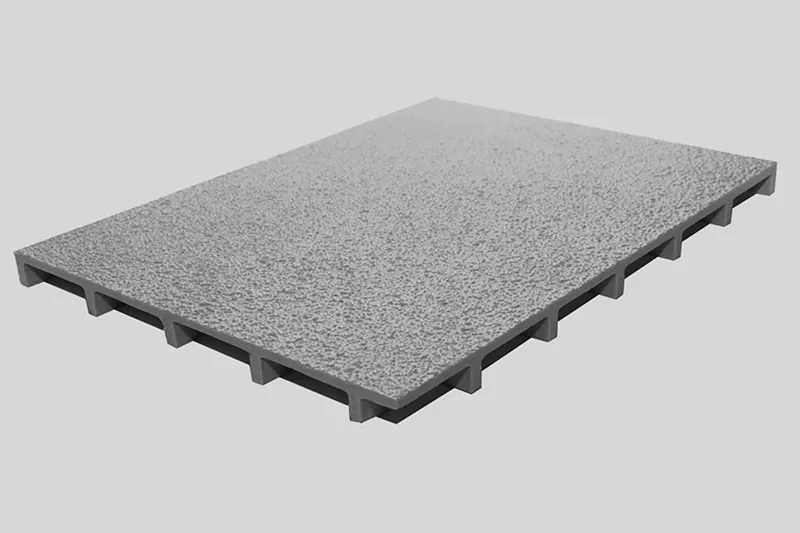
Offshore and marine FRP grating is standard because it is saltwater-proof, fire-retardant and lightweight — pultruded FR with UV resin is the workhorse for decks and helidecks.
- Best for: offshore platforms, ships and coastal structures
- Choose pultruded for: long spans; FR for: fire-zones; UV resin for: sunlight
- Key spec: FR class, UV-stabilized, salt-spray resistant
1. Why FRP is the Standard for Offshore & Marine
Offshore platforms, ships, and coastal facilities face the most aggressive combination of corrosion factors: saltwater (3.5% NaCl), constant humidity, UV radiation, wind-blown sand, and in some cases fire risk. Steel grating, even galvanized, typically fails in 3-7 years in marine environments due to chloride-induced corrosion. Stainless steel (SS316) performs better but can still suffer pitting and crevice corrosion in warm seawater, and is 2-3x heavier. FRP vinyl ester grating is immune to saltwater corrosion, UV-stabilized for 20+ year outdoor life, 75% lighter than steel, and available in fire-retardant grades meeting SOLAS/IMO requirements. Major offshore operators have standardized FRP grating for living quarters, helidecks, and process areas.
2. Marine Corrosion Mechanisms & FRP Resistance
Saltwater Immersion: FRP vinyl ester is completely immune to saltwater corrosion — no rust, no degradation, no loss of strength. Splash Zone: Most aggressive area due to wet/dry cycles and oxygen — FRP handles this perfectly, unlike steel which corrodes 5-10x faster in splash zone. Atmospheric Salt: Wind-blown salt deposits on all surfaces — FRP requires only periodic washing, steel requires constant painting. UV Radiation: UV-stabilized vinyl ester with surface veil provides 20+ year UV resistance; non-stabilized polyester will chalk and degrade in 5-10 years. Temperature: Marine environments range from -20C (Arctic) to 50C (tropical); FRP maintains properties across this range. Biological Fouling: Marine growth (barnacles, algae) can attach to FRP, but is easily removed with pressure washing; unlike steel, fouling does not cause corrosion.
3. Fire Safety Regulations for Offshore
SOLAS (Safety of Life at Sea): International Convention for the Safety of Life at Sea, requires fire-retardant materials in marine applications. IMO FTP Code: International Maritime Organization Fire Test Procedures, requires materials to meet specific fire performance criteria. DNV (Det Norske Veritas): Classification society, provides certification for FRP materials used offshore. ABS (American Bureau of Shipping): Classification society, similar to DNV. Fire-Retardant FRP Options: Brominated Vinyl Ester — self-extinguishing, moderate smoke, meets most offshore requirements. Phenolic Resin — best fire performance (V-0 UL 94, low smoke, low toxicity), required for offshore living quarters and tunnel applications.
4. Offshore Application Areas & Product Specifications
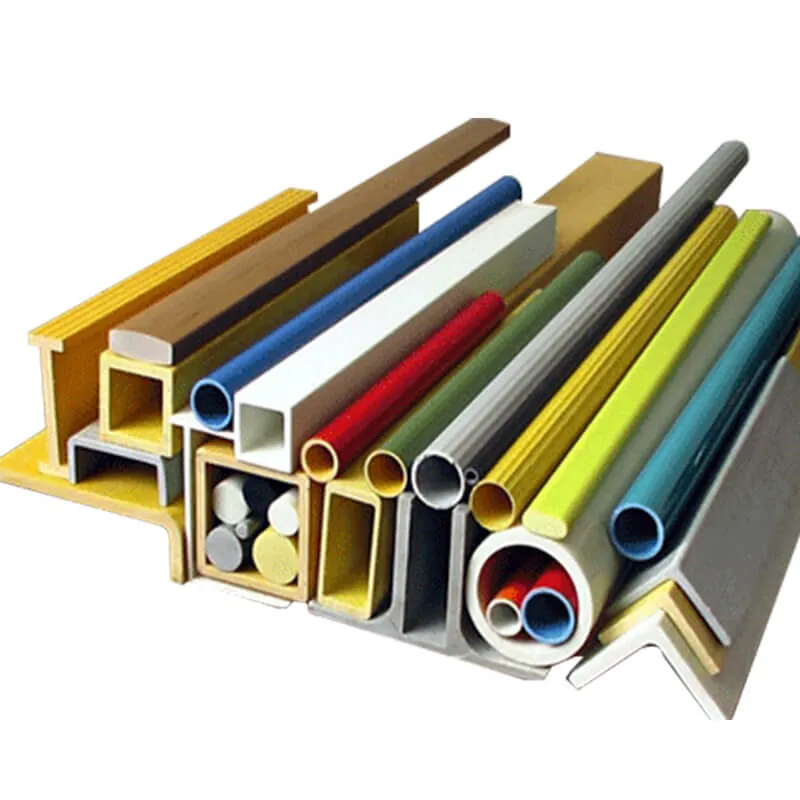
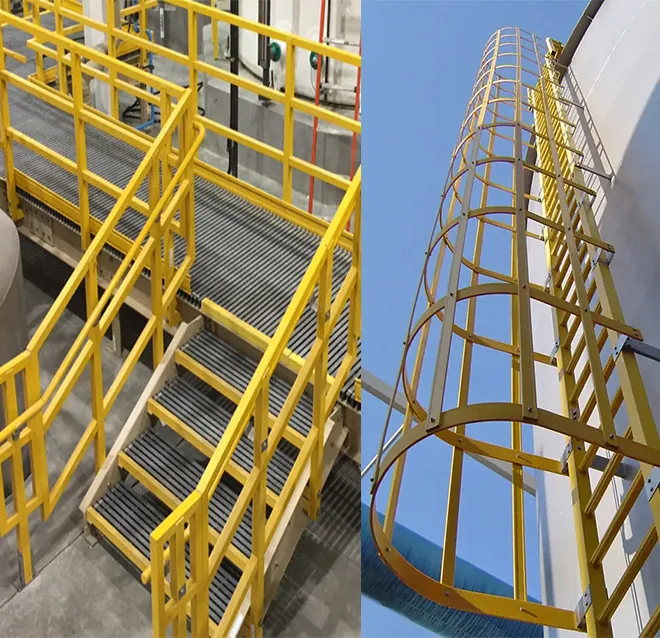
Helideck Perimeter Walkways: 38mm molded grating, fire-retardant vinyl ester or phenolic, yellow color, high visibility. Living Quarter Decks: 38mm molded, phenolic resin (low smoke, low toxicity), smooth or grit surface. Process Area Platforms: 38mm or 50mm molded, vinyl ester, grit surface, SS316 clips. Pump Room Access: 38mm molded, vinyl ester, mini mesh for tool safety. Cable Tray Supports: FRP pultruded profiles (I-beam, channel), non-conductive, corrosion-proof. Stair Towers: 38mm stair treads, FRP handrail, fire-retardant resin, IMO compliant. Dock & Quay Walkways: 38mm molded, vinyl ester, UV-stabilized, constant saltwater exposure. Ship Deck Grating: 38mm molded, fire-retardant, lightweight (reduces ship weight, improves fuel efficiency).
5. Case Study: Offshore Platform — Norway (North Sea)
Project: North Sea oil platform walkway upgrade during scheduled maintenance shutdown. Problem: Existing steel grating corroded severely after 6 years in North Sea saltwater environment, creating safety hazards. Solution: 320 m² of 50mm pultruded FRP grating, fire-retardant vinyl ester resin, all SS316 stainless steel clips and fasteners, custom sizes to fit existing support structure. Key Challenge: Helicopter transport to platform — FRP light weight (1/4 of steel) was critical for airlift. Results: Delivered in 18 days (faster than 30-45 day steel lead time), installed in 5 days during shutdown, DNV approved, zero corrosion after 5 years. Platform engineers report FRP is the only material that survives the North Sea.
6. Case Study: Desalination Plant — UAE
Project: Large-scale seawater reverse osmosis (SWRO) desalination plant in UAE. Problem: High salinity (45,000 ppm TDS), 50C ambient temperatures, constant UV exposure destroyed steel grating in 4 years. Solution: 1,200 m² of 38mm molded FRP grating, vinyl ester resin, UV-stabilized, plus 800 linear meters of FRP handrail system. Results: Operating since 2021, no corrosion, no fading, no maintenance required despite extreme heat and UV. Plant has standardized FRP for all future expansion projects.
7. Installation & Maintenance Tips for Marine Applications
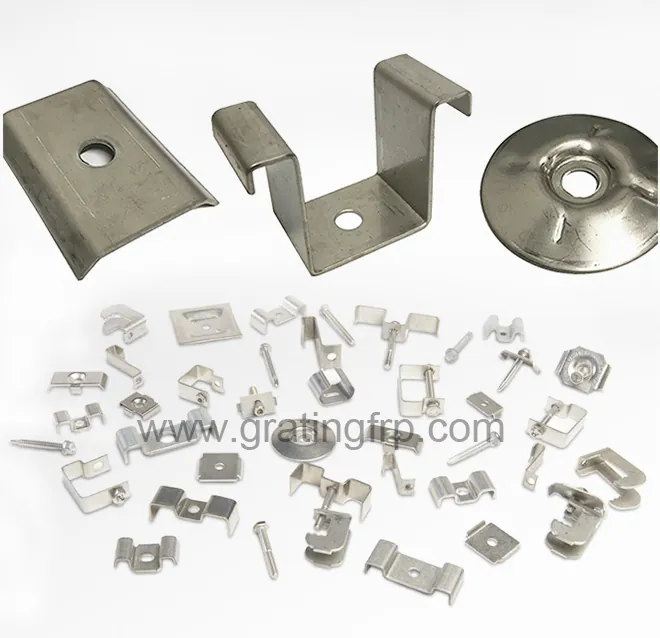
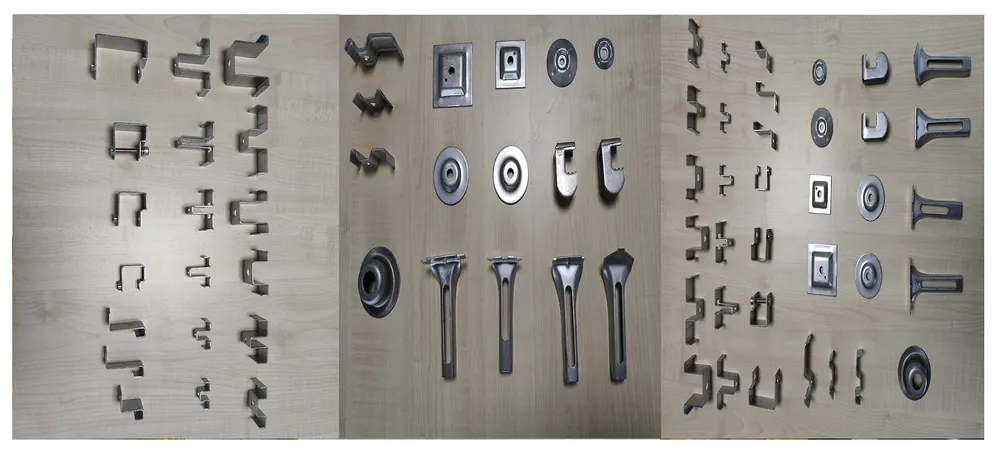
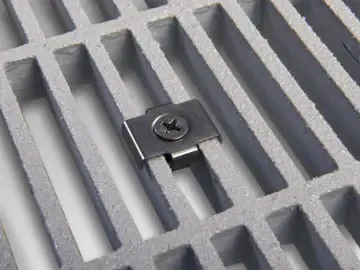
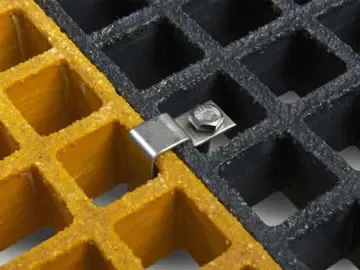
Fasteners: Always use SS316 stainless steel clips — never use galvanized steel in marine environments (will rust and stain grating). UV Protection: Specify UV-stabilized resin and surface veil for all outdoor marine applications. Fire Rating: Always confirm fire rating requirements with classification society (DNV, ABS, Lloyd's) before ordering. Color: Yellow is standard for high visibility; gray blends with marine environments; custom colors available. Maintenance: Annual pressure washing to remove salt and biological growth, check clip tightness annually, inspect for impact damage. Expected Service Life: 20-30 years in marine environments, compared to 3-7 years for galvanized steel.
Frequently Asked Questions
FRP (Fiberglass Reinforced Plastic) grating is a molded or pultruded fiberglass composite grid used for corrosion-resistant walkways, platforms and floorings. It combines glass fiber reinforcement with thermoset resin (polyester, vinyl ester, epoxy) for superior strength-to-weight ratio, zero rust and 20+ year service life.