Surface selection is the primary slip-safety decision on FRP grating; R13-rated grit top is the benchmark for wet/oily walkways, while concave/convex handles dry process areas.
- Best for: setting slip resistance per walkway environment
- Choose grit (R13+) for: wet/oily; concave/convex for: dry process areas
- Key spec: R13 grit top, COF test per EN/ASTM
1. Why Surface Selection Matters
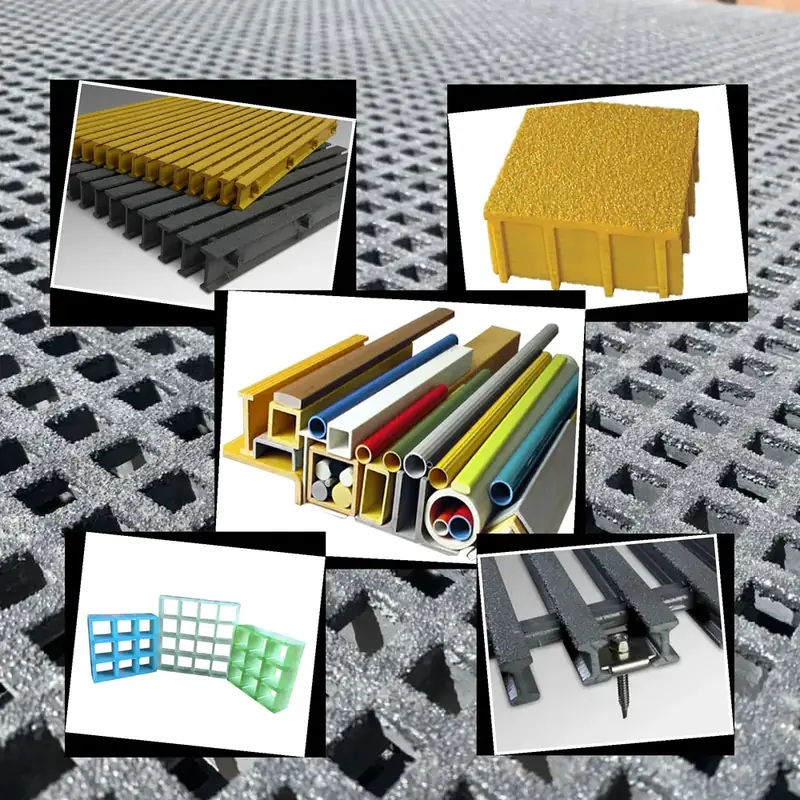
The surface of FRP grating is the primary interface between users and the product, directly affecting safety, maintenance, and suitability for specific applications. Choosing the wrong surface can lead to slip-and-fall accidents (the #1 cause of workplace injuries in industrial settings), difficulty cleaning, or premature wear. Four main surface options are available: Concave/Meniscus Top (standard), Grit Top (maximum anti-slip), Smooth (decorative/clean room), and Covered Solid (water-tight). Each has specific slip resistance ratings, cleaning characteristics, and ideal applications.
2. Concave / Meniscus Top Surface (Standard)
Description: The standard molded grating surface features a concave (meniscus) shape on each bar top, formed naturally during the molding process. This provides moderate anti-slip performance through the curved surface geometry. Slip Resistance: R10-R11 (DIN 51130), suitable for dry to slightly wet conditions. Advantages: Standard (no extra cost), good all-around performance, easy to clean, durable, consistent appearance. Disadvantages: Can become slippery when covered with oil, grease, or heavy water. Applications: General industrial walkways, indoor platforms, dry areas, commercial buildings, areas with normal foot traffic. Cleaning: Pressure washing or mopping, debris falls through mesh openings. Wear Life: 15-20 years in normal foot traffic.
3. Grit Top Surface (Maximum Anti-Slip)
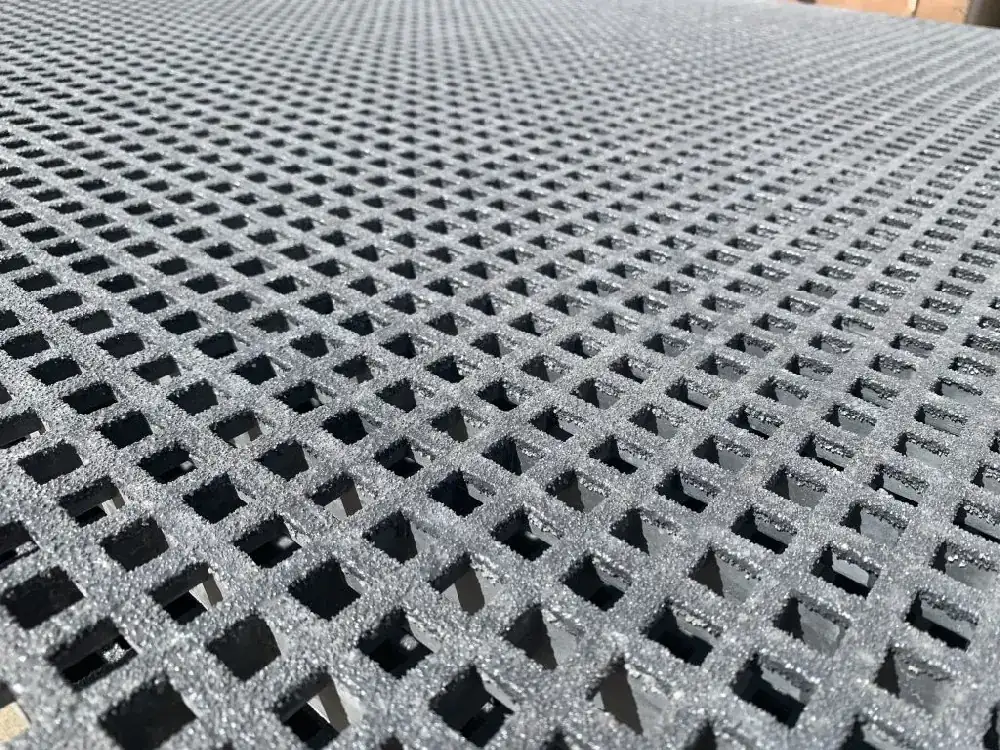
Description: Grit top surface has quartz sand or aluminum oxide grit integrally applied and cured into the resin surface during manufacturing, creating a highly abrasive, non-slip texture. Available in coarse (1-2mm grit) or fine (0.5-1mm grit) grades. Slip Resistance: R12-R13 (DIN 51130), the highest anti-slip rating available for FRP grating. Suitable for oily, wet, or icy conditions. Advantages: Exceptional anti-slip performance, reduces slip-and-fall accidents by 70%+ vs smooth surfaces, integrally bonded (will not peel off), available in all resin types. Disadvantages: 10-15% cost premium, harder to clean (grit traps debris), can be abrasive on bare skin/knees, not suitable for areas where items slide (e.g., cart traffic). Applications: Wet areas (wastewater, food processing), oily areas (manufacturing, marine), outdoor ramps and stairs, offshore platforms, chemical plants, any area with slip hazard. Cleaning: Requires pressure washing (100+ bar) to remove debris from grit, periodic scrubbing. Wear Life: 10-15 years (grit wears down over time in high traffic).
4. Smooth Surface
Description: Smooth surface is flat and even, achieved by using a smooth mold surface or secondary grinding. Available only on solid covers or specially molded panels (standard mesh grating cannot have truly smooth surface due to mesh openings). Slip Resistance: R9 (DIN 51130), lowest anti-slip rating, can be slippery when wet. Advantages: Easy to clean (hygienic), aesthetically pleasing, allows items to slide (cart traffic), no abrasive texture. Disadvantages: Poor anti-slip when wet, not recommended for walkways in wet areas. Applications: Clean rooms (pharmaceutical, electronics), food processing (where hygiene is critical), decorative areas, cart/roller paths, table tops. Cleaning: Wipe or mop clean, no debris traps. Wear Life: 20+ years (no grit to wear off).
5. Covered Solid Surface
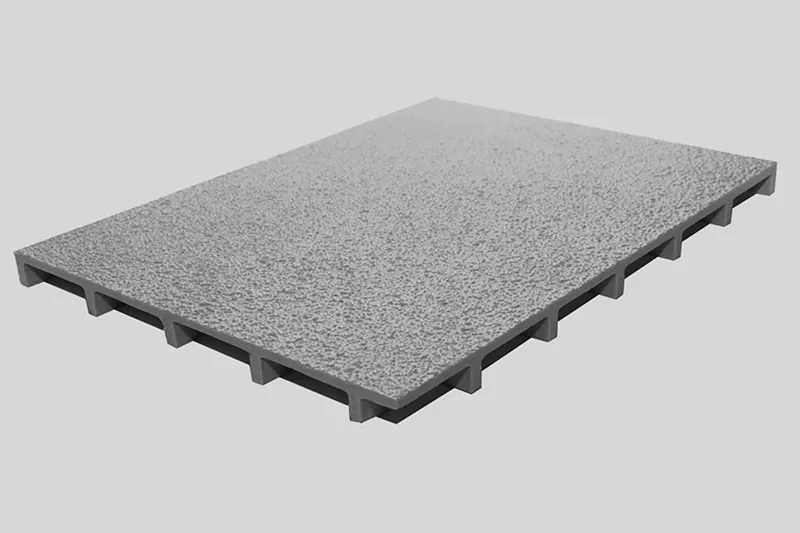
Description: Covered solid grating has no mesh openings — it is a solid FRP panel with the selected surface texture (concave, grit, or smooth). Provides full coverage while maintaining FRP corrosion resistance. Slip Resistance: Depends on surface texture (concave R10-R11, grit R12-R13, smooth R9). Advantages: No openings (prevents items, liquids, or debris from falling through), water-tight, can be used as flooring, provides solid walking surface. Disadvantages: Heavier than mesh grating (25-30 kg/m2 vs 15-20), no drainage (water pools on surface), 20-30% higher cost. Applications: Trench covers, drain covers, chemical spill containment areas, food processing floors, pharmaceutical clean rooms, areas where tools/parts cannot fall through. Cleaning: Sweep or pressure wash, water runs off edges (must slope for drainage).
6. Surface Selection Decision Tree
Step 1: Is the area wet, oily, or outdoors? YES -> Grit Top (R12-R13). NO -> Continue. Step 2: Is the area a clean room or food processing requiring hygienic surface? YES -> Smooth (solid cover). NO -> Continue. Step 3: Do items need to fall through (drainage, debris)? YES -> Mesh grating (concave or grit). NO -> Covered Solid. Step 4: Is the area general industrial, dry to slightly wet? YES -> Concave/Meniscus Top (standard, cost-effective). Step 5: Is there heavy cart or wheeled traffic? YES -> Smooth or Concave (grit can impede wheels). Step 6: Is slip safety the highest priority? YES -> Grit Top (always). General Rule: When in doubt, choose Grit Top — the small cost premium is negligible compared to the cost of a single slip-and-fall injury.
7. Surface Performance Comparison Table
Concave Top: Slip Rating R10-R11, Cost 1.0x (base), Cleaning Easy, Wear Life 15-20 yrs, Best For General walkways. Grit Top: Slip Rating R12-R13, Cost 1.1-1.15x, Cleaning Difficult (pressure wash), Wear Life 10-15 yrs, Best For Wet/oily areas, ramps, stairs. Smooth: Slip Rating R9, Cost 1.05x, Cleaning Very Easy, Wear Life 20+ yrs, Best For Clean rooms, food, cart traffic. Covered Solid (concave): Slip Rating R10-R11, Cost 1.2-1.3x, Cleaning Easy, Wear Life 15-20 yrs, Best For Trench covers, spill containment. Covered Solid (grit): Slip Rating R12-R13, Cost 1.3-1.4x, Cleaning Difficult, Wear Life 10-15 yrs, Best For Wet trench covers, ramps. Note: All surfaces available in all resin types (polyester, isophthalic, vinyl ester, phenolic) and all colors.
DIN 51130 Slip Resistance Rating Scale
Slip performance on FRP grating surfaces is classified per DIN 51130 as follows:
- R9 — normal dry areas
- R10 — general industrial walkways
- R11 — wet process areas
- R12 — very wet or oily environments
- R13 — extreme slip-hazard zones
All surface and load values are indicative, derived from laboratory tests per NAAMM MBG-01 (FRP Grating Design Manual) methodology; certified load tables and third-party test reports are available on request.
Frequently Asked Questions
FRP (Fiberglass Reinforced Plastic) grating is a molded or pultruded fiberglass composite grid used for corrosion-resistant walkways, platforms and floorings. It combines glass fiber reinforcement with thermoset resin (polyester, vinyl ester, epoxy) for superior strength-to-weight ratio, zero rust and 20+ year service life.