Chemical plants pick FRP grating because it survives acids, alkalis and solvents that corrode steel; matching the resin to the chemical — vinyl ester for the harshest acids — sets service life.
- Best for: chemical process areas, battery limits and spill-containment zones
- Choose vinyl ester for: hot acids and chlorinated solvents; isophthalic for: general corrosion
- Key spec: ASTM resin tests, FR class, grit top in spill zones
1. Chemical Plant Corrosion Environment Overview
Chemical processing plants present the most diverse and severe corrosion challenges of any industry. Facilities handle acids (sulfuric, hydrochloric, nitric, phosphoric, acetic), alkalis (sodium hydroxide, potassium hydroxide, ammonia), solvents (ketones, aromatics, chlorinated), oxidizers (hydrogen peroxide, chlorine, sodium hypochlorite), and mixtures thereof. Steel grating, even galvanized or stainless, fails rapidly in these environments — typically 2-5 years for galvanized steel, 5-10 years for SS304 in chloride environments. FRP vinyl ester grating provides 20+ year service life with zero maintenance, making it the material of choice for chemical plant walkways, platforms, and trench covers worldwide.
2. Resin Selection Matrix for Chemical Plants
Acid Processing (H2SO4, HCl, H3PO4): Vinyl Ester (bisphenol-A) — excellent up to 50% concentration. Alkali Processing (NaOH, KOH): Vinyl Ester — excellent up to 50% concentration. Chlor-Alkali Plants (Cl2, NaOH, NaOCl): Vinyl Ester — excellent chlorine and bleach resistance. Fertilizer Plants (NH3, HNO3, urea): Vinyl Ester or Novolac VE for nitric acid. Petrochemical (hydrocarbons, H2S): Vinyl Ester — good solvent resistance, excellent H2S. Pharmaceutical (acids, solvents, sanitizers): Isophthalic Polyester or Vinyl Ester (FDA grade). Food & Beverage (CIP chemicals, lactic acid): Isophthalic Polyester (FDA compliant). General Rule: When in doubt, use Vinyl Ester — the cost premium (20-30%) is negligible compared to replacement costs and plant downtime.
3. Specific Chemical Plant Application Areas
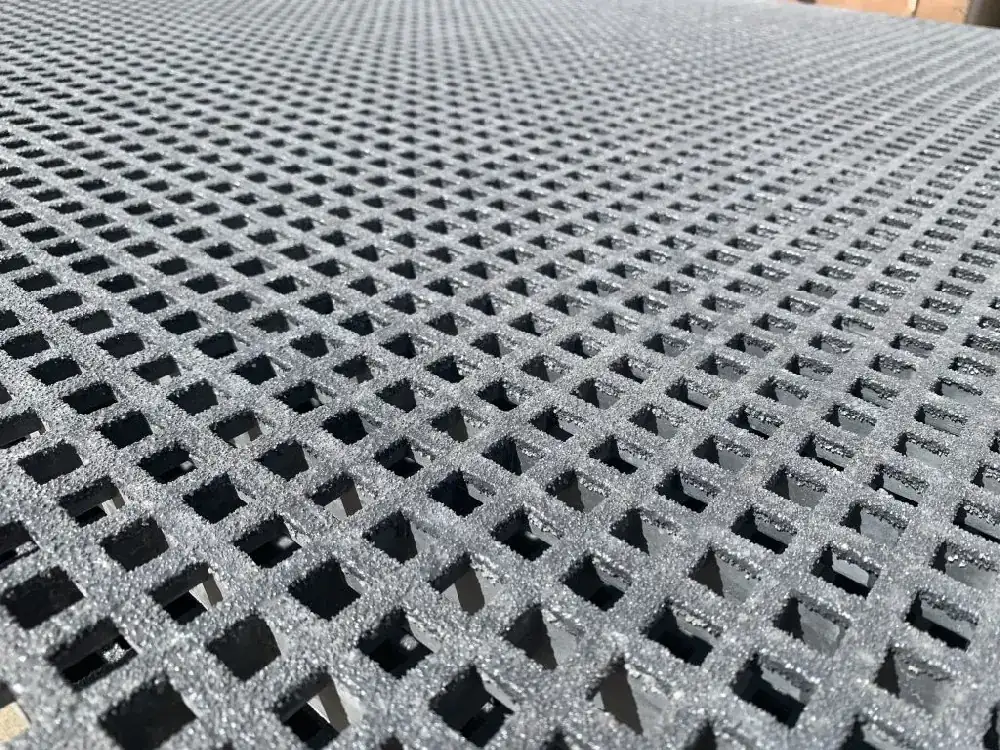
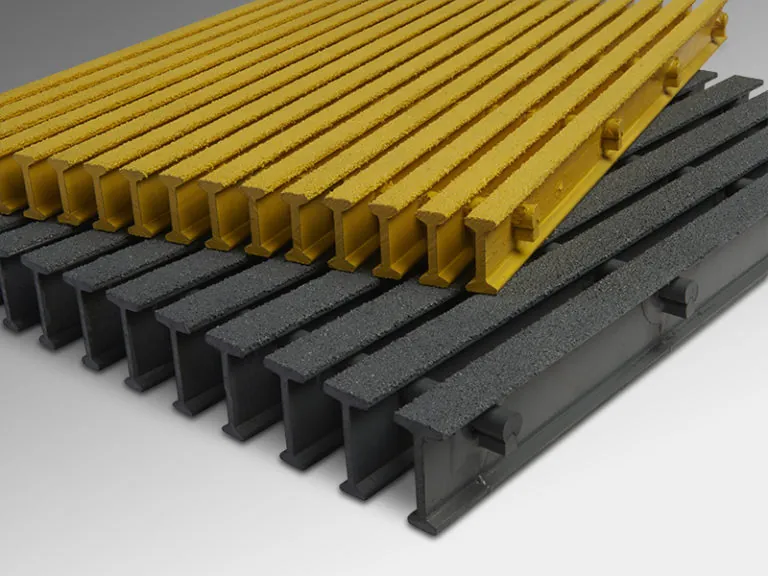
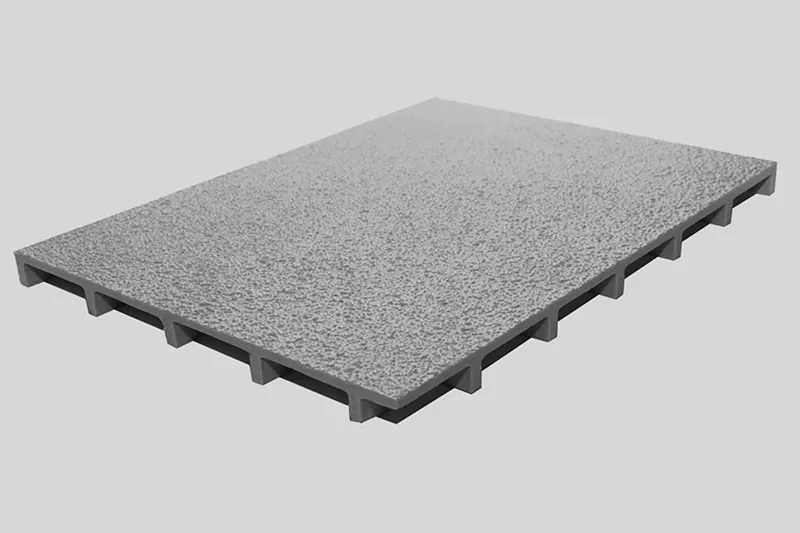
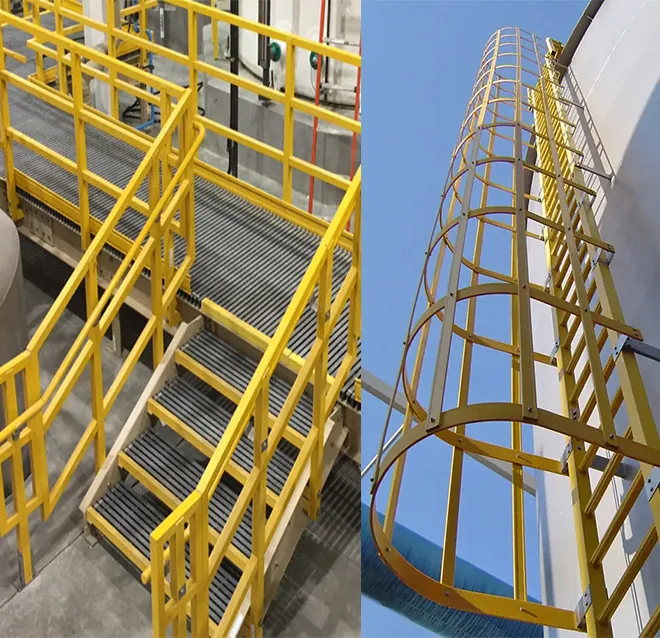
Acid Storage Tank Platforms: 38mm or 50mm molded grating, vinyl ester, grit surface, secondary containment area. Pump Alley Walkways: 38mm molded, vinyl ester, custom cutouts for pump bases, cable trays. Reactor Access Platforms: 50mm heavy-duty or pultruded, vinyl ester, high load capacity for maintenance equipment. Trench & Ditch Covers: 38mm solid cover, vinyl ester, prevents chemical spills spreading. Loading Rack Platforms: 38mm molded, vinyl ester, anti-slip grit surface, fall protection. Stair Towers: 38mm stair treads, FRP handrail system, vinyl ester, OSHA compliant. Pipe Rack Access: 38mm molded, lightweight, easy installation at height.
4. Case Study: Chemical Plant — Netherlands
Project: Specialty chemical plant producing industrial acids and cleaning compounds. Problem: Existing SS304 stainless steel grating developed pitting corrosion within 3 years due to chloride and acid exposure, requiring replacement at high cost and plant downtime. Solution: 750 m² of 38mm molded FRP grating, vinyl ester resin, custom cutouts for piping and equipment, FRP handrail system (800 linear meters). Installation: Completed during scheduled turnaround, 30% faster than steel due to lightweight. Results: Operating since 2020, zero corrosion, zero maintenance, plant engineers report the only material that has survived in the acid processing area. Estimated 20+ year service life, 70% lower total cost vs stainless steel.
5. Case Study: Chlor-Alkali Plant — USA
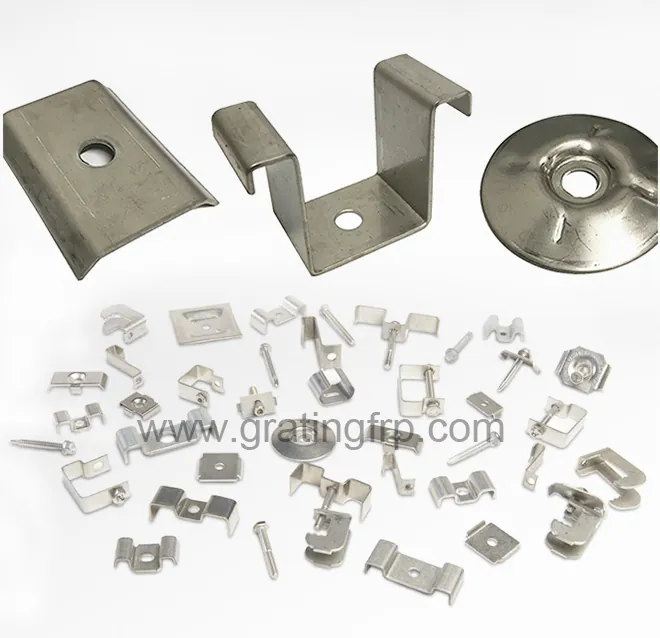
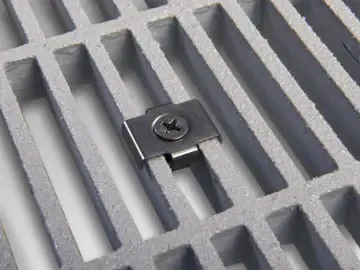
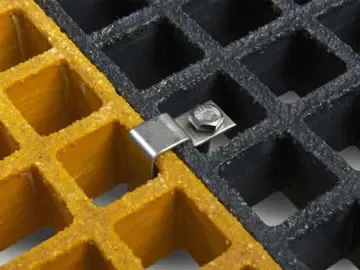
Project: Chlor-alkali facility producing chlorine gas, caustic soda (NaOH), and sodium hypochlorite (bleach). Problem: Extreme combined corrosion from chlorine gas (moist), 50% NaOH, and 15% NaOCl destroyed steel grating in 2 years. Solution: 1,200 m² of 38mm molded FRP grating, vinyl ester resin, all SS316 clips and fasteners, FRP handrail system. Key design feature: all cut edges factory-sealed with vinyl ester resin to prevent moisture ingress. Results: Installed 2018, after 8 years no corrosion observed, no maintenance required, customer has standardized on FRP for all new construction.
6. Safety & Compliance Considerations
OSHA Requirements: FRP grating must meet OSHA 1910.23 (fall protection), 1910.24 (fixed stairs), 1910.27 (ladders). Fire Safety: In chemical plants with flammable materials, specify fire-retardant vinyl ester or phenolic resin. ASTM E-84 Class A flame spread rating available. Static Electricity: FRP is non-conductive, which is an advantage in explosive environments (no sparking), but may require static-dissipative additive in areas with flammable vapors. Chemical Spill Response: FRP is unaffected by most chemical spills, unlike steel which can be damaged rapidly. Spills can be washed off with water.
Frequently Asked Questions
FRP (Fiberglass Reinforced Plastic) grating is a molded or pultruded fiberglass composite grid used for corrosion-resistant walkways, platforms and floorings. It combines glass fiber reinforcement with thermoset resin (polyester, vinyl ester, epoxy) for superior strength-to-weight ratio, zero rust and 20+ year service life.