FRP Grating in Canadian Municipal Water & Wastewater Plants
Across Canada, municipal water treatment plants and wastewater facilities in provinces from British Columbia to Quebec rely on walkway grating, tank covers and platform decks that must survive permanent moisture, pooled chemicals and corrosive off-gases. Traditional steel grating rusts in this environment, requires repainting, and can become slippery when wet; aluminium is softer, carries electrical risk and stains. FRP grating has become the standard upgrade for new and upgraded treatment plants because it never corrodes, weighs a fraction of steel, and is non-conductive and non-sparking.
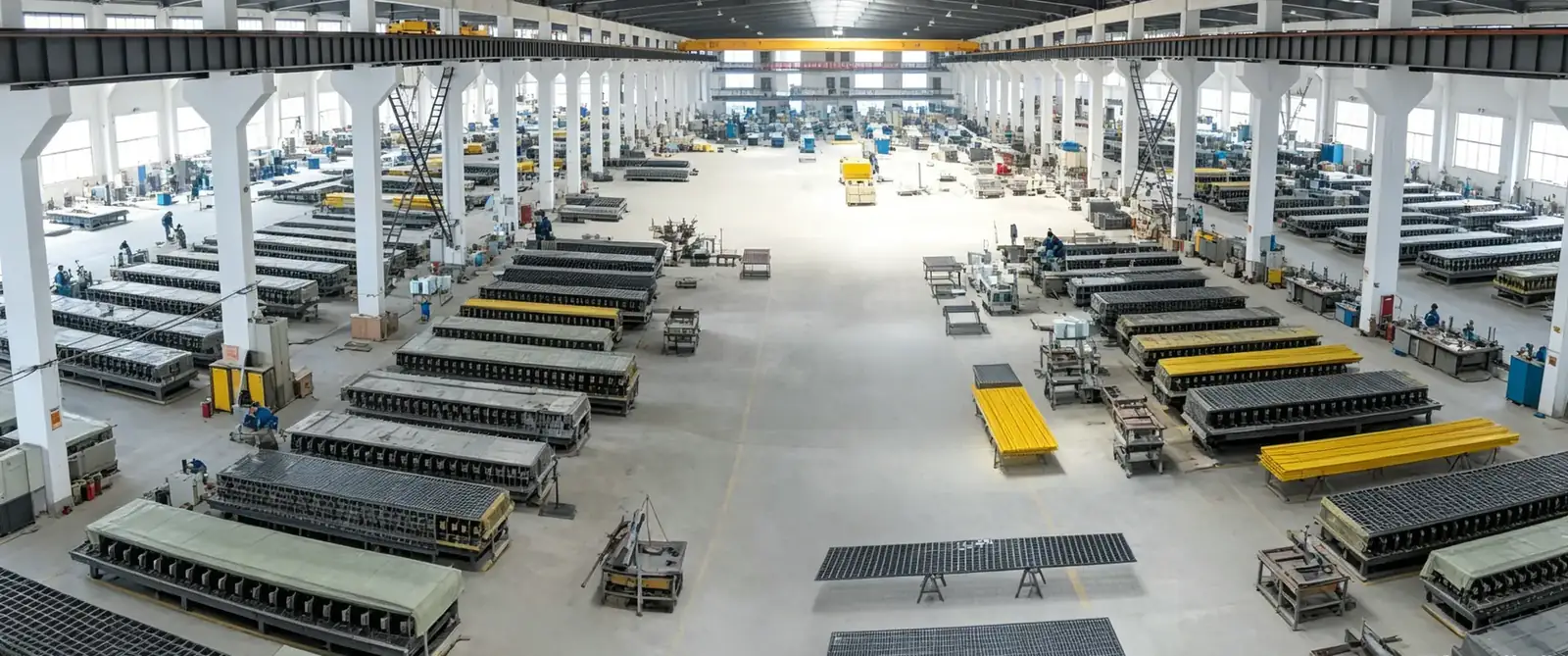
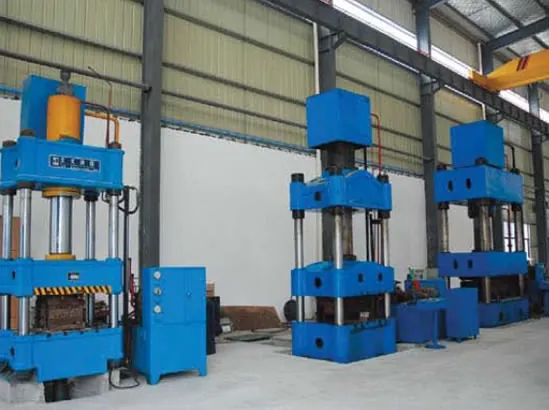
NANTONG ZEALL supplies molded and pultruded fiberglass grating, solid covers, stair treads and clips to municipal contractors, engineering firms and plant operators across Canada, with factory-direct pricing from USD 15 to 95 per square meter and free load calculations for submittals.
Why FRP Replaces Steel and Aluminium in Corrosive Sewer Environments
Wastewater structures attack steel on three fronts: constant wetting, acidic or alkaline process chemistry, and hydrogen sulfide (H2S) gas generated in sewers, lift stations and wet wells. H2S converts to sulfuric acid on moist steel and concrete surfaces, causing rust creep, section loss and delamination that shortens maintenance cycles and forces early replacement. FRP is unaffected by this attack: it resists corrosive acids, alkalis, saltwater and the industrial chemicals commonly found in treatment processes, so it does not need painting, sandblasting or recoating between shutdowns. It is also non-conductive, which reduces shock risk around electrified equipment, and it leaves no rust staining that would discolour concrete walkways and tank edges.
Common Installations: Walkways, Tank Covers, Pump Stations and Odour Zones
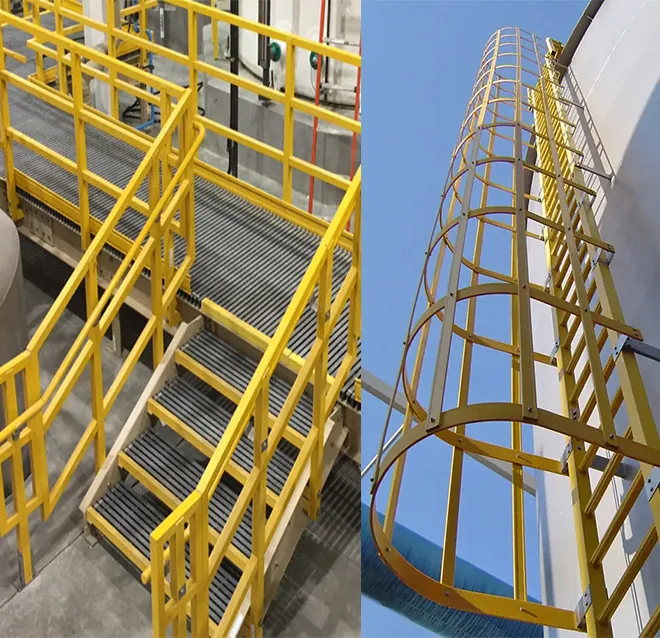
- Aeration & Clarifier Walkways — perimeter decks and access bridges around circular clarifiers, aeration basins and digesters, where wet footing is permanent.
- Tank Covers & Odour Control — solid or grated covers over open tanks, wet wells and screening channels that contain odour and limit worker exposure to H2S.
- Pump Stations & Wet Wells — grating over wet-well access, valve pits and below-grade chambers where corrosion is most severe.
- Grit, Sludge & Thickener Areas — trenches, channel covers and flow splitter decks exposed to abrasive and chemically aggressive sludges.
- Disinfection & Contact Tanks — non-sparking, non-conductive grating near chlorine or UV disinfection and contact basin areas.
- Chemical Feed & Scrubber Rooms — secondary containment decks and walkways around acid, caustic and polymer dosing systems.
Resin and Grating Selection for H2S and Wet-Well Service
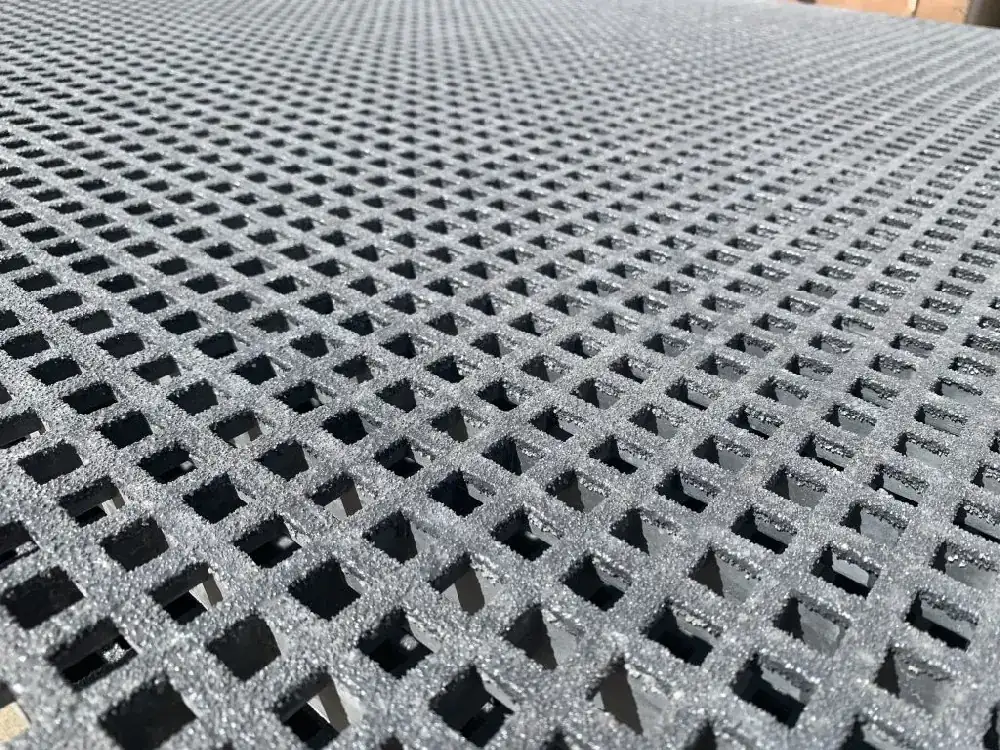
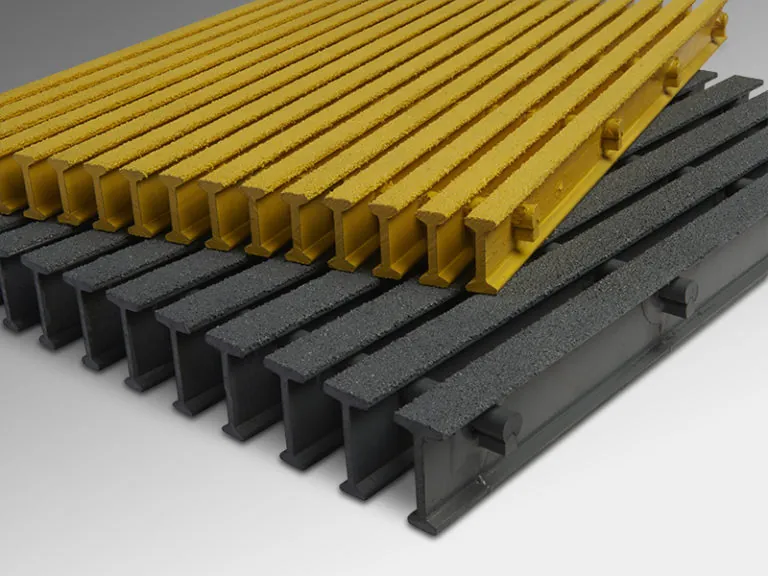
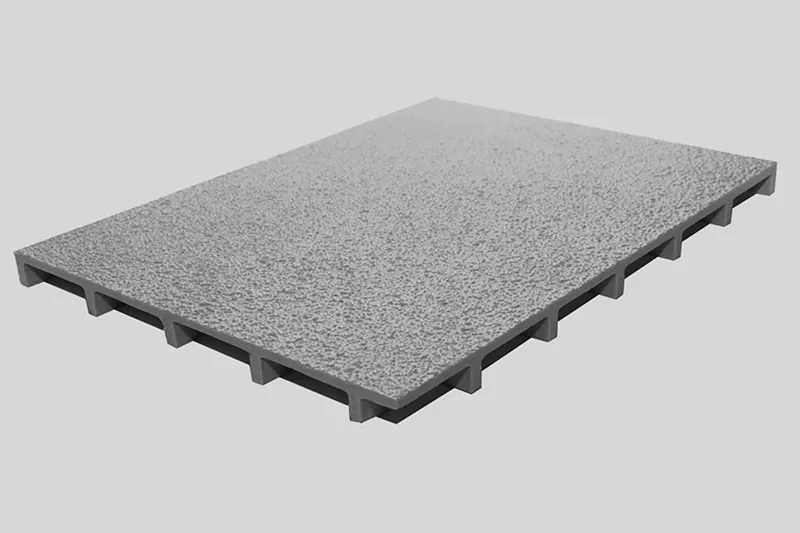
Resin choice is the single most important decision in a wastewater specification. Isophthalic polyester (ISO) grating is the general-purpose workhorse for typical walkways, wet areas and mild chemical exposure, and represents the most cost-effective option. Where exposure is severe — H2S-laden air, chlorine dosing, acidic digester environments or frequent chemical splash — vinyl ester (VE) resin is specified because it offers superior resistance to strong acids, alkalis and solvent attack. Molded grating (commonly 38 mm or 50 mm depth) provides bi-directional strength and good drainage through the mesh; pultruded grating offers higher uni-directional capacity for longer spans and heavier equipment access. A gritted or concave surface is recommended wherever footing is wet, and solid covers or plate panels are used where odour containment or fall-through protection is required.
Specifications, Load Tables and Standards for Municipal Tenders
Municipal tenders across Canadian provinces commonly reference ASTM E-84 surface burning characteristics and ASTM F3059 for fiberglass grating products; our gratings are tested to both and manufactured under an ISO 9001 quality system. Canadian engineers also consult CSA S806 for the design of building structures with FRP and CSA S807 for FRP material properties as design references when checking walkway spans, live loads and deflection limits. We supply span tables, deflection calculations, resin data sheets and mill test reports to support municipal submittals, and we can size panels for equipment dead loads, snow loads and maintenance live loads specific to each facility.
FRP Product Range for Water and Wastewater Projects
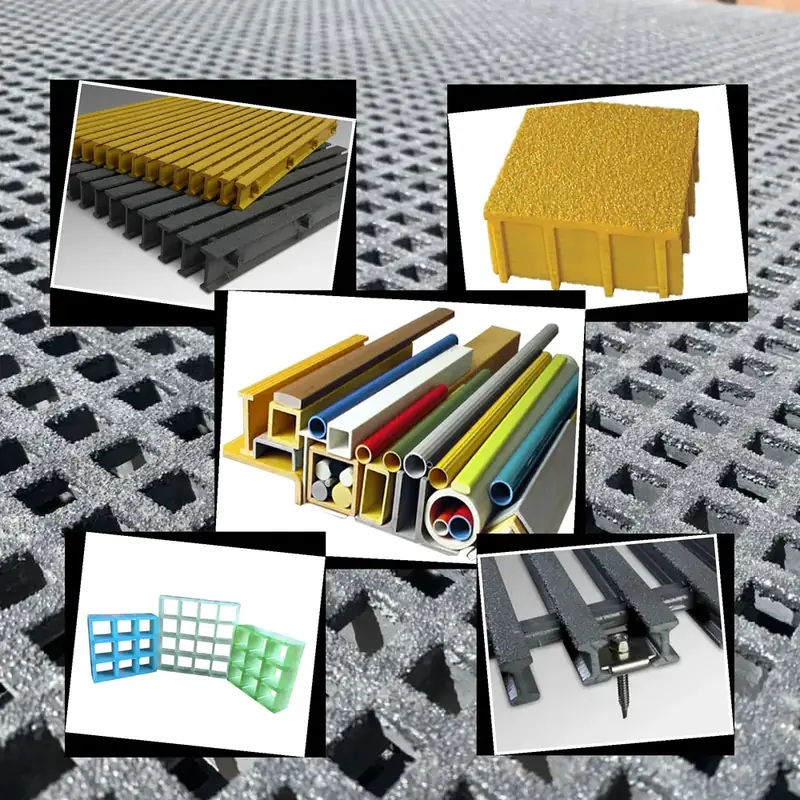
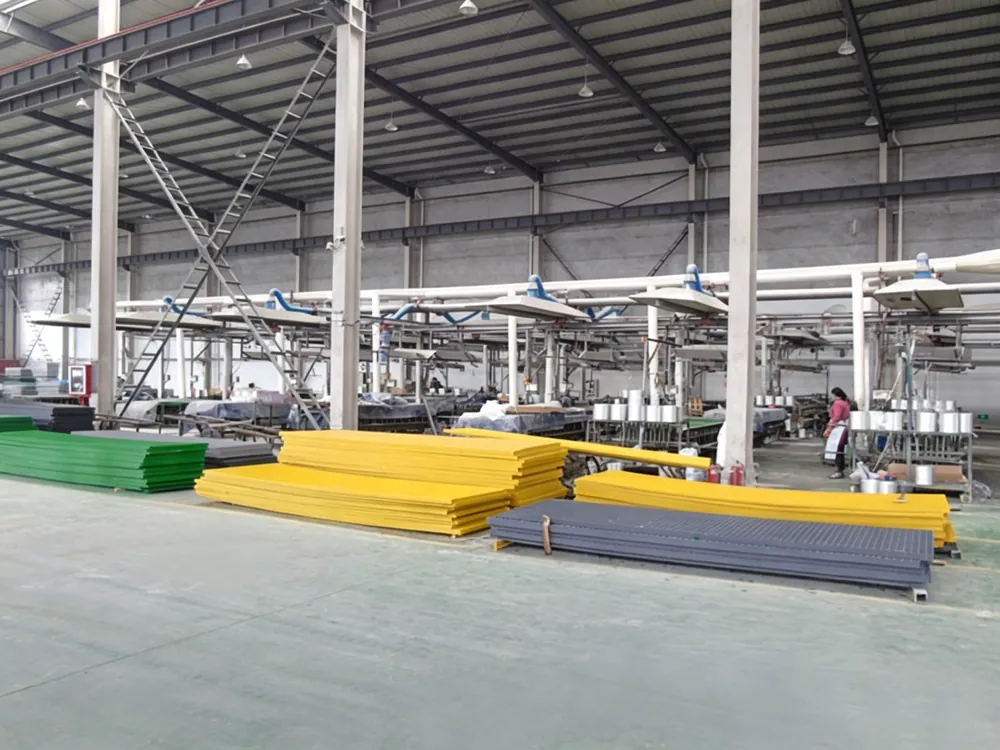
- 38 mm Molded FRP Grating — standard walkway depth for clarifier perimeter decks and operator platforms.
- 50 mm Molded FRP Grating — heavier depth for equipment access and cart or trolley load paths.
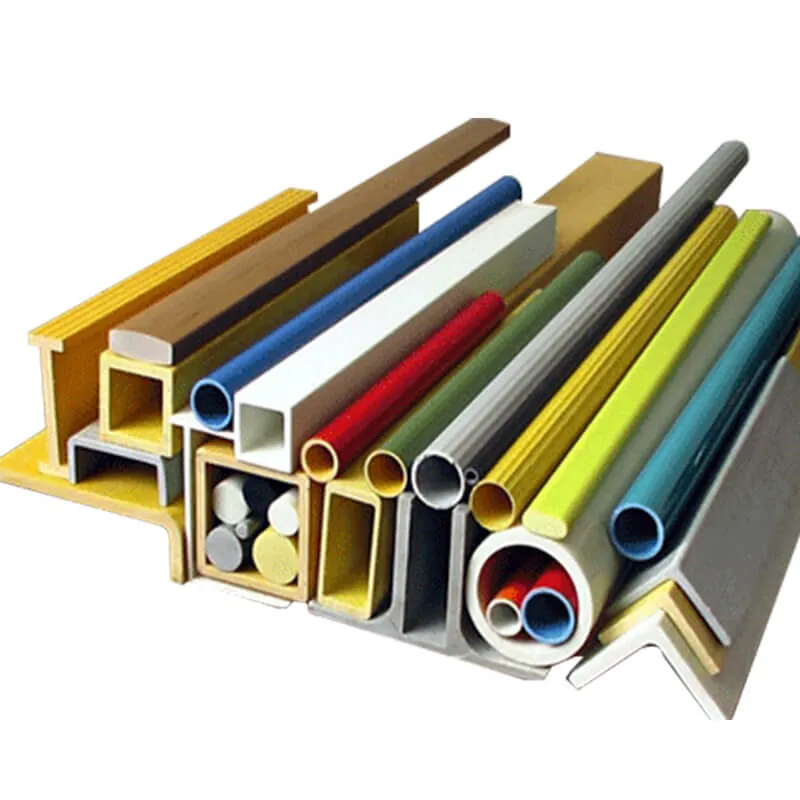
- Pultruded FRP Grating — I-bar and sanded profiles for long spans between supports where deflection must be controlled.
- Solid FRP Covers & Plate Panels — odour-containment tank covers and trench covers, removable in sections for access.
- FRP Stair Treads & Handrail Components — anti-slip treads and non-corrosive rail parts for wet stair towers.
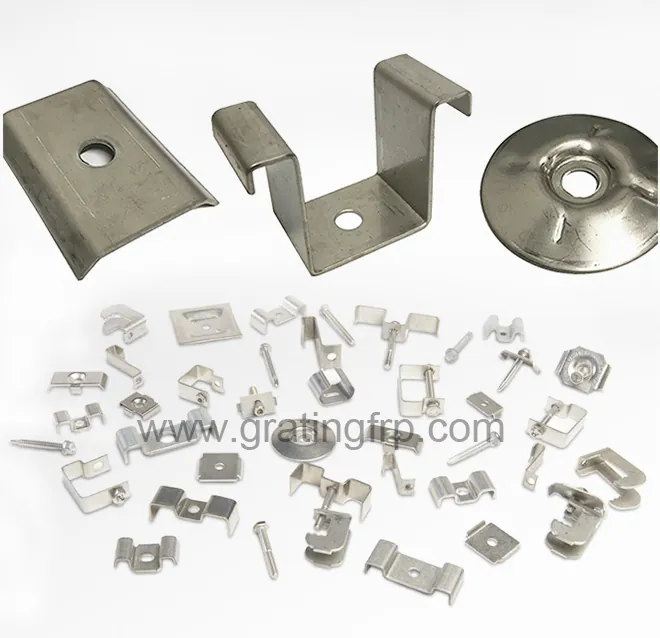
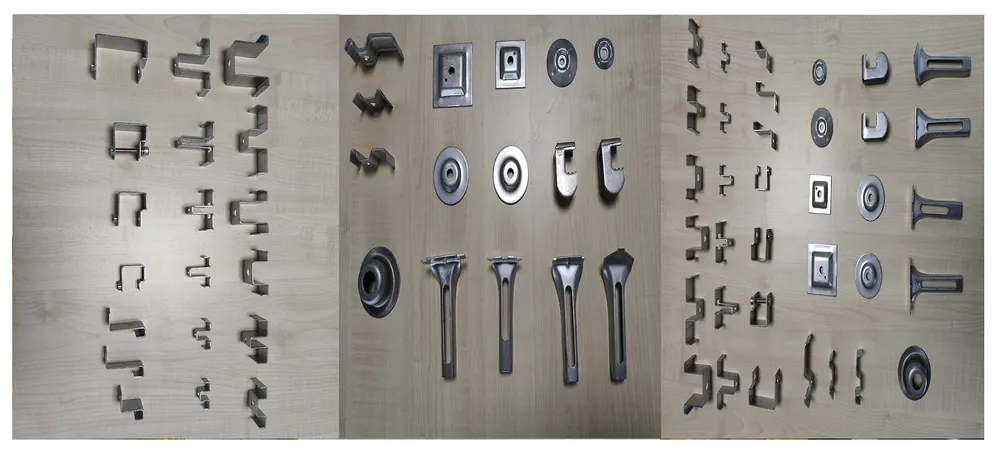
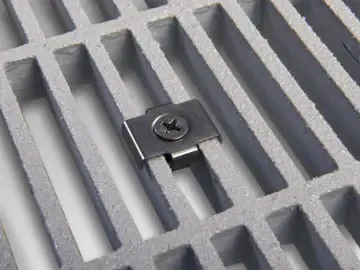
- M, C and L Clips — stainless-steel or FRP fasteners that avoid galvanic corrosion with aluminium or steel supports.
Sourcing Factory-Direct for Provincial Municipal Projects
Municipal procurement typically balances lowest acceptable cost with documented engineering support. Factory-direct sourcing removes local distributor mark-ups while retaining direct access to the factory engineering team: free load calculations, resin selection guidance and panel layout optimisation come with the quote. Standard sizes are produced in 15–25 days, with overall delivery of 12–36 working days depending on specification; the minimum order is 10 square meters, and a one-piece sample can be supplied for evaluation. We export to 45+ countries and hold 541 customer reviews at 4.9 out of 5. Canadian import clearance follows the standard CBSA process through CARM with a commercial invoice and a Commercial Accounting Declaration.
Frequently Asked Questions
FRP does not rust in permanent wet, H2S-laden environments, needs no painting, is non-conductive and non-sparking, and weighs roughly a quarter of steel. Steel walkways in wastewater service typically need repainting within a few years; FRP requires only occasional washing.