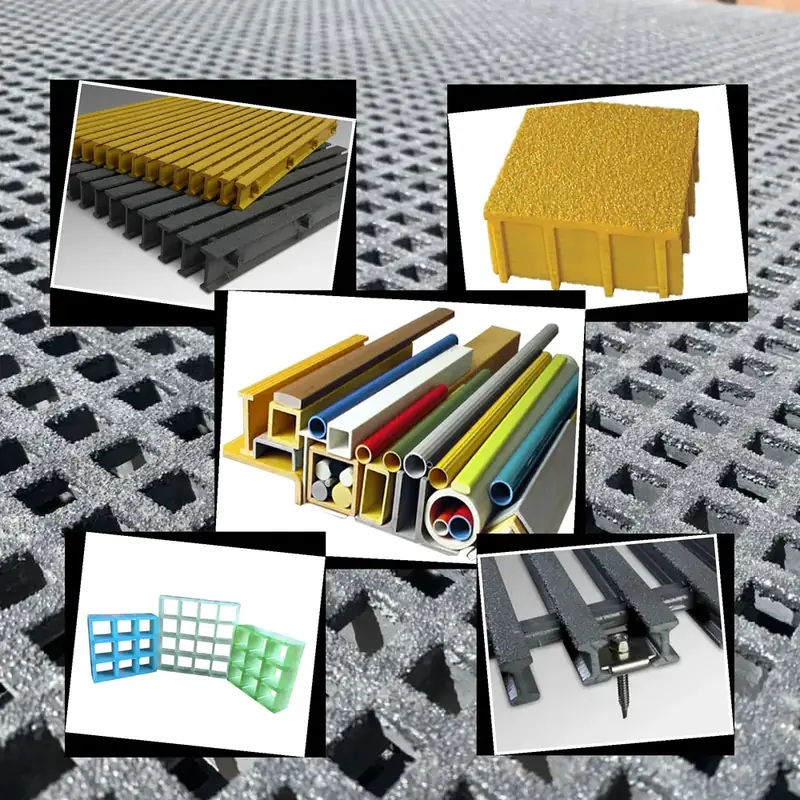
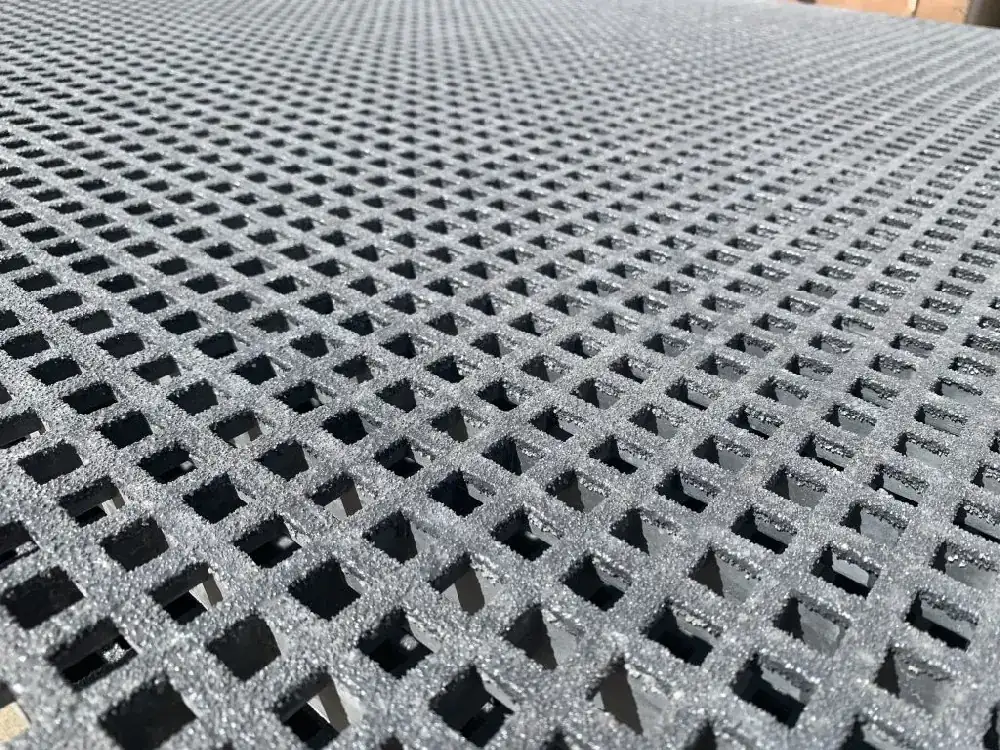
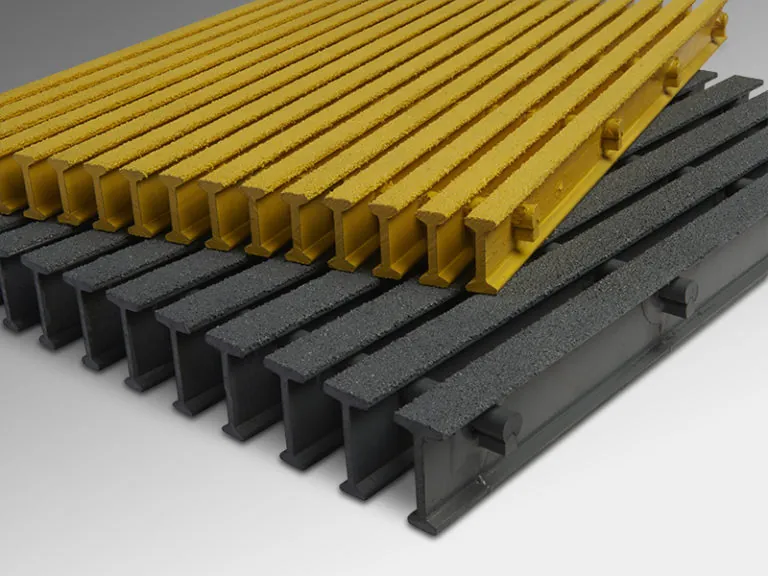
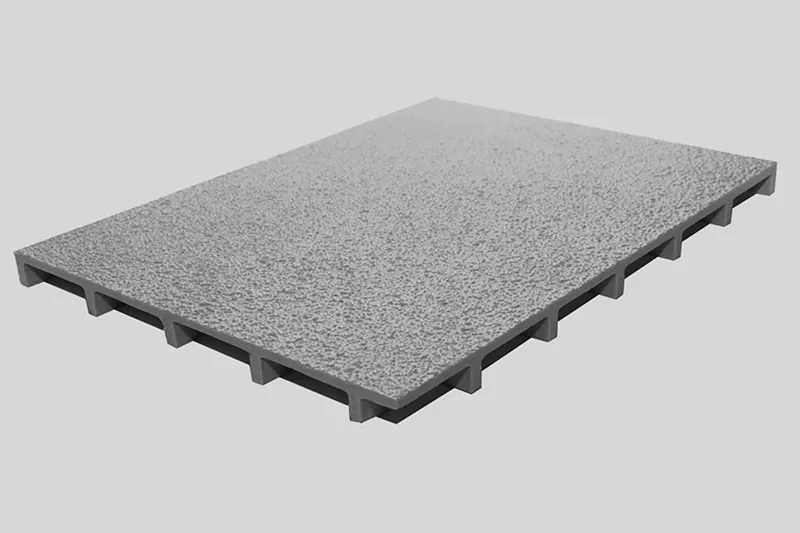
Offshore wind access platforms demand a grating that survives continuous salt spray, intermittent splash, foot traffic in boots and dropped tools, plus helicopter and boat transfer loads. The default resin is vinyl ester for splash and wet zones, phenolic where fire performance governs the refuge and laydown areas. Panels are lifted whole, clipped with SS316, and replaced locally rather than welded in. Panel size, resin and fire class are confirmed per project.
- Splash zone: wetted, oxygen-rich and abrasive; vinyl ester or phenolic outlasts general polyester here
- Fire: phenolic is chosen where hydrocarbon-fire smoke and flame spread govern; verify the required class per zone
- Anti-slip: gritted top or concave profile stays usable under salt film and boot sole
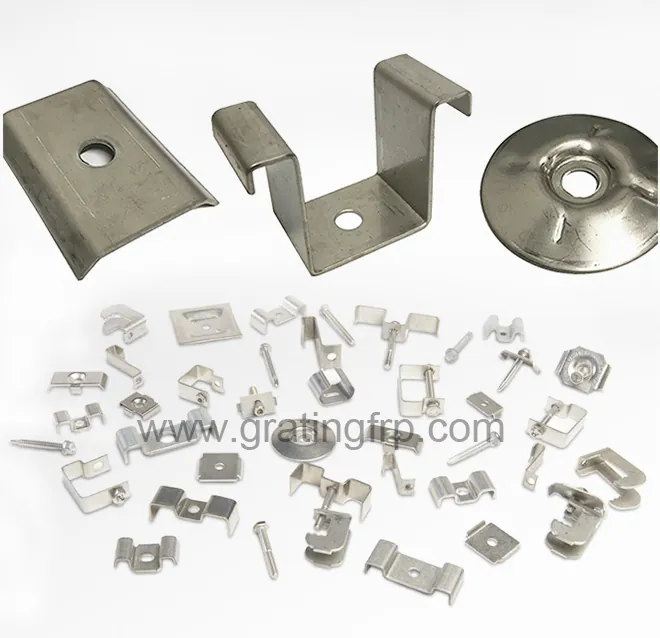
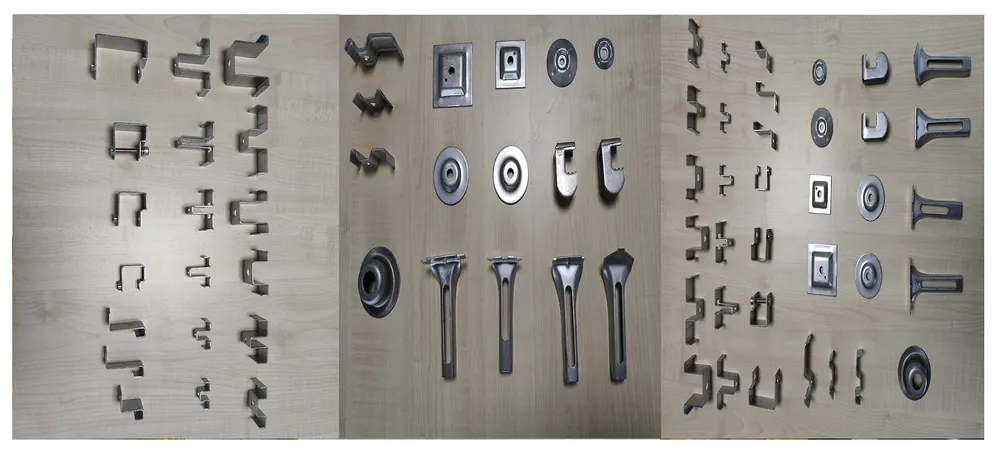
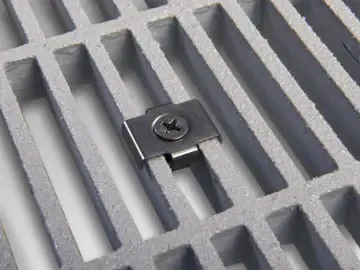
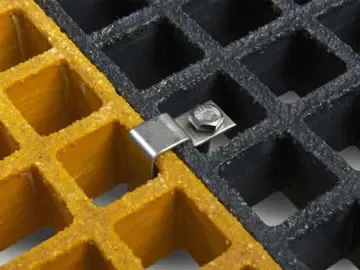
- Fixings: SS316 clips and bolts; FRP does not corrode, but the metal hardware around it does
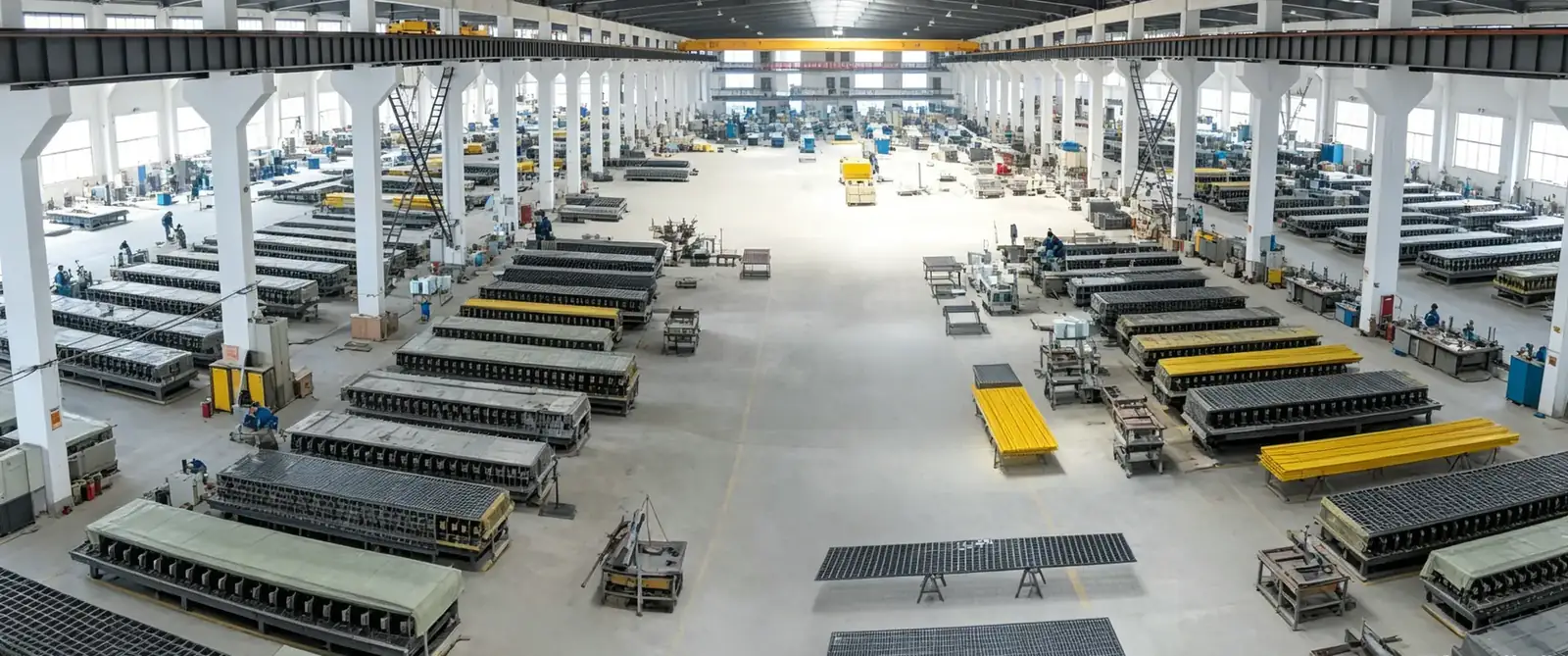
- Supply: standard panel 1220×3660 mm, MOQ 10 m², lead time 12–36 working days
Why wind access platforms differ from general marine decks
An offshore wind O&M platform is not a fixed quay. It sits on a tubular jacket or monopile head, moves subtly under wave and rotor vibration, is reached by boat or crew-transfer walkway, and is worked by technicians in seaboots carrying tools. The grating must handle salt spray in the dry zones, intermittent splash at the waterline, and the point loads of a dropped wrench or a wheeled service case.
This page focuses on those wind-specific decisions: resin in the splash zone, phenolic versus vinyl ester for fire zones, anti-slip and drainage on a wet deck, lifting and whole-panel handling, and local replacement without hot work. It does not repeat the general marine corrosion guide already published.
Note: Fire class, resin system and panel rating are confirmed per project zone and certifier requirement. This page gives selection logic, not a blanket certification; the relevant report and scope are quoted where they apply.
Splash zone and salt-spray exposure
The harshest band is the splash zone: wetted by spray, well oxygenated, and exposed to abrasive salt crystals and marine growth above the waterline. Below it, the permanently wet zone is less aggressive because it is low in oxygen. Above it, the atmospheric spray zone is dry but constantly coated in salt film. Each band pushes a different resin and fixing choice.
| Exposure band | Conditions | Grating response |
|---|---|---|
| Atmospheric spray | Dry, salt film, UV | Standard corrosion-resistant resin, UV-stabilized gel coat |
| Splash zone | Wet/dry cycling, abrasion | Vinyl ester or phenolic, gritted top |
| Permanently wet | Immersed, low oxygen | Vinyl ester; verify biological growth plan |
| Transfer gate | Boots, dropped tools | Heavy pultruded span, gritted |
| Helideck edge | Additional dynamic load | Confirm rated live load per project |
FRP itself resists saltwater; the failure points are the resin-rich surface, the cut edges and the metal fasteners. Cut edges should be sealed and all hardware specified in SS316, not painted carbon steel.
Vinyl ester vs phenolic: choosing by zone
Vinyl ester is the workhorse for splash and wet zones: it combines good salt resistance with the toughness needed for boot traffic and impact. Phenolic is specified where fire performance governs — refuge areas, laydown zones and near equipment enclosures — because it chars rather than melts and produces low smoke. You do not pick one resin for the whole platform; you match the resin to the zone.
| Resin system | Strength | Best zone |
|---|---|---|
| General polyester | Good general use | Sheltered, non-critical areas |
| Isophthalic polyester | Better weathering | Atmospheric spray, dry decks |
| Vinyl ester | Tough, corrosion margin | Splash and wet zones, transfer gates |
| Phenolic | Low smoke, chars in fire | Refuge, laydown, near equipment |
Fire ratings are confirmed per zone and certifier. The factory publishes pedestrian-surface performance under ASTM F3059, report 211122012SHF-001, which covers grating only and does not cover profiles or handrails; hydrocarbon-fire behavior is addressed in the phenolic guidance and must be verified against the project's required class.
Note: Do not assume a fire-certified panel automatically covers profiles, rails or a whole zone. Confirm the exact scope of each report and the required fire class with the project certifier before ordering.
Anti-slip surface and deck drainage
A wind deck is never fully dry: salt film, spray and wet boots keep the surface slick. A gritted or concave profile gives a stable footing even under a thin brine layer, while a smooth top becomes a hazard. Drainage matters because standing water on a grate drains through the mesh, but solid covers around equipment should be sloped and drained to a sump.
| Surface | Grip when wet | Use on wind platform |
|---|---|---|
| Gritted top | Best under brine film | Transfer gates, stairs, main deck |
| Concave profile | Good, sheds water | Walkways and landings |
| Smooth top | Poor when wet | Avoid on foot traffic |
| Solid covered panel | Rainslip if flat | Use only with slope and drain |
| Mini mesh | Fine-foot grip | Where tools could fall through |
Keep the open mesh over drains and cable trenches so water falls through rather than across a slippery deck. Match the mesh opening to the smallest item that must not drop through the guard or tool-carrying zone.
Lifting, handling and panel fixings
FRP panels are light — roughly a fraction of the steel equivalent — which makes them fast to manhandle on a remote structure, but they must still be lifted as whole panels, not swung loose by one corner. Use spreaders and soft slings, avoid edge chafe, and never drag a panel over steelwork. Fixings are SS316 clips and bolts torqued to a hand setting; no welding, no hot work on the deck.
| Handling step | Rule | Reason |
|---|---|---|
| Lift | Whole panel, soft sling | Avoid point crush at corners |
| Transport | Flat, separated, banded | Prevent grit chafe and edge damage |
| Position | Lower gently onto supports | No dropping or levering |
| Fix | SS316 clips, hand torque | No hot work on live platform |
| Cut on site | Seal cut edges | Stop salt wicking into the edge |
Because there is no welding, a panel can be replaced during a short weather window by a two-person team, which is a major cost advantage over steel grating on a tower with limited access.
Local replacement and access gangway design
Routine O&M means a panel gets damaged by a dropped tool or a tracked trolley, and it must be swapped without shutting the whole platform. Modular panel sizes and clip fixings make local replacement fast: remove the clips, lift the damaged panel, lower a like-for-like spare. Keep a small stock of common panels offshore rather than waiting for a weather window and a supply run.
| Access element | Grating choice | Note |
|---|---|---|
| Main access platform | Pultruded gritted span | Rated live load for tools and crew |
| Crew-transfer gate | Heavier gritted panel | Highest point-load zone |
| External stair | Gritted treads, anti-nose | Marine boot grip |
| Laydown area | Solid or mini mesh | Stop small parts dropping through |
| Cable trench cover | Removable mesh cover | Tool access below |
Design the gangway transition and gate zone as the highest-load area: that is where technicians step from a moving boat onto a fixed deck, and where dropped tools land first. Size that strip for a patch load, not the average uniform figure.
Load and span reference data (L/200, simply supported)
The table gives factory published working loads for a single simply supported span at the L/200 deflection limit, in kN/m² at 600, 900 and 1200 mm spacing. Use for initial sizing; the final wind-platform live load, transfer gate patch and any helideck-related load are confirmed by the structural engineer.
| Panel type | 600 mm | 900 mm | 1200 mm |
|---|---|---|---|
| Molded m25 | 12.5 kN/m² | 6.0 kN/m² | 3.2 kN/m² |
| Molded m38 | 25 kN/m² | 12 kN/m² | 6.5 kN/m² |
| Molded m38–50 | 22 kN/m² | 10 kN/m² | 5.5 kN/m² |
| Pultruded p38 | 35 kN/m² | 18 kN/m² | 9 kN/m² |
| Pultruded p50 | 48 kN/m² | 26 kN/m² | 14 kN/m² |
| Pultruded p65 | 62 kN/m² | 35 kN/m² | 20 kN/m² |
For the crew-transfer gate and laydown strips, start from the pultruded range rather than thin molded mesh. Convert with 1 kN/m² ≈ 20.9 lb/ft². Panel densities and resin content follow the standard molded range below.
| Molded panel | Face weight | Resin content |
|---|---|---|
| 25 mm | 12.5 kg/m² | 68% |
| 30 mm | 15.0 kg/m² | 66% |
| 38 mm | 19.5 kg/m² | 68% |
| 38×40 mm | 18.0 kg/m² | 70% |
| 50 mm | 27.0 kg/m² | 60% |
| 65 mm HD | 38.0 kg/m² | 56% |
Fixings, corrosion and what actually fails offshore
On a wind platform, the FRP panel rarely fails; the clip, the bolt and the support bracket do. Specify SS316 hardware everywhere the salt reaches, inspect cut edges for gel-coat damage, and re-torque clips after the first vibration season.
| Failure point | Cause | Prevention |
|---|---|---|
| Stainless clip crevice corrosion | Long-term salt retention | SS316, inspect yearly |
| Cut edge wicking | Unsealed edge | Seal all field cuts |
| Grit loss under boot traffic | Abrasion | Gritted top in high-traffic zones |
| Loose clip after vibration | Rotor and wave motion | Hand torque, re-check after season |
| Bolt galvanic coupling | Mixed metals | Match stainless hardware |
QC, certification and supply for wind projects
Acceptance follows Barcol and visual QC at reference temperature; Barcol ≥40 under standard conditions. The factory holds ISO 9001:2000 (registration 01708Q11888R0S, valid 2025-03-31 to 2028-12-30), and pedestrian-surface performance follows ASTM F3059, report 211122012SHF-001, covering grating only.
| Item | Basis | Note |
|---|---|---|
| Barcol | ≥40 at reference T | Record surface temperature |
| Grit integrity | Uniform | Check transfer gate first |
| Edge seal | All field cuts sealed | Stop salt wicking |
| Hardware grade | SS316 | Every salt-exposed fastener |
| Spare panels | Common sizes stocked | Enable local swap offshore |
Standard supply: panel 1220×3660 mm, MOQ 10 m², lead time 12–36 working days. State the zone-by-zone resin, fire class and required report scope in the RFQ so the supply matches the certification.
Specification checklist for wind access grating
A wind-platform RFQ should name the zone, the exposure band and the required fire class, not just a panel thickness. The checklist below avoids the common offshore mistakes.
| Item | State | Why |
|---|---|---|
| Zone and band | Splash / wet / atmospheric | Sets resin choice |
| Resin system | Vinyl ester or phenolic | Matches corrosion and fire need |
| Fire class | Per zone and certifier | Drives phenolic selection |
| Surface | Gritted or concave | Brine-film grip |
| Hardware | SS316 clips and bolts | Salt resistance |
| Spare stock | Common panel sizes offshore | Local replacement in short weather window |
Common offshore-wind mistakes and fixes
Most wind-platform grating problems trace to a few recurring errors rather than a material failure.
| Mistake | Effect | Fix |
|---|---|---|
| General polyester in splash zone | Premature surface loss | Vinyl ester or phenolic |
| Smooth top on transfer gate | Slip on wet boots | Gritted panel |
| Carbon-steel clips | Rusted fasteners | SS316 hardware |
| No spare panels offshore | Long downtime | Stock common sizes |
| Welded steel on deck | Hot-work hazard | Clipped FRP, bolted |
| Unsealed cut edges | Salt wicking | Seal all field cuts |
Treat the crew-transfer gate and laydown strip as the critical zone: size it for a patch load, keep a spare panel, and inspect grit and clips after the first service season.
Frequently Asked Questions
Which resin is best for offshore wind grating?
Vinyl ester is the default for splash and wet zones, combining salt resistance with impact toughness for boot traffic. Phenolic is chosen in refuge, laydown and near-equipment zones where fire performance, low smoke and char behavior govern. Match the resin to the zone rather than using one across the whole platform.
Why not just use general marine polyester offshore?
General polyester is adequate for sheltered or dry areas but loses surface integrity faster in the cyclic wet/dry, abrasive splash zone. Vinyl ester or phenolic is specified there for a longer service life; confirm the exact system against the project's exposure and fire requirements.
How is FRP grating replaced offshore without hot work?
Panels are clipped with SS316 hardware rather than welded, so a damaged panel is unclipped, lifted out and swapped for a like-for-like spare during a short weather window by a small team. Keep common panel sizes in offshore storage to avoid waiting for a supply run.
What surface stops technicians slipping on a wet wind deck?
A gritted or concave profile keeps footing on a salt-film deck where a smooth top becomes dangerous. Keep open mesh over drains so water falls through instead of pooling, and specify the heaviest gritted panel at the crew-transfer gate.
Does FRP corrode in saltwater?
The FRP panel itself resists saltwater; the failure points are the cut edges and the metal fasteners. Seal all field cuts and specify SS316 clips and bolts everywhere the spray reaches. Confirm any fire or pedestrian certification scope, since the report covers grating only, not profiles or handrails.