FRP Grating for French Chemical and Nuclear Industrial Facilities
France hosts one of Europe’s densest industrial footprints: petrochemical and refining clusters along the Normandy coast and the Étang de Berre basin, chemical and specialty-material plants in the Lyon and Alsace corridors, and a large nuclear power generation fleet operated under national utilities such as EDF, with fuel-cycle activities associated with operators such as Orano. Across these settings, walkway and platform surfaces are exposed to acids, caustics, solvents, hydrocarbon vapours, salt spray and constant moisture, where carbon steel rusts and requires repainting, aluminium conducts and corrodes in caustic service, and concrete cracks under cyclic loading. Fiberglass (FRP/GRP) grating is non-sparking, electrically non-conductive and corrosion-resistant, and weighs roughly a quarter of steel for easier installation on elevated structures.
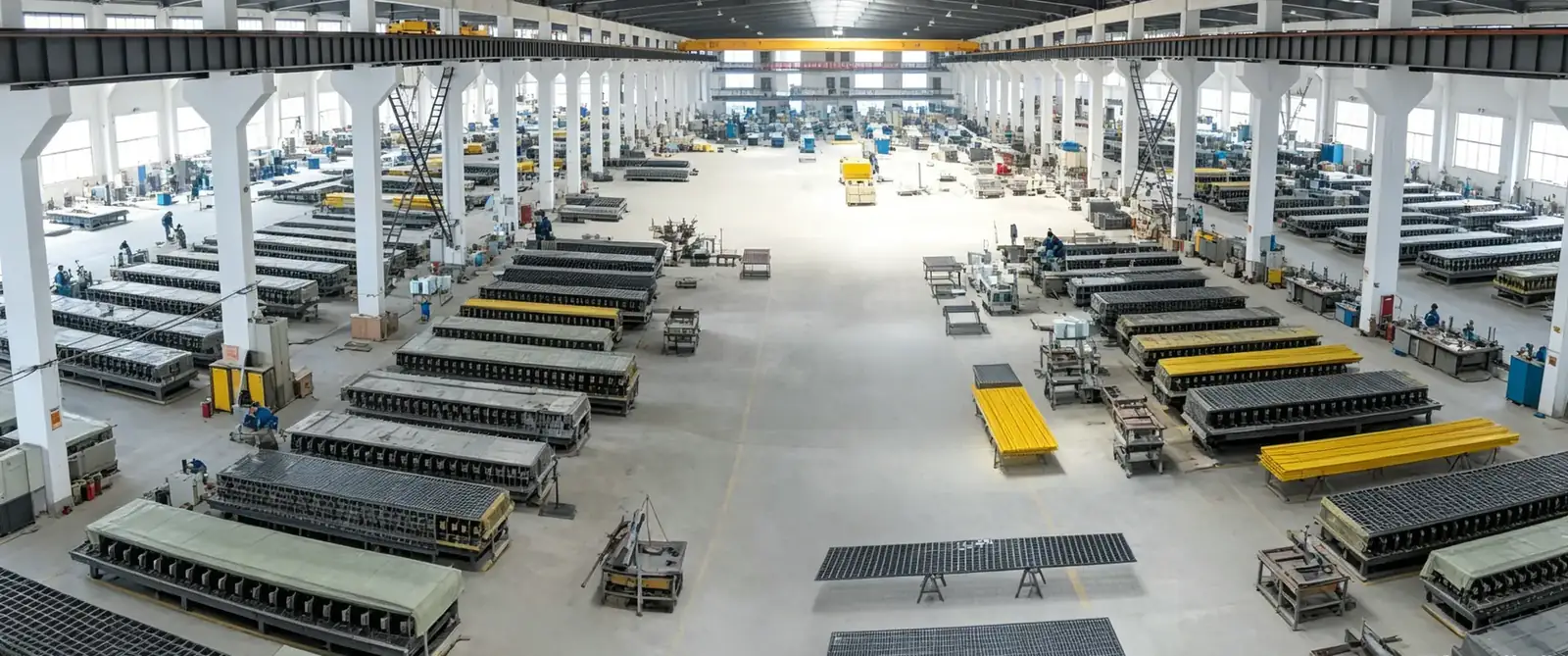
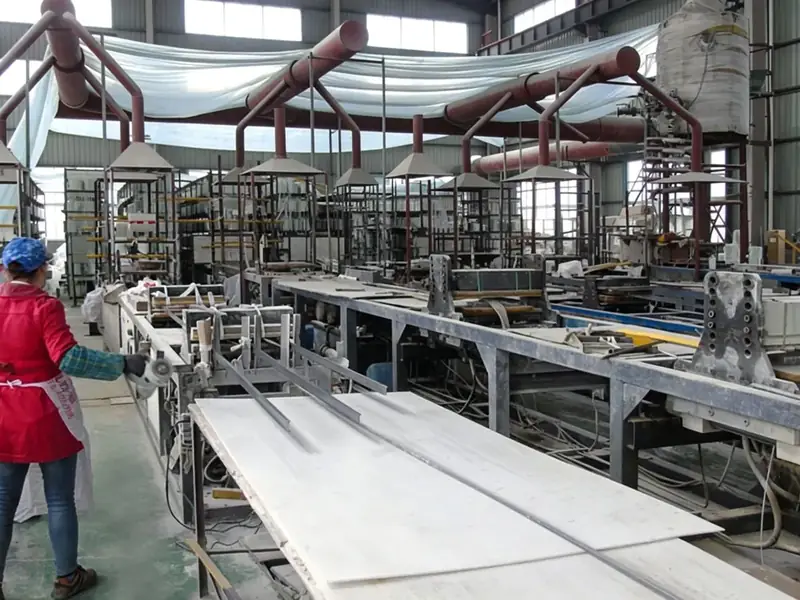
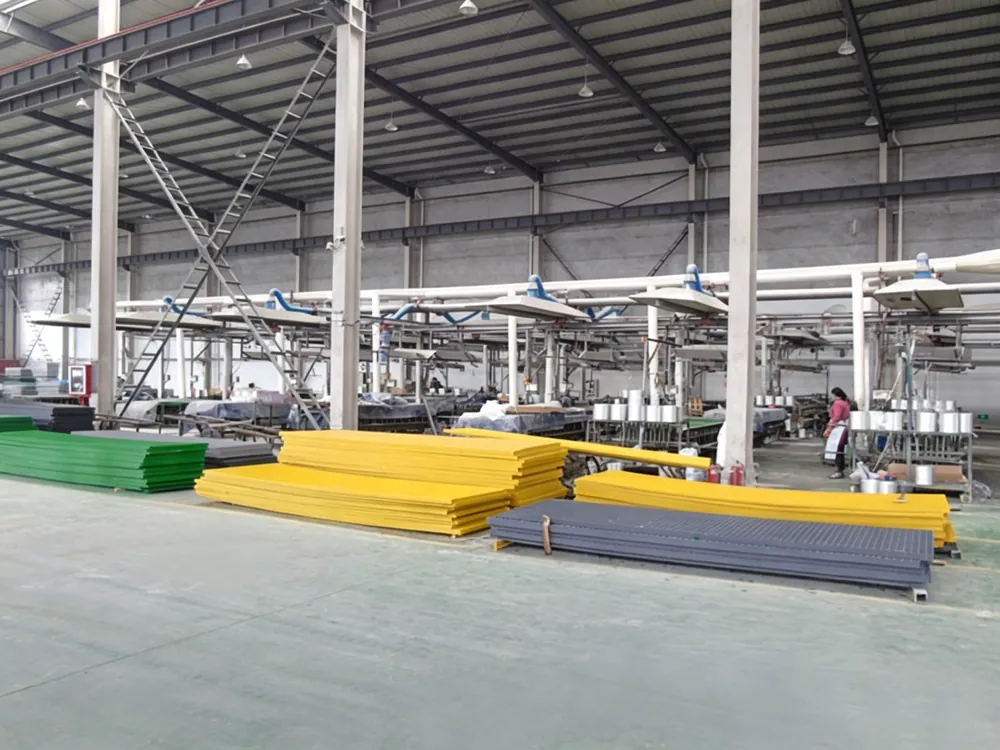
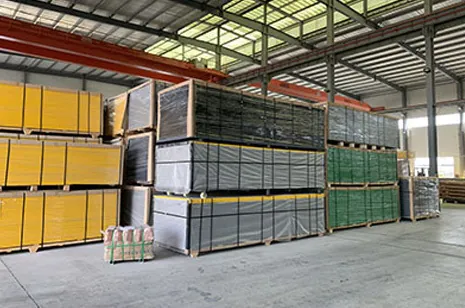
NANTONG ZEALL supplies molded and pultruded composite grating, stair treads, solid covers and handrails to French plant owners, EPCs and maintenance contractors, with engineering support for resin selection and load sizing, factory-direct from USD 15-95 per square meter.
Where Composite Walkways Serve the French Process Industry
- Refining & Petrochemical Clusters — pipe-rack walkways, process-unit platforms and flare-area access in sour-service and chemical environments.
- Specialty Chemicals & Plastics Plants — processing and packaging areas exposed to acids, alkalis, solvents and wash-down.
- Nuclear-Related Maintenance Areas — general access, inspection walkways and non-safety-related platforms around plant buildings, subject to site-specific regulatory requirements.
- Water, Effluent & Desalination — treatment, pumping and effluent facilities facing corrosive gases and permanent damp.
- Pharma, Food & Cosmetic Processing — wash-down floors and trench covers for sanitation-critical buildings.
- Power, Utilities & Storage — tank-farm access, cooling-water structures and outdoor utility walkways.
Import Routing to French Chemical and Nuclear Maintenance Projects
Material ships by ocean container from Shanghai or Ningbo to a French port matching the project: the Atlantic/Channel gateway at Le Havre for northern and inland sites, or the Mediterranean ports of Marseille and Fos-sur-Mer for southern facilities, both reaching France typically approximately 30–40 days port-to-port depending on routing, canal transit and vessel schedule. From the port, containers continue by truck or inland transport to the plant; small lots can be consolidated LCL to keep freight economical. When Suez routing is disrupted, carriers divert around the Cape of Good Hope, typically adding roughly 10–14 days to the sea schedule.
Clearance follows EU single-market rules through a licensed French broker under the correct commodity code, with commercial invoice, packing list and bill of lading. EU common tariff duty and the standard French import VAT (TVA) of 20% generally apply; the importer of record accounts for TVA through the broker. Because we are not a tax advisor, please confirm the current duty, reliefs, classification and any sector-specific import requirements with your broker or accountant.
Safety, Standards and Conservative Certification Position
French and EU industrial walkways are commonly referenced to EN ISO 14122 for permanent machinery access, alongside site-specific risk assessments for fall protection, slip resistance and fire performance. Our panels are produced under an ISO 9001 quality system, tested to ASTM E-84 for surface burning characteristics and ASTM F3059 for fiberglass grating, and carry CE documentation. FRP’s non-sparking and non-conductive properties are widely preferred around hydrocarbon and electrical hazards; engineers still size panels from published load and deflection tables for the actual span and live load.
We state only the certifications the company holds — ISO 9001, ASTM E-84, ASTM F3059, ABS, Intertek, SGS and CE — without reference numbers or expiry dates, and we do not claim marks we do not hold. In nuclear-related contexts we take a conservative position: composite grating is supplied for general maintenance access and non-safety-related platforms, and any site-specific regulatory qualification, nuclear-grade approval or safety-class requirement must be confirmed by the project’s engineering, safety and regulatory authorities.
Product Range for Chemical Process and Utilities Access
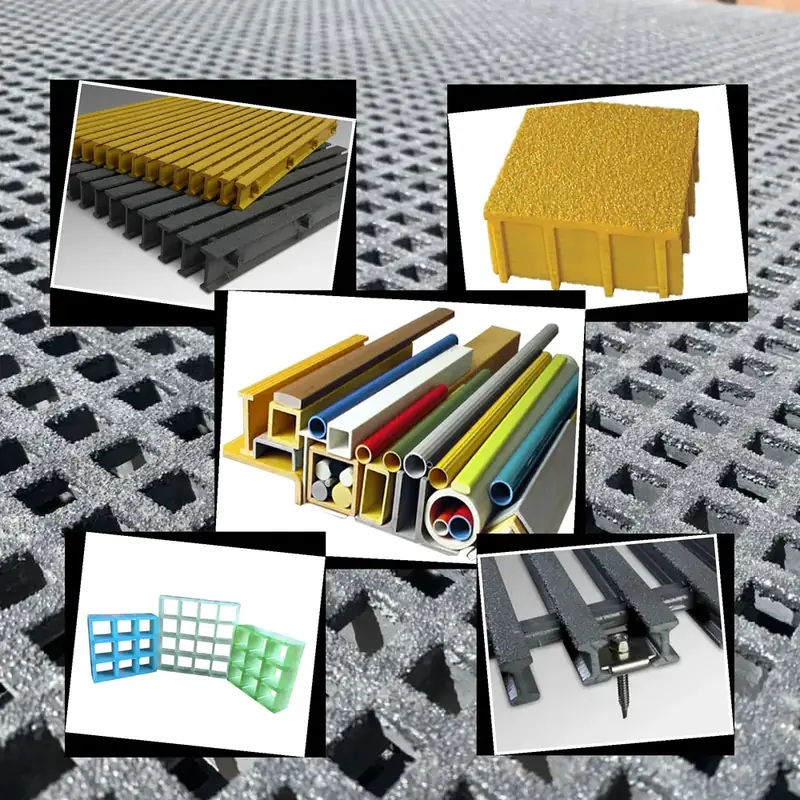
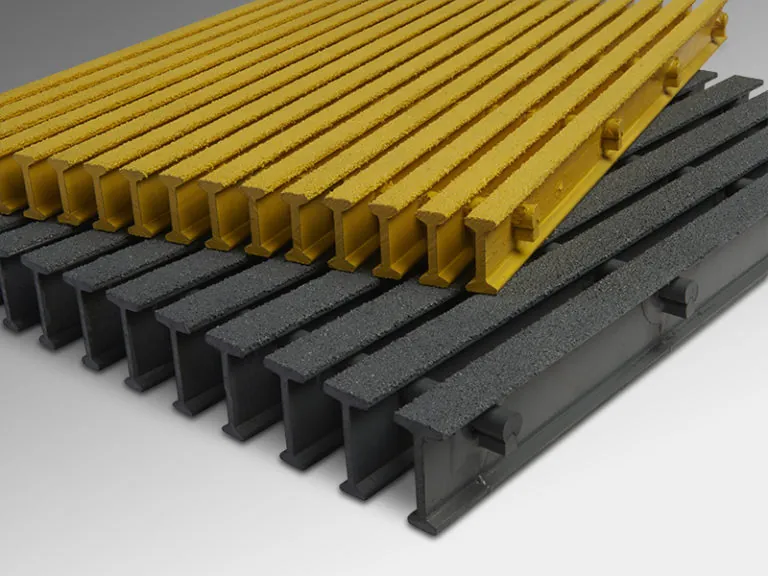
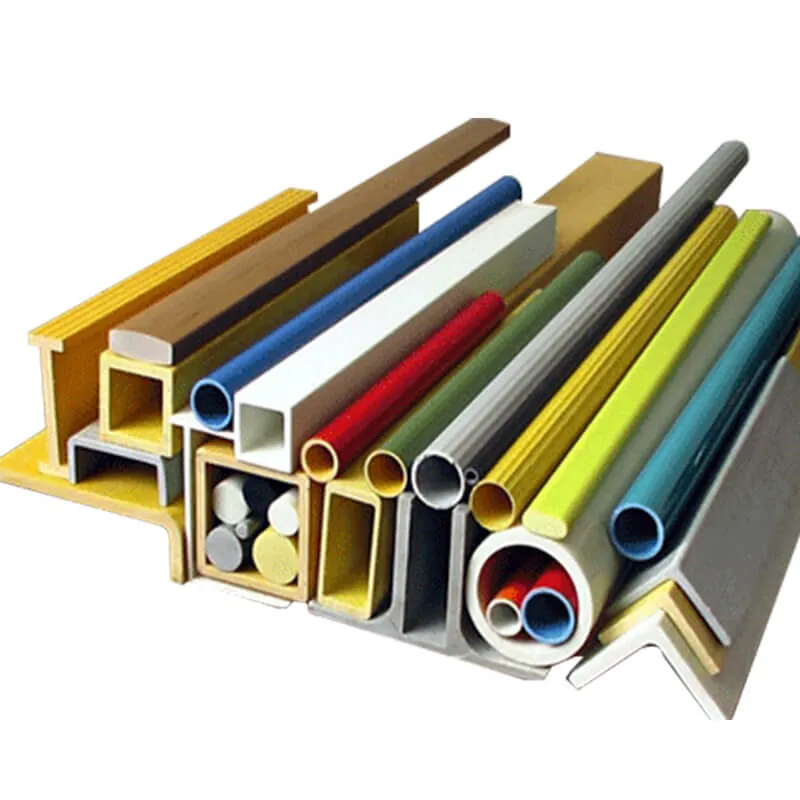
- 50 mm Pultruded FRP Grating — high uni-directional capacity for long pipe-rack spans and elevated equipment platforms.
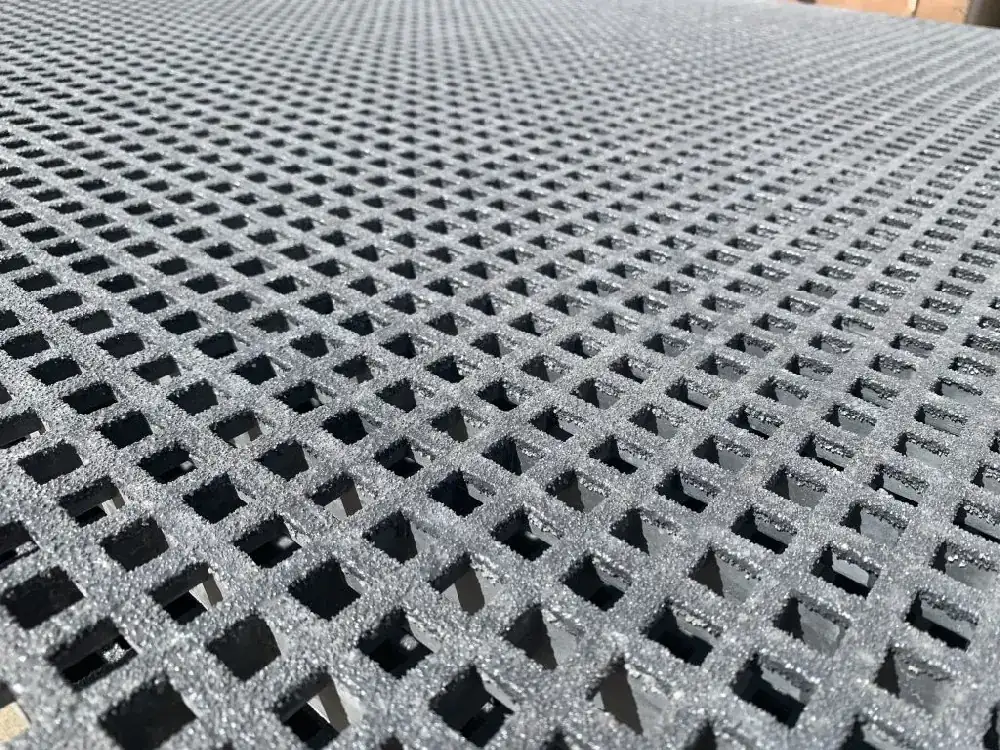
- 38 mm Molded FRP Grating — bi-directional, grit-top panels for general access, valve platforms and inspection decks.
- Vinyl-Ester Resin Grating — preferred for sour service, H2S, acids, caustics and heavy chemical exposure.
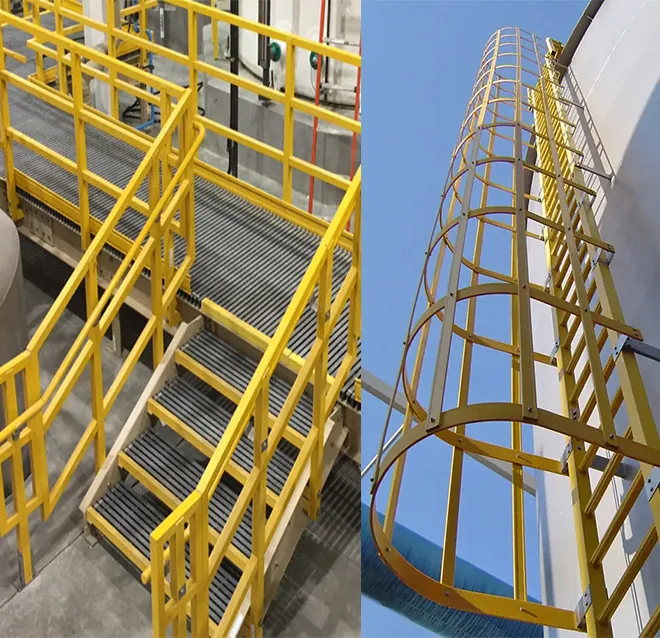
- FRP Stair Treads & Handrails — anti-slip treads with integrated nosing and non-corrosive railing for stair towers and access ladders.
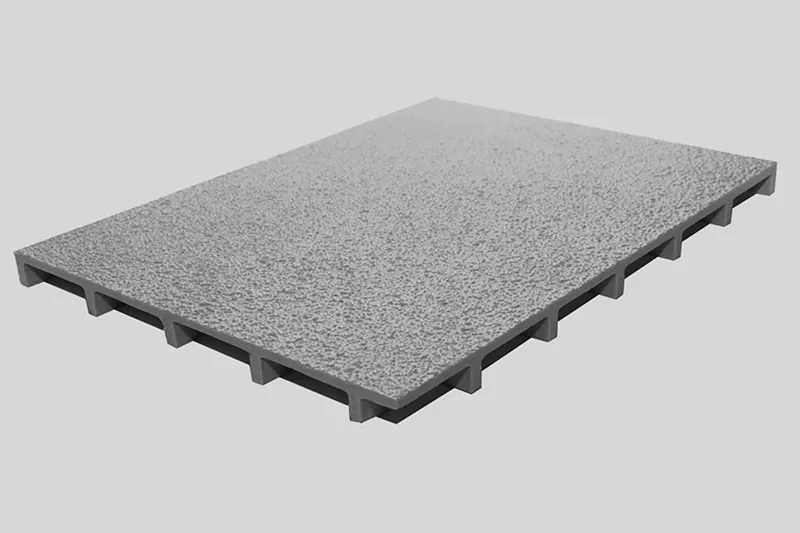
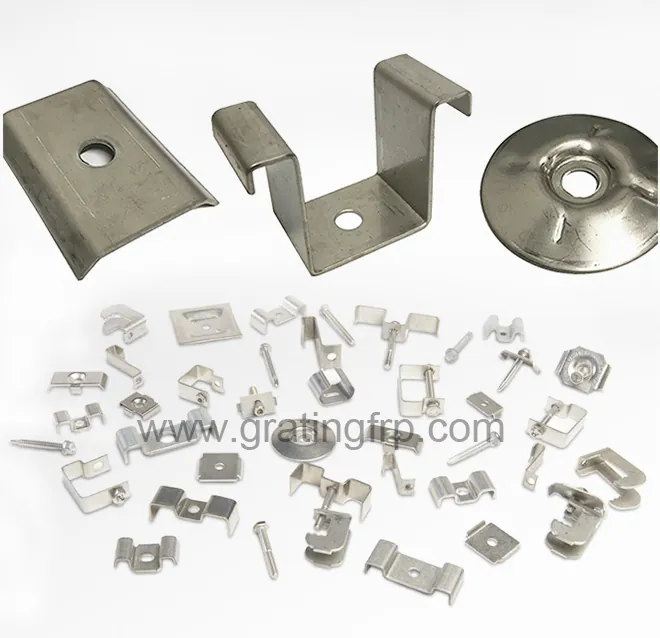
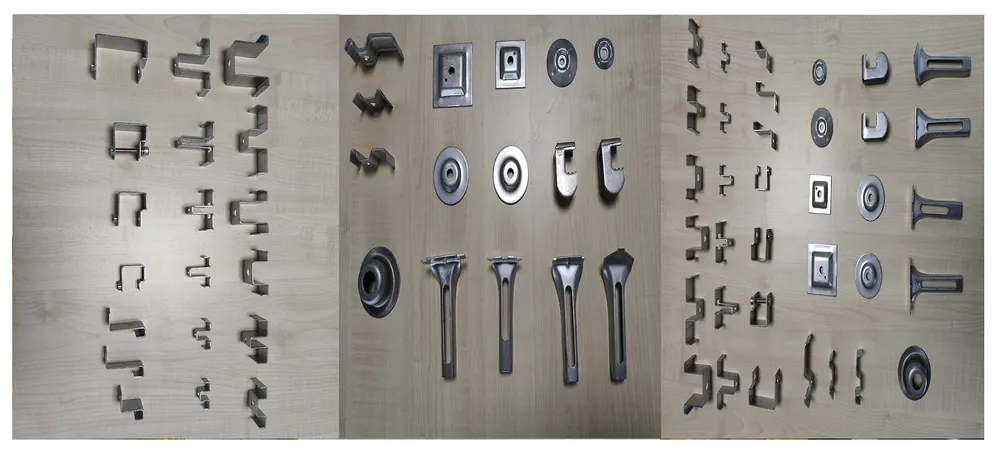
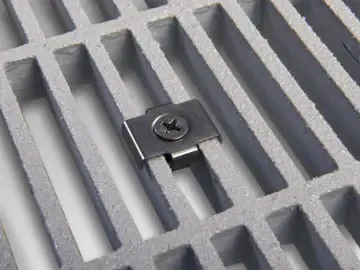
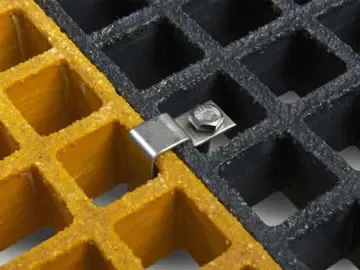
- Solid Covers & Clips — trench, sump and pit covers with M, C and L fasteners for secure, non-sparking fixing.
- Isophthalic & Polyester Grades — moderate-corrosion and general-purpose options for less aggressive service.
Resin Selection Against Chemical and Sour Exposure
Resin choice drives long-term performance in chemical and sour service. General-purpose polyester suits mild, dry, covered walkways; isophthalic polyester handles moderate moisture and chemical exposure; vinyl-ester resin is the standard for sour service, hydrogen sulphide, acids, caustics and solvent contact because it retains strength and resin-barrier properties where cheaper systems blister or degrade. For outdoor installations we add UV stabilization and a surface veil to limit chalking and fibre prominence, while gritted or concave surfaces retain traction when walkways are wet, damp or wash-down. Because the composite does not rust or spark, recurring repainting and ignition-inspection burdens fall away over the asset life, and the non-conductive material supports electrical safety in suitable areas.
Why French EPCs and Plant Owners Source Direct from ZEALL
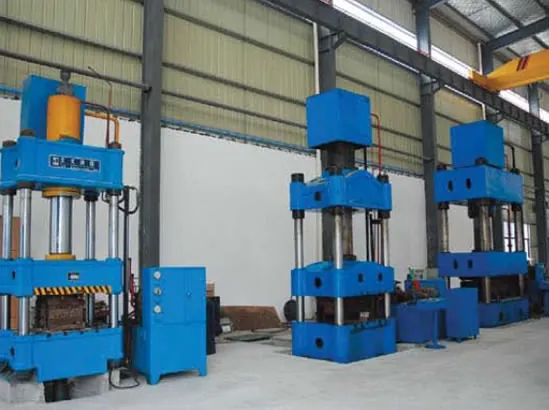
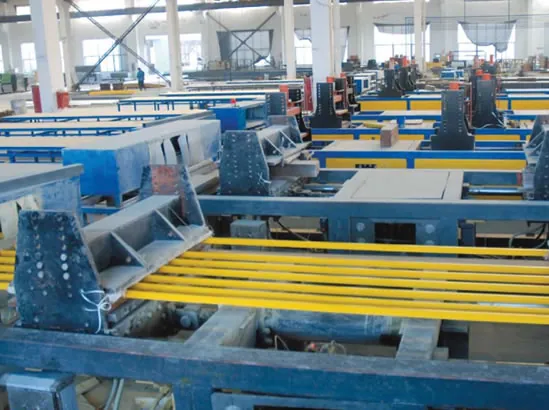
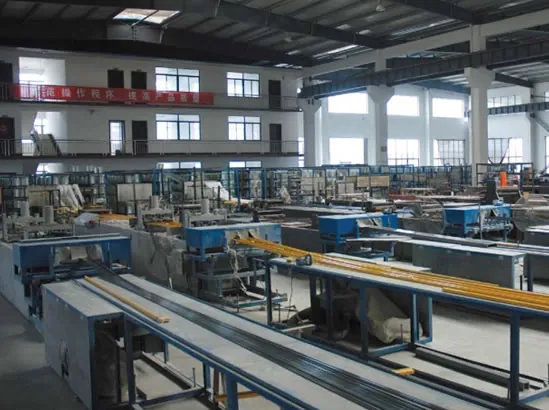
Direct factory supply removes specialist distributor margins while keeping resin selection, structural design and quality control in our hands. Standard panels are produced in 15–25 days, with overall delivery to French sites of typically 12–36 working days depending on specification, routing and consolidation; the minimum order is 10 m². Our export track record covers 45+ countries, supported by 541 customer reviews averaging 4.9 out of 5. Operating since 2004 with 200+ employees, we provide free load calculations, resin selection for chemical service, panel layout and the commercial and technical documentation your broker and engineering team need for EU submittals.
Frequently Asked Questions
Yes. FRP does not spark and is electrically non-conductive, and vinyl-ester or isophthalic systems resist acids, caustics, solvents and hydrocarbon exposure, which is why composite walkways are widely used on chemical plant platforms, pipe racks and tank-farm access.
- France FRP Grating Supplier
- Le Havre
- Marseille
- Fos Sur Mer
- Chemical Nuclear (this page)