Yes, you can paint or recoat FRP grating, but only after proper surface preparation and with a coating compatible with the base resin. Factory FRP already carries its color in the resin, so painting is for refurbishment, color change or repair, not a default finish. The failure mode is almost always poor adhesion from weak surface prep, not the paint itself.
- Why paint: recoat chalked UV surfaces, restore color, or seal cut edges.
- Surface prep: clean, abrade, degrease; the resin-rich skin must be opened.
- Compatibility: paint must suit polyester, vinyl ester or phenolic substrate.
- Adhesion test: cross-hatch or pull-off before full coverage.
- Grit tops: anti-slip surfaces need a coating that keeps texture.
Why Factory FRP Is Not Normally Painted
FRP grating is colored in the resin, so the pigment runs through the section, not just on top. That is why chalking over years wears the surface but the color stays visible underneath. Painting is therefore a refurbishment tool, not a finishing step the factory applies. Understand that before reaching for a roller.
| Question | Answer | Implication |
|---|---|---|
| Is FRP painted at factory? | No; color is in the resin | No paint film to rely on |
| Then why paint on site? | Refurbish, color change, seal edges | Only when needed |
| What is the main risk? | Poor adhesion from weak prep | Preparation drives success |
When a Recoat Is Actually Needed
Not every aged panel needs paint. Recoat when the surface has chalked and faded, when you need a color change for safety or wayfinding, when cut edges need sealing, or when a localized chemical attack needs a protective top. Do not recoat a panel that is structurally cracked or delaminated; replace it.
| Condition | Recoat? | Note |
|---|---|---|
| Chalked, faded surface | Yes | Clean and abrade first |
| Cracked / delaminated panel | No | Replace |
| Cut edge on site | Yes | Seal against wicking |
| Color change for safety | Yes | Confirm compatibility |
Surface Preparation: The Decisive Step
FRP arrives with a smooth, resin-rich, release-agent-contaminated skin. Paint will not stick to that. The surface must be cleaned, degreased and abraded to open the resin skin and remove mold release. This step drives 80% of coating failures when it is skipped or rushed.
| Step | Method | Target |
|---|---|---|
| Clean | Wash, remove grime | Dry, oil-free |
| Degrease | Solvent wipe | No release agent |
| Abrade | Light sand / grit blast | Open resin skin, texture |
| Dust off | Tack cloth / vacuum | No loose dust before paint |
Note: Do not abrade so aggressively that you expose and loosen glass fibers; the goal is a clean, slightly textured resin surface, not a sanded-through panel.
Resin and Coating Compatibility
The coating must be compatible with the substrate resin. Polyester, vinyl ester and phenolic each accept different paint families, and some solvents in a paint can attack the substrate rather than bond to it. Confirm the coating maker's substrate list before you buy.
| Substrate resin | Preferred coating families | Avoid |
|---|---|---|
| Polyester | Epoxy, polyurethane topcoats | Strong-solvent lacquers |
| Vinyl ester | Epoxy, vinyl-compatible systems | Generic alkyd paints |
| Phenolic | Specialist systems; test first | Strong solvents |
Adhesion Testing Before Full Coverage
Always test on a sample or hidden area first. The cross-hatch test cuts a small grid, applies tape and pulls; a pull-off test measures the force to detach a dolly. If the coating lifts in the test, it will lift across the whole deck. Fix prep before rolling out.
| Test | Method | Acceptance |
|---|---|---|
| Cross-hatch | Grid + tape pull | No flakes at cut edges |
| Pull-off | Dolly, measured force | Per coating spec |
| Visual | Cure, no blistering | Even film, no crater |
Recoating Grit and Anti-Slip Tops
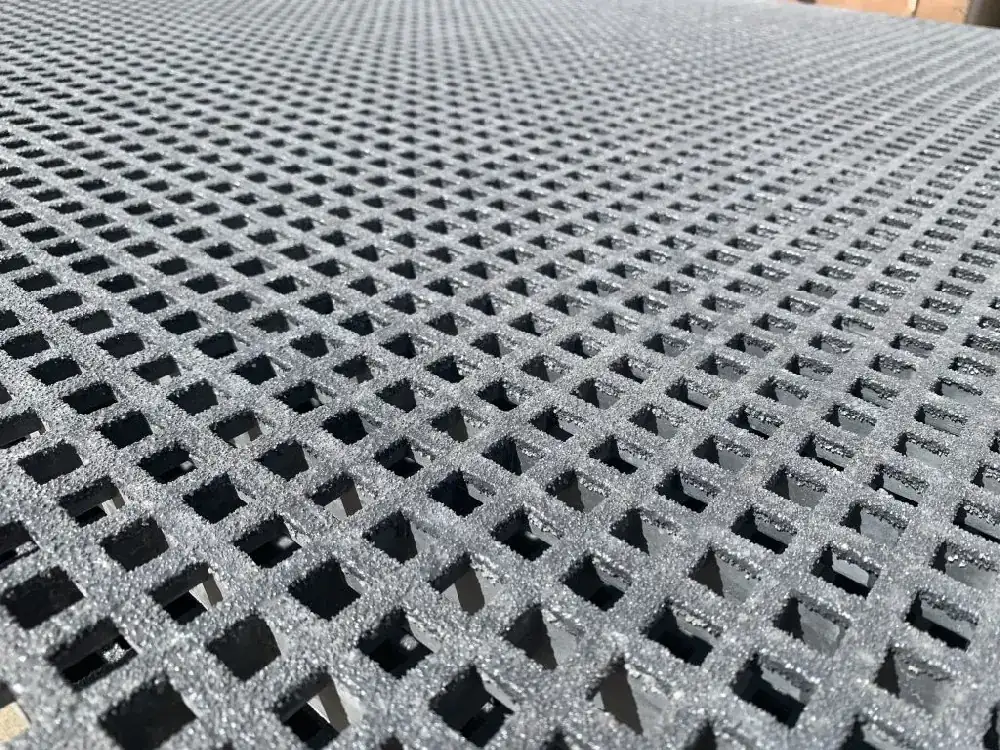
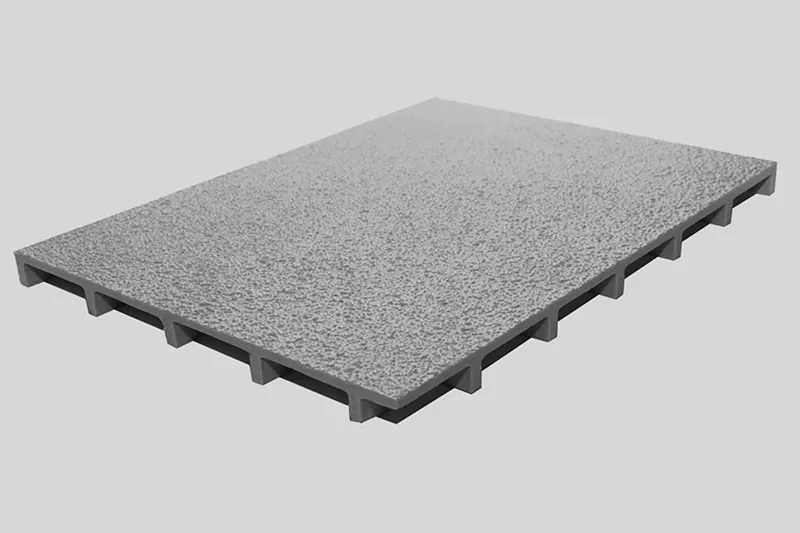
Grit-topped and concave anti-slip surfaces are the hardest to recoat because you must keep the texture. A thick film fills the grit and kills slip resistance. Use a thin, compatible coating designed for textured surfaces, or re-apply grit into a wet coat where traction is critical.
| Surface type | Recoat approach | Watch |
|---|---|---|
| Smooth / concave | Standard thin film | Even coverage |
| Grit top | Thin compatible coat; re-grit where needed | Do not fill the texture |
| Covered / solid top | Standard | Edge seal |
Color Restoration After UV Chalk
UV chalk leaves a faded, powdery surface. Clean it thoroughly first; painting over chalk locks the powder under the film and adhesion fails. Once clean and abraded, a compatible topcoat restores color and protects the resin-rich skin from further UV attack.
| Stage | Action | Why it matters |
|---|---|---|
| 1 | Wash and remove all chalk powder | Chalk under film kills adhesion |
| 2 | Abrade and degrease | Opens the resin skin |
| 3 | Test adhesion | Confirms the prep works |
| 4 | Apply compatible topcoat | Restores color and protects |
Typical Coating Systems
A typical system is a primer tied to the substrate resin plus a polyurethane or epoxy topcoat for UV and wear. Exact film thickness and number of coats come from the coating maker's datasheet for the chosen system.
| Layer | Role | Note |
|---|---|---|
| Primer | Bond to prepared resin | Resin-specific |
| Intermediate | Build film, UV | Per datasheet |
| Topcoat | Color, wear, UV | Polyurethane common |
Cure and Recoat Window
Each coating has a recoat window: apply the next layer before the previous cures too far, or adhesion between layers fails. Applying after the window usually requires light abrading between coats. Never rush cure by painting over a soft film.
| Factor | Rule | If missed |
|---|---|---|
| Recoat window | Per coating datasheet | Inter-layer adhesion fails |
| Over-application | Light abrade between coats | Film delaminates |
| Humidity / cold | Follow maker limits | Poor cure, soft film |
Field Repairs vs Factory Recoat
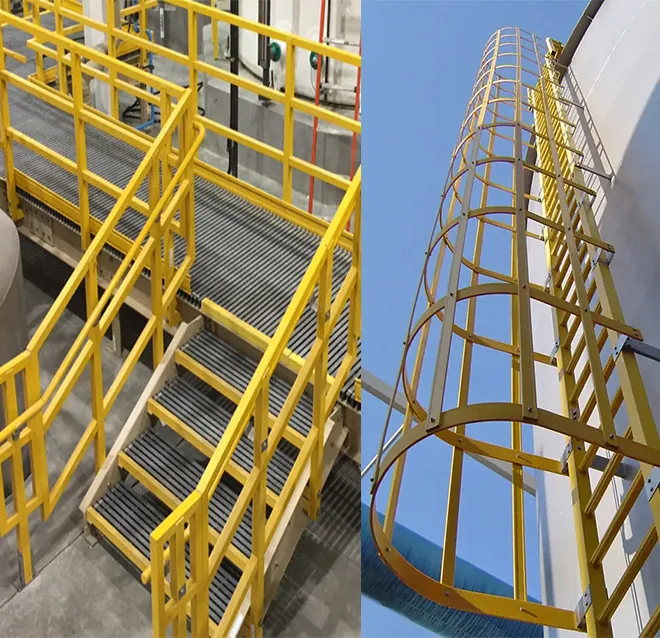
A single panel or a localized patch is a field job. A whole platform of chalked panels is often cheaper and more consistent to replace or to factory-recoat than to roll on site, especially at height or in weather-exposed locations.
| Scope | Field recoat? | Better option |
|---|---|---|
| One panel, cut edge | Yes | - |
| Localized patch | Yes | Confirm compatibility |
| Whole chalked platform | Costly | Replace or factory recoat |
QC Checklist for a Recoat Job
- Confirm the base resin (polyester, vinyl ester, phenolic) and pick a compatible system.
- Clean, degrease and abrade; never paint over chalk or release agent.
- Run a cross-hatch or pull-off test before full coverage.
- Respect the recoat window and cure times from the datasheet.
- On grit tops, keep texture; re-grit where traction matters.
- Spare panels: MOQ 10 m2, lead time 12-36 working days.
Note: Factory: 20,000+ m2, 200+ staff, since 2004. Certification GB/T19001-2000 idt ISO9001:2000, register 01708Q11888R0S, valid to 2028-12-30.
Frequently Asked Questions
Can you paint over FRP grating?
Yes, but only after cleaning, degreasing and abrading the resin-rich skin, and with a coating compatible with the base resin. Painting over chalk, release agent or without abrasion will fail by peeling.
What paint sticks to fiberglass grating?
Epoxy and polyurethane systems matched to the substrate resin usually bond well. Strong-solvent lacquers or generic alkyd paints can attack the polyester or vinyl ester instead of bonding. Always confirm the coating maker's substrate list.
How do you prep FRP before painting?
Wash off grime and chalk, degrease to remove mold release, then lightly abrade to open the resin skin and produce a clean texture. Blow or tack off all dust before the first coat. This prep step drives most coating failures.
Can you recoat the grit anti-slip surface?
Yes, but use a thin compatible coat so you do not fill the grit and kill slip resistance. For critical traction areas, re-apply grit into a wet topcoat rather than relying on a thick film.
Does painting FRP reduce its chemical resistance?
A compatible coating generally adds UV and wear protection rather than reducing resistance. A wrong or poorly bonded coating can blister and trap chemicals behind it, which is why substrate compatibility and adhesion testing matter.