
GRP Grating Guide: Selection, Resin, Mesh, Load and Standards
A structured engineering guide to glass reinforced plastic (GRP) grating: how molded and pultruded panels are built, which resin matches your chemical environment, how mesh, thickness, span and load are selected, applicable standards, and how to install and maintain GRP grating for long service life.
What Is GRP Grating?
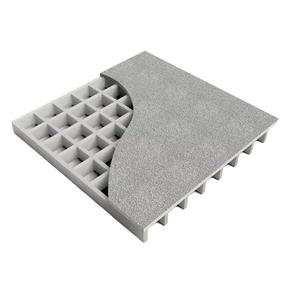
GRP (Glass Reinforced Plastic) grating is an open-mesh composite panel made from continuous glass fibre reinforcement embedded in a thermoset resin matrix. It is the same material family called FRP (Fiber Reinforced Plastic) in US schedules, GFRP, or composite grating; GRP is the standard trade term in the UK, Ireland, Australia and Commonwealth markets.
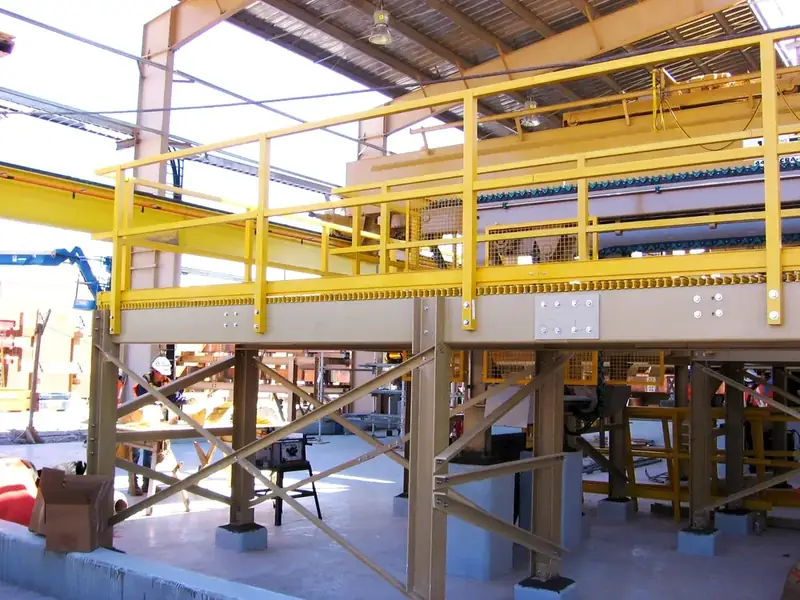
The fibreglass carries the tensile load while the resin binds the fibres, excludes moisture and chemicals, and transfers load between fibres. The resulting panel will not rust, rot or corrode, weighs roughly one quarter of equivalent steel, and is electrically non-conductive. It is specified for walkways, platforms, drainage covers, stairs and equipment decks across wastewater, chemical, marine, offshore, mining and energy projects.
Molded vs Pultruded GRP Grating
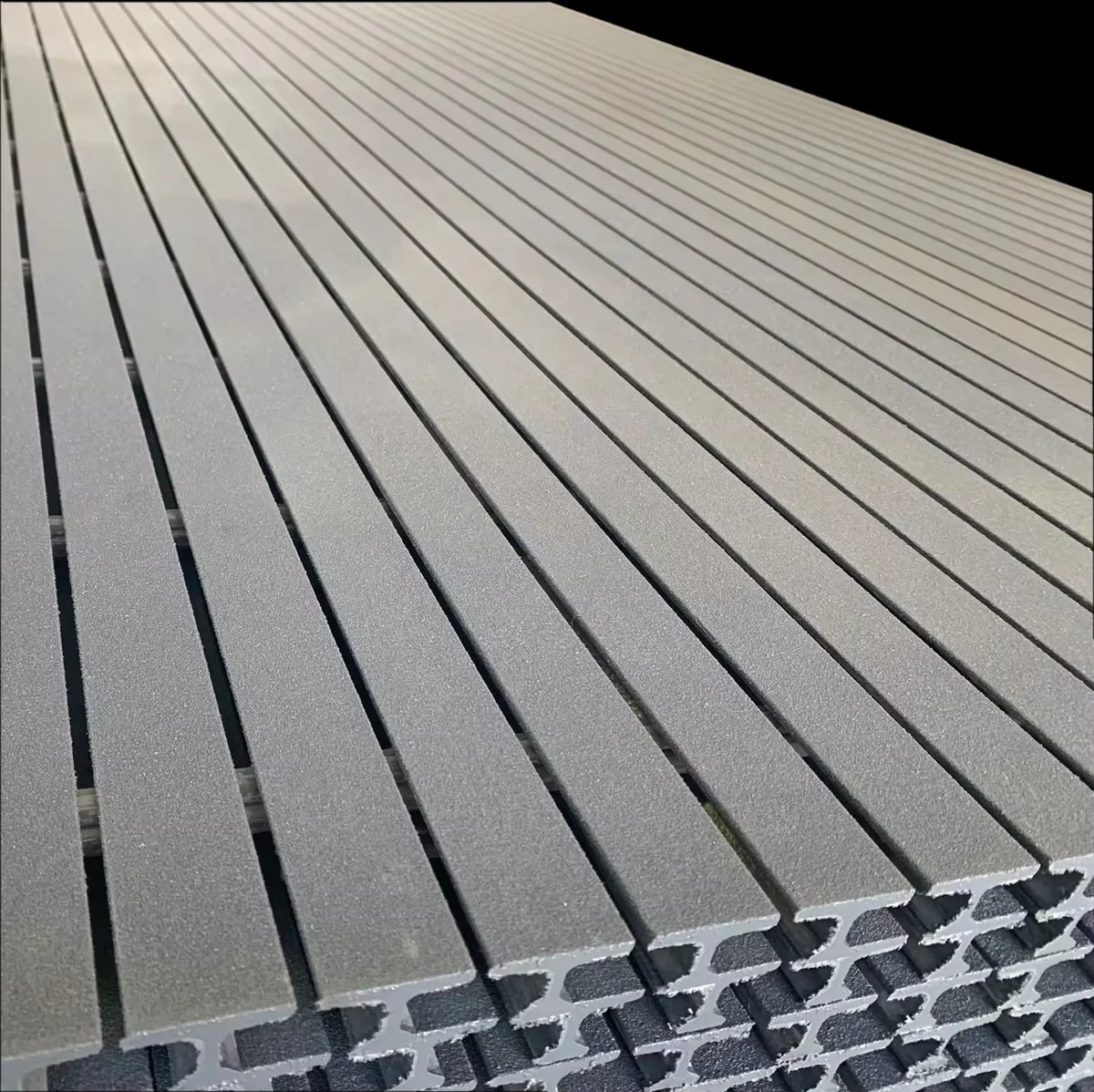
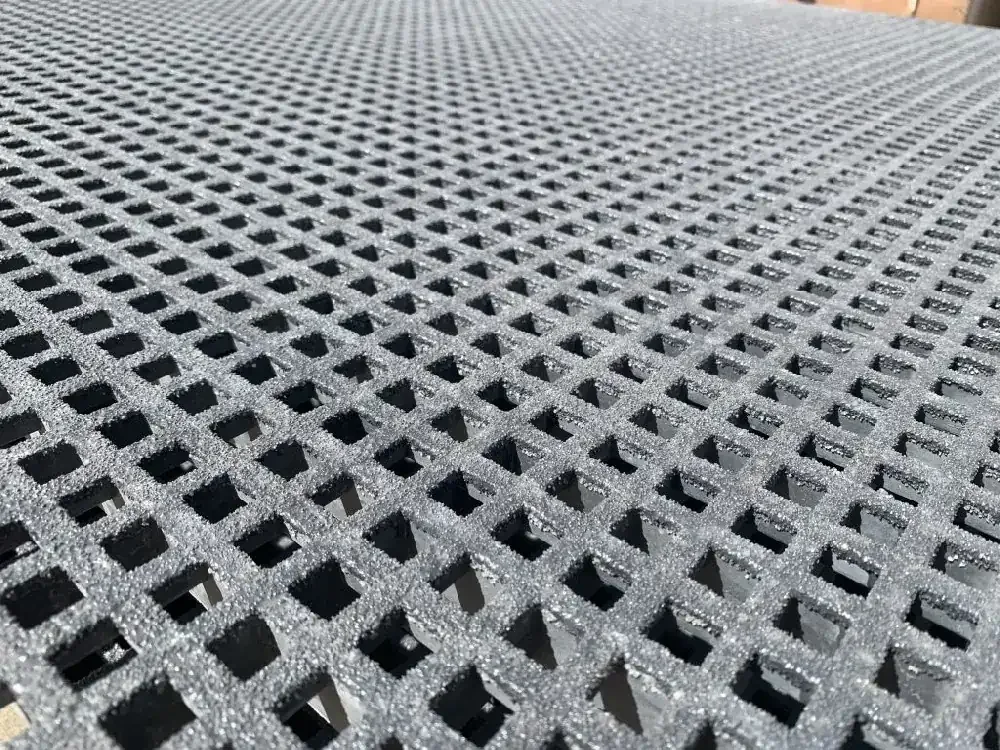
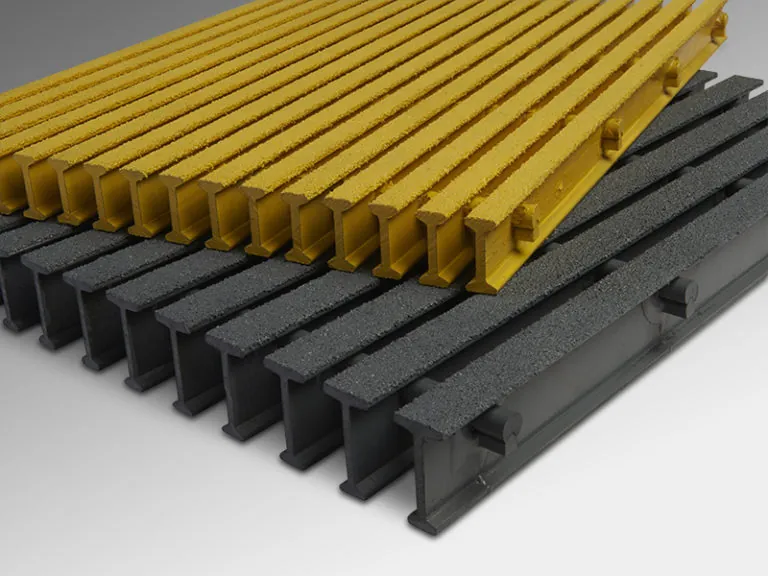
GRP grating is produced in two construction families. The choice follows the span, the imposed load, the environment and the required strength direction.
| Parameter | Molded GRP Grating | Pultruded GRP Grating |
|---|---|---|
| Process | Continuous fibreglass mat and resin compression-molded in a press | Fibres pulled through a heated die into continuous I-bar / T-bar profiles |
| Strength direction | Bidirectional (two-way) | Principally unidirectional along the bar |
| Typical mesh / depth | 19×19 to 50×50 mm mesh; 25–50 mm depth | Deep sections from 25 to 100 mm |
| Best use | General walkways, platforms, wash-down zones, covers | Long spans, heavy industrial and offshore loads |
See molded GRP grating and pultruded GRP grating for panel data.
Resin Systems and Chemical Environment
Resin choice is matched to the service chemistry. The resin protects the glass fibre; selecting the wrong grade is the most common cause of premature composite failure in corrosive service.
| Resin | Best environment | Avoid |
|---|---|---|
| Orthophthalic polyester | Dry, general atmospheric service; light duty; cost-sensitive projects | Strong alkalis, strong solvents, sustained immersion |
| Isophthalic polyester | Damp and wet service, weak acids and alkalis, seawater, general industrial exposure | Concentrated acids and solvents |
| Vinyl ester | Strong acids and alkalis, salt spray, solvents; offshore and chemical plant; broadest corrosion grade | — |
| Phenolic | Low-smoke, low-toxicity fire zones; tunnels, metros, offshore escape routes | — |
| Epoxy | High-strength, chemical-resistant and electrical-insulating special cases | Cost-sensitive general use |
Mesh, Thickness, Load and Span
Mesh size
Standard molded mesh openings are 19×19, 38×38, 40×40 and 50×50 mm. Finer mesh retains small falls and prevents tool-through; open mesh drains fastest and weighs less.
Panel thickness
Molded GRP grating is supplied in 25, 30, 38 and 50 mm depths; pultruded sections run from 25 to 100 mm deep. Thickness rises with imposed load and required span.
Load and span
Panel selection follows the imposed load (pedestrian, pallet truck, forklift or vehicle), the bearer spacing and the allowable deflection. As the span increases, the usable load decreases; the load and deflection table for the chosen panel must govern the design. Standard panels are 1220×3660, 1220×2440 and 1000×3000 mm, with cut-to-size options. Send your drawings and loads for an engineered specification.
Surface Finish Options
The top surface is chosen for slip risk, hygiene and splash protection. Grit and concave finishes retain grip in wet and oily conditions; smooth tops clean fastest in food and pharma zones.
| Finish | Grip / function | Typical use |
|---|---|---|
| Concave / meniscus | Raised profile channels drain; grip in wet and oily conditions | Walkways, stairs, wash-down areas |
| Grit-top | Mineral grit bonded into the resin; high slip resistance | Exposed wet areas, ramps, heavy traffic |
| Smooth | Easy-clean, non-porous surface | Food and pharma, cleanrooms |
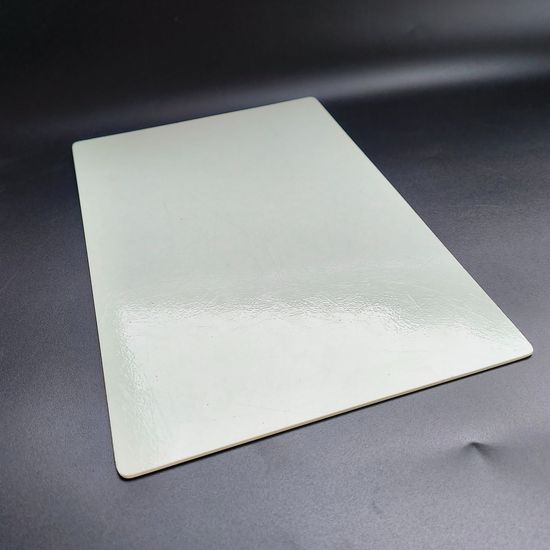
| Covered solid | Sealed top; splash and falling-object protection | Trenches, equipment covers |
Standards and Compliance
GRP grating is specified against regional product standards, fire tests and load codes. Our panels are manufactured under an ISO 9001 quality system, with fire-rated options to ASTM E-84 Class B and independent testing to Intertek, ABS and SGS methods.
- BS 4592-3 — Industrial flooring and stair treads; specification for glass fibre reinforced plastic (GRP) grating (UK).
- EN 13706 — Reinforced plastics composites; pultruded profiles (Europe).
- ASTM F3059 — Standard specification for fiberglass (glass-reinforced-plastic, GRP) grating (North America).
- ASTM E84 — Surface burning characteristics of building materials; flame-spread classification.
- ASCE 7 — Minimum design loads and associated criteria for buildings and other structures (load basis).
- NAAMM MBG-01 — Metal bar grating manual; load and spacing principles adapted for composite layouts.
See the standards and compliance hub for regional certification detail.
Where GRP Grating Is Used
Walkways & Platforms
Industrial walkway and platform grating for plants, refineries and factories.
Trench & Drain Covers
GRP trench cover and drainage grating for municipal and industrial works.
Stair Treads
Anti-slip GRP stair tread grating for safe vertical access.
Marine & Offshore
Dock, deck and offshore grating in corrosive salt environments.
Water & Wastewater
Treatment plant walkways and covers that never corrode.
Chemical & Petrochemical
Corrosion-proof flooring and access in acid and alkali service.
Mining & Oil/Gas
Heavy-duty panels for abrasive and sour-service zones.
Solar & Power
Maintenance walkways, cable trenches and substation decks.
Food & Pharma
Easy-clean, non-porous flooring for processing and cleanroom areas.
Installation, Maintenance and Service Life
- Fix panels with M/C/L/Z stainless steel clips (SS304/SS316) to the support bearers; do not weld to GRP.
- Respect the bearer spacing from the load table; allow expansion gaps at panel edges.
- Keep tread and cover surfaces clear of sludge and oil; wash down periodically to retain anti-slip performance.
- Inspect clips, edges and bearing points after heavy use; replace damaged panels early.
In normal corrosive industrial service, GRP grating typically serves 20+ years without rust repair or repainting; maintenance is limited to cleaning and fastener checks. Fixings: grating clips and fasteners; reference: installation guide.
Related Products and Guides
- GRP Grating product range — molded and pultruded panels
- Molded GRP grating — two-way general purpose
- Pultruded GRP grating — heavy-duty spans
- GRP vs steel grating — material comparison
- GRP/FRP standards & compliance — regional certification
Request Your GRP Grating Specification
Email [email protected] · Tel/WhatsApp +86-513-6681-9918 · Nantong, Jiangsu, China
GRP Grating Guide FAQ
Product and factory gallery
Technical Documentation (PDF)
Download the FRP/GRP technical documents relevant to this page. Figures are indicative — confirm against a stamped project calculation.
- frp-grp-grating-technical-data-sheet.pdf (5 KB, PDF)
- frp-grating-load-table.pdf (4 KB, PDF)
- installation-maintenance-manual.pdf (81 KB, PDF)
- installation-node-details.pdf (81 KB, PDF)
Download Document
Thank you for your interest. Please fill in your email and company name. Our technical and sales team will contact you within 30 minutes (during working hours) to provide support!
Thank You!
Your request has been received successfully.
Our technical and sales team will contact you within 30 minutes (during working hours) to provide the document and professional support!
If you need urgent assistance, please email: [email protected]