Why Weight Matters
FRP grating weighs one-quarter to one-third of equivalent steel grating. A single worker can lift a 1220 x 3660mm FRP panel, while steel requires two or more workers and lifting equipment. This reduces installation labor, crane rental, and structural support requirements.
Molded Grating Weight by Thickness
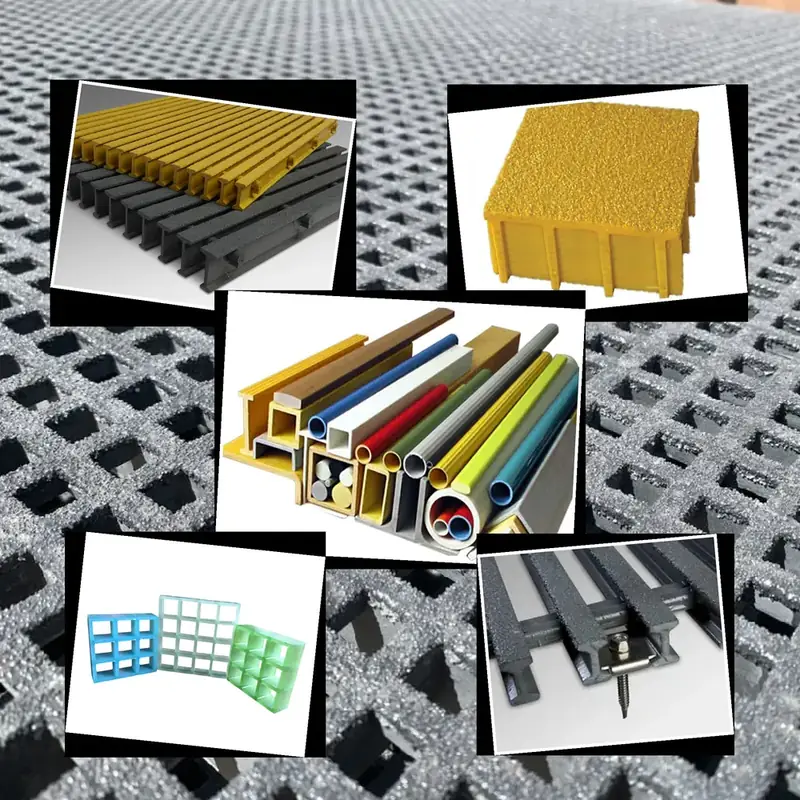
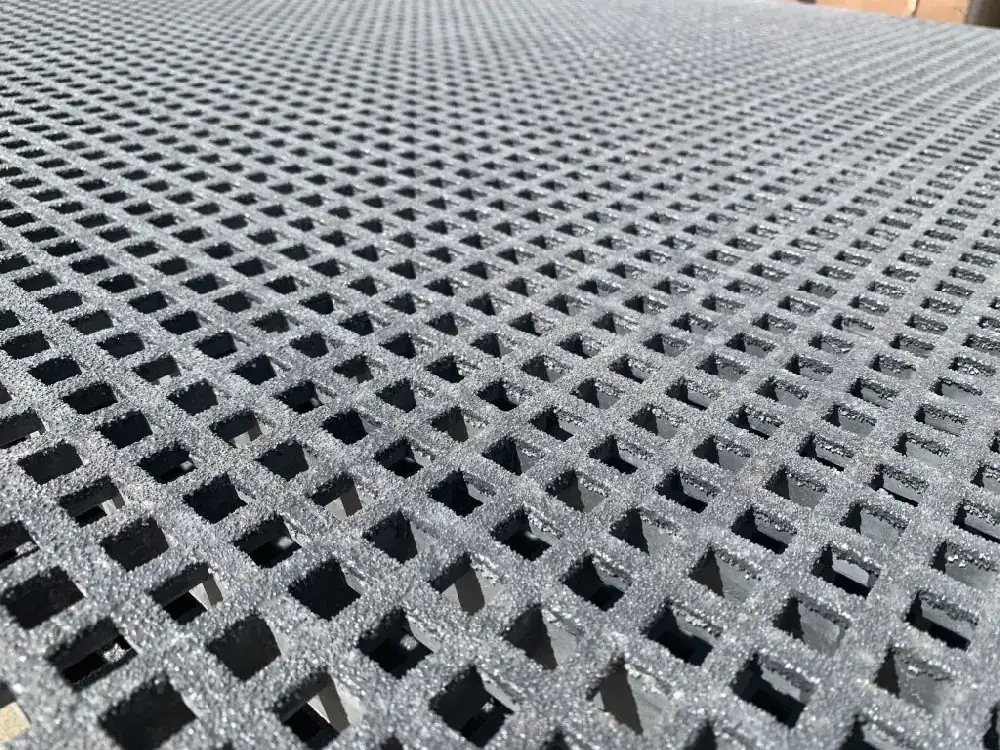
25mm standard mesh: 12 to 15 kg/m2. 38mm standard mesh: 18 to 22 kg/m2. 40mm heavy-duty: 20 to 24 kg/m2. 50mm extra heavy-duty: 30 to 35 kg/m2. Mini-mesh panels weigh slightly more due to denser bar configuration. Values vary by resin system and glass content.
Pultruded Grating Weight
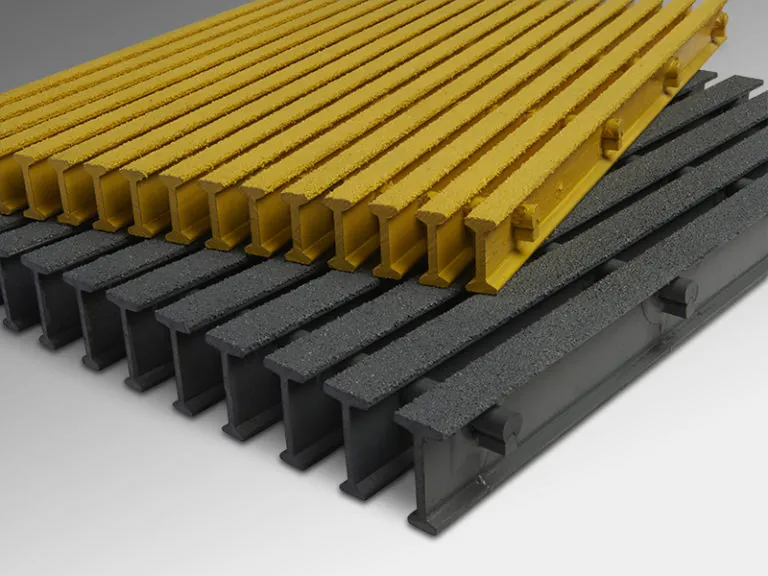
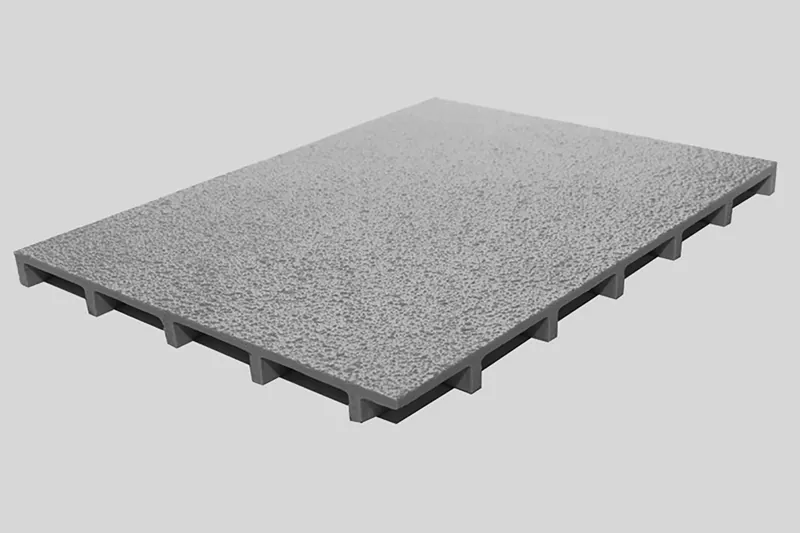
38mm I-bar pultruded: 14 to 18 kg/m2. 50mm heavy-duty pultruded: 18 to 25 kg/m2. Sandwich panels: 16 to 22 kg/m2. Unidirectional fiber alignment in pultrusion provides higher strength-to-weight ratio than bi-directional random fiber in molded grating.
Comparison with Steel and Aluminum
Steel equivalent: 60 to 80 kg/m2 (3-4x heavier). Aluminum: 30 to 45 kg/m2 (2x heavier). A 1000 m2 platform using FRP saves 40 to 50 tons vs steel, reducing dead load on supports and foundations.
Transport and Installation Savings
A 40-foot container holds 1500-2000 m2 of FRP vs 400-600 m2 of steel due to weight limits. On-site, FRP panels install without cranes, cutting time by 50 percent or more vs steel requiring welding.
Frequently Asked Questions
La rejilla FRP (plástico reforzado con fibra de vidrio) es una rejilla compuesta moldeada o pultruida utilizada para pasarelas, plataformas y suelos resistentes a la corrosión. Combina fibra de vidrio con resina termoestable (poliéster, viniléster, epoxi) para una relación resistencia-peso superior, cero oxidación y más de 20 años de vida útil.